Kenya Makes History as Ogamba Opens 2026 World TVET Congress in Nairobi, Bringing Global Education Leaders to Safari Park Hotel
With Education Cabinet Secretary Julius Migos Ogamba presiding over the opening ceremony alongside TVET Principal Secretary Dr Esther Thaara Muoria, the gathering has placed Kenya at the centre of international discussions on skills development, innovation and global employability. The congress comes at a time when countries are increasingly recognising the importance of practical skills in addressing unemployment, supporting entrepreneurship and responding to technological changes. Its historic hosting on African soil also provides an opportunity for the continent to demonstrate its contribution to global education and economic transformation. As delegates continue with their discussions, expectations remain high that the gathering will produce meaningful partnerships, innovative approaches and practical recommendations that will benefit learners and institutions. Ultimately, the success of the 2026 WFCP Congress will depend on how the ideas shared in Nairobi are translated into better training opportunities, stronger institutions and improved employment prospects for young people across the world.
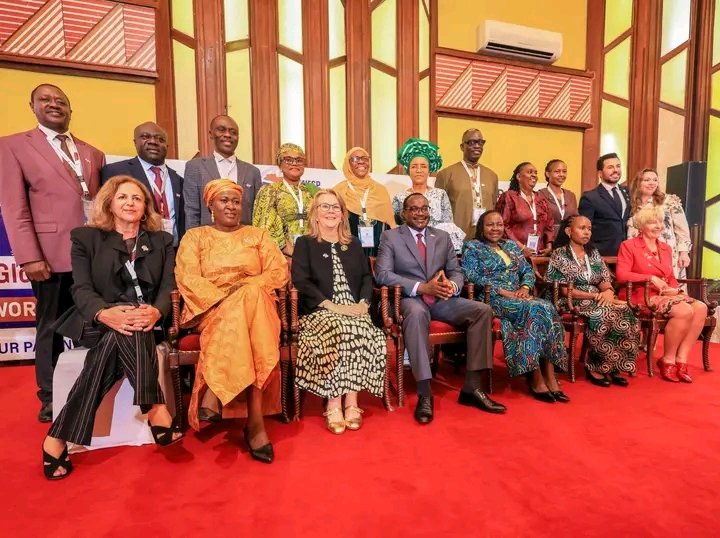
Kenya has taken another major step towards strengthening its position as a regional and international centre for education, skills development and innovation following the official opening of the 2026 World Federation of Colleges and Polytechnics (WFCP) World Congress at Safari Park Hotel in Nairobi on Monday, November 23, 2026.
The international conference, which has attracted education leaders, government representatives, policymakers, technical and vocational education experts, industry players and development partners from different parts of the world, is expected to provide an important platform for discussing the future of technical and vocational education and training (TVET).The opening ceremony was presided over by Education Cabinet Secretary Julius Migos Ogamba, who was accompanied by the Principal Secretary for Technical and Vocational Education and Training, Dr Esther Thaara Muoria, among other education stakeholders.
The congress is being held under the theme "Building Skills for Sustainability, Innovation and Global Employability." Its central objective is to explore how colleges, polytechnics and technical institutions can prepare learners for changing employment opportunities while supporting economic development, technological advancement and sustainable growth.
The event is particularly significant because it is the first time in the history of the World Federation of Colleges and Polytechnics that the international congress is being hosted on the African continent. This gives Kenya and the wider African region an opportunity to demonstrate their contribution to global education discussions and showcase the potential of technical training in addressing unemployment and skills shortages.Ogamba pointed to government reforms aimed at making technical education more relevant to the needs of employers and the changing labour market.
He explained that technical training should not only focus on awarding certificates but also equip learners with practical competencies that can be applied in real working environments.
The Cabinet Secretary also challenged participants to ensure that the discussions and resolutions reached during the congress translate into meaningful improvements in education and opportunities for learners.During the congress, she emphasised the importance of placing learners at the centre of technical education reforms.
She highlighted that every trainee represents a family with expectations, a community seeking development and an economy requiring skilled workers.
Her message reflected the importance of ensuring that technical institutions provide relevant training that responds to the needs of society and the labour market.
The government has continued to encourage young people to consider technical and vocational education as an important pathway towards professional development, self-employment and economic independence.The choice of Nairobi is also significant because Africa has a long history of contributing to the development of the federation.
Africa was among the founding participants in the international network through the Commonwealth Association of Polytechnics in Africa, which preceded the current African technical education association.
The congress therefore represents an opportunity for the continent to strengthen its contribution to global discussions while demonstrating that African institutions can provide leadership in technical education.Figures cited by Education CS Julius Ogamba during the congress, drawing on African Development Bank estimates, indicate that between 10 million and 12 million young people enter Africa's workforce annually, while approximately three million formal jobs are created.
This gap demonstrates the importance of finding alternative ways of preparing young people for economic opportunities.
Technical and vocational education can help address the challenge by equipping learners with practical skills that enable them to work in different industries or establish their own businesses.
Training in areas such as construction, electrical installation, automotive engineering, agriculture, hospitality, information technology, manufacturing and renewable energy can provide young people with opportunities beyond traditional office employment.
The congress is therefore expected to encourage discussions on how governments and education institutions can expand access to quality training while ensuring that graduates possess skills that employers actually require.Another important area of discussion is sustainability and the development of skills that support environmental protection and the transition towards cleaner economies.
As countries continue addressing climate change, there is increasing demand for professionals who understand renewable energy, environmental conservation, sustainable agriculture and resource management.
Technical institutions have an important responsibility to prepare learners for these emerging sectors.
For instance, training in solar energy installation and maintenance can create employment opportunities as households, businesses and institutions increasingly adopt renewable energy solutions.
Similarly, skills in waste management, water conservation, sustainable construction and environmental technologies can support communities while creating new economic opportunities.One of the longstanding challenges facing technical education is the gap between classroom learning and actual workplace requirements.
In some cases, graduates complete their studies with theoretical knowledge but lack sufficient practical experience to perform effectively in their respective industries.
This situation can make it difficult for employers to recruit workers who can immediately adapt to their working environments.
The WFCP Congress provides a platform for education leaders and industry representatives to discuss how the gap can be addressed.
Stronger collaboration between colleges, polytechnics, technical universities and private companies can help institutions understand the skills required in different sectors.Institutions are encouraged to develop inclusive learning environments, provide appropriate learning resources and ensure that persons with disabilities can participate in practical training.
There is also a need to encourage more women to pursue courses in engineering, construction, information technology, manufacturing and other technical fields.
By expanding access to these opportunities, countries can benefit from a larger and more diverse skilled workforce.ATUPA was established in 1978 following a resolution of the seventh Conference of Commonwealth Education Ministers held in Ghana.
The organisation works to strengthen technical institutions through professional development, policy advocacy, research, curriculum development and institutional partnerships.
It has a membership of approximately 225 institutions across more than 20 countries.
Through its activities, ATUPA seeks to transform technical universities and polytechnics into centres of innovation, professional training and knowledge transfer.
Hosting the WFCP Congress in Nairobi provides the association with an opportunity to strengthen its international relationships and promote African institutions to the wider global education community.The Leadership Institute brought together education leaders to discuss leadership development, coaching, emotional intelligence and institutional management.
The sessions were led by WFCP International Ambassador and Past Chair Denise Amyot and WFCP Chair Dawn Ward, with Rajinder Mann OBE DL participating as a guest trainer.
Participants explored different leadership approaches and discussed how improved communication and coaching can strengthen educational institutions.
The Youth Congress is equally important because it provides young people with an opportunity to contribute their perspectives on skills development, innovation and the future of employment.
The wider programme also includes opportunities for institutional benchmarking and excursions.Education institutions may use the opportunity to explore student exchange programmes, joint research, staff development and collaborations with industries.
Third, hosting international delegates provides visibility for Kenya as a destination for international conferences and educational cooperation.
The event also brings opportunities for the hospitality and tourism sectors through accommodation, transport, catering and other services required by delegates.
Safari Park Hotel provides the venue for the gathering, bringing together participants for discussions on issues that have a direct connection to economic development and the future of education.

You Might Also Like
-
**HEADLINE:** IEBC CHAIRPERSON ETHEKON QUESTIONS PRACTICALITY AND COST OF LIVESTREAMING RESULTS FROM 50,000 POLLING STATIONS **NEWS ARTICLE:** Independent Electoral and Boundaries Commission (IEBC) Chairperson Erastus Ethekon has questioned the practicality of livestreaming electoral activi
-
The meeting convened by Interior Cabinet Secretary Kipchumba Murkomen, attended by PS Raymond Omollo, IG Douglas Kanja, DIG Eliud Lagat, DIG Gilbert Masengeli and leaders from Isiolo and Garissa, marks an important government intervention following the recent deadly inter-community clashes. The eig
-
Football Kenya Federation (FKF) has partnered with the Kenya Red Cross Society in an agreement valued at approximately KSh54 million aimed at strengthening medical preparedness and emergency response across Kenyan football. The collaboration seeks to improve the safety and welfare of players, coache
-
President William Ruto has announced an increase in Hustler Fund borrowing limits for approximately 4.5 million Kenyans who have demonstrated responsible repayment behaviour. The move is aimed at expanding access to affordable credit, supporting small-scale traders and entrepreneurs, and strengtheni
-
The 17th anniversary celebrations of Joyful Women Organization at State House on November 24, 2026, mark an important chapter in Kenya's efforts to promote women's economic independence. With President William Ruto leading the celebrations, the occasion recognises an organisation that began with app
-
By combining KIMC's expertise in media and communication with TSC's responsibility for teacher development, the initiative seeks to prepare educators for emerging learning areas under the Competency-Based Education curriculum. The training in Media Technology, Theatre and Film, Creative Arts, Music