



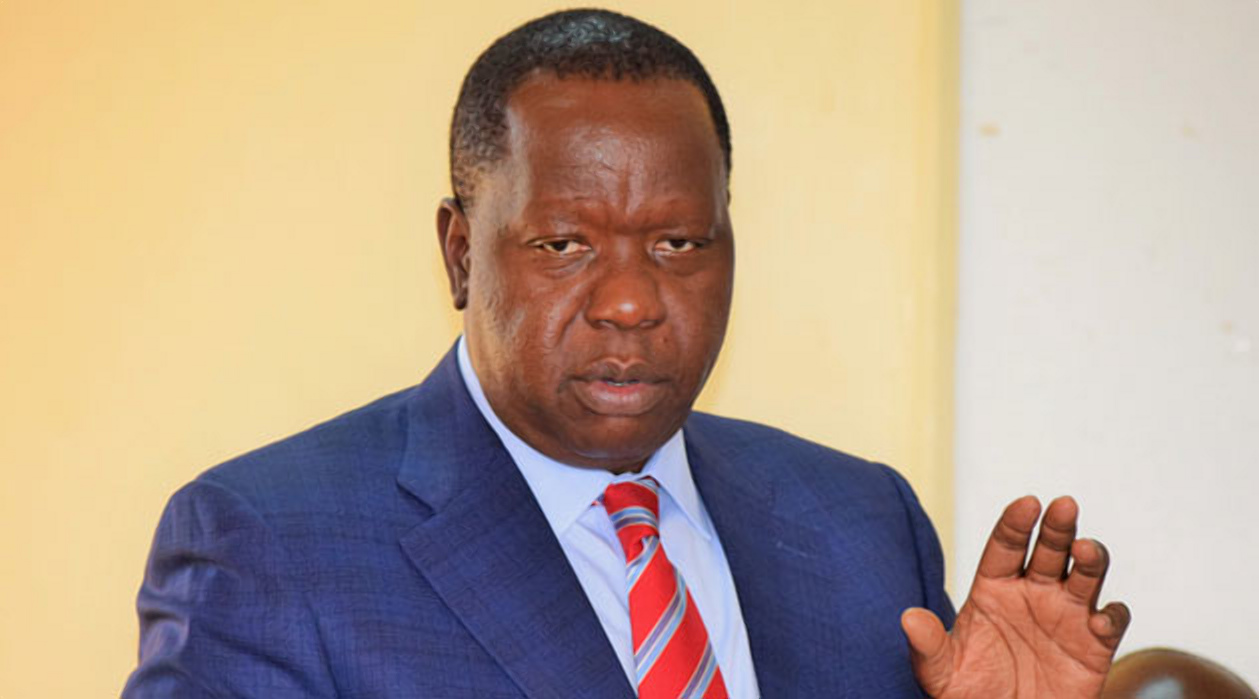
Matiang’i Calls for Full Disclosure in Major Investment Projects, Says Public Has Right to Know
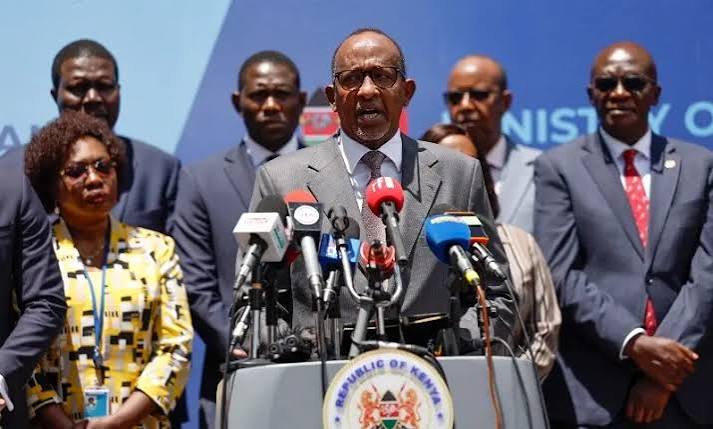
Former Interior CS Fred Matiang’i has called for full disclosure of major investment projects, saying Kenya can welcome investors while ensuring the public has access to information on projects of significant national interest.
Former Interior Cabinet Secretary Fred Matiang’i has called for greater transparency in major investment projects being undertaken in Kenya, arguing that welcoming investors should not prevent the public from seeking information about agreements involving projects of significant national interest.
Matiang’i said Kenya remains open to investors and should continue creating an environment that attracts both local and international capital. However, he maintained that projects involving substantial financial commitments and public interest should be accompanied by adequate disclosure.
“We welcome investors to our country, but when projects of that magnitude are being done, I don’t understand why there should be a problem with full disclosure when it is being demanded by the public,” Matiang’i said.
His remarks come amid growing public debate over the transparency of major investment and infrastructure projects, particularly those involving the government, foreign investors and public resources.
The former Cabinet Secretary's position reflects a wider argument over how Kenya can balance the need to attract investors with the constitutional and public demand for accountability.
For Matiang’i, the two objectives should not be viewed as competing interests. He argues that investment and transparency can exist together, particularly where taxpayers and public institutions have a direct or indirect stake in a project.
Public interest at the centre of disclosure debate
The debate over disclosure has gained prominence following questions raised by political leaders and sections of the public concerning major projects announced by the government.
Supporters of greater disclosure argue that Kenyans should be able to understand the ownership structures, financing arrangements, government commitments and expected benefits of projects that could have a long-term impact on the economy.
Opponents of excessive disclosure requirements, however, often point to the need to protect commercially sensitive information and maintain investor confidence.
The debate therefore revolves around where the line should be drawn between legitimate commercial confidentiality and information that the public has a right to access.
Matiang’i’s argument is that the scale of a project matters. Where a project is small and privately financed, there may be limited public interest in its contractual details. However, where the government is involved or public resources could be committed, he believes the demand for information becomes more legitimate.
His comments come at a time when Kenya is positioning itself as a major investment destination in East Africa, with the government seeking foreign capital for energy, manufacturing, infrastructure, housing, transport and other sectors.
The administration has repeatedly presented foreign direct investment as an important component of economic growth, arguing that large-scale investments can create employment, expand the tax base and strengthen local industries.
Matiang’i did not dispute the importance of attracting such investments. Instead, his emphasis was on ensuring that Kenyans are adequately informed about projects that could have significant economic or public consequences.
Questions over major projects
The discussion has particularly intensified around the proposed Dangote East Africa Refinery in Lamu.
President William Ruto officially launched the project on September 30, 2026, with the refinery described as a major investment with an estimated value of Sh2.2 trillion.
The project has attracted significant political and public attention because of its scale and the potential implications for Kenya's petroleum sector.
Opposition leaders have subsequently demanded more information about the ownership and financing arrangements surrounding the refinery.
People's Party of Kenya leader Ndindi Nyoro has called for disclosure of the refinery's shareholding structure, arguing that Kenyans should be able to scrutinise details surrounding a project of such national significance.
The demands have also focused on the government's proposed involvement in the project and questions about how any public contribution would be financed.
These concerns have placed transparency at the centre of the conversation surrounding the refinery.
The government, on the other hand, has continued to promote the project as a major investment opportunity capable of transforming Kenya's petroleum industry and strengthening the country's position as a regional economic hub.
The debate illustrates the broader challenge facing governments across Africa: attracting large investors while ensuring that citizens understand the agreements that underpin major projects.
Transparency and investor confidence
Matiang’i’s remarks raise an important question about whether greater transparency necessarily discourages investors.
For governments seeking investment, investor confidence is critical. Companies typically consider political stability, infrastructure, taxation, regulation, market access and the predictability of government policy before committing billions of shillings to a project.
There is therefore an argument that governments should avoid unnecessary disclosure of confidential commercial information that could disadvantage investors or expose sensitive negotiations.
At the same time, transparency is a key element of public accountability, particularly where government institutions are involved.
Matiang’i’s position appears to focus on striking a balance between these two considerations.
His argument is that investors should not be treated as though they require secrecy as a condition for doing business in Kenya.
Instead, he suggests that a transparent environment can help strengthen public confidence in major investments.
When citizens understand who owns a project, how it is financed, what obligations the government has assumed and what benefits are expected, they are better placed to assess the project and hold public officials accountable.
The G2G fuel deal debate
Matiang’i has previously made similar calls for transparency in relation to Kenya's Government-to-Government petroleum importation arrangement.
In September, he renewed his demand for the full publication of the G2G fuel agreement following remarks by Ugandan President Yoweri Museveni regarding the role of intermediaries in petroleum supplies through Kenya.
Matiang’i argued that Kenyans should have access to the agreement and information about the companies involved in implementing it.
He also called for the role of intermediaries to be examined and for the National Oil Corporation of Kenya to regain what he described as its proper role in securing fuel supplies and helping stabilise the domestic market.
The former CS has therefore consistently linked transparency with public accountability, particularly when government arrangements have a direct effect on consumers or involve public institutions.
The G2G fuel debate has also demonstrated how questions about contracts, pricing and intermediaries can become matters of national concern when they affect fuel costs and the wider economy.
What should be disclosed?
The demand for full disclosure raises another question: what exactly should the public be told?
Transparency does not necessarily mean publishing every commercially sensitive document or revealing information that could compromise legitimate business interests.
However, members of the public and oversight institutions may reasonably seek information about matters such as the identity of major shareholders, government financial commitments, ownership structures, public guarantees, taxation arrangements and expected economic benefits.
For large public-private projects, Kenyans may also want to know the responsibilities of each party and what happens if the project fails to meet agreed targets.
Such information can help citizens understand whether the risks and benefits of a project are being shared fairly between the government and private investors.
It can also help Parliament, oversight bodies, journalists and civil society organisations conduct independent scrutiny.
The challenge is ensuring that disclosure requirements are clear, predictable and applied consistently.
If investors know from the beginning which information is subject to public disclosure, they can factor those requirements into their negotiations with the government.
This could potentially reduce uncertainty while maintaining accountability.
Balancing investment with accountability
Kenya is competing with other countries for international investment.
Governments across the region are offering incentives, improving infrastructure and establishing policies aimed at attracting companies capable of bringing capital, technology and employment opportunities.
Kenya therefore needs to remain competitive.
But attracting investment is only one part of the equation.
The country must also ensure that investments contribute to broader economic objectives and that agreements entered into by public institutions serve the national interest.
This is where transparency becomes important.
If the public believes that a major investment has been negotiated behind closed doors without adequate explanation, suspicion can grow even when the project itself may have significant economic potential.
Conversely, providing credible information can help address concerns and allow the public to evaluate a project based on facts rather than speculation.
The same principle applies to government-to-government agreements.
Where taxpayers ultimately bear some of the financial or economic consequences of an agreement, citizens have an interest in understanding the arrangement.
A wider political debate
Matiang’i’s comments also come as political parties and leaders position themselves ahead of the 2027 General Election.
As one of the political figures involved in the emerging opposition debate, Matiang’i has increasingly spoken on issues of governance, accountability, public spending and economic management.
His remarks on transparency therefore form part of a broader political conversation about how government decisions should be made and communicated to citizens.
However, the question of disclosure extends beyond political competition.
Major investment projects can remain in place for decades and may affect several administrations.
Their economic consequences can extend well beyond the tenure of the officials who negotiate them.
That makes transparency particularly important, because long-term projects should ideally be evaluated on their economic and public merits rather than solely through the political lens of the administration that initiated them.
The role of Parliament and oversight institutions
Parliament also has an important role to play in examining major agreements involving public resources.
Legislators can question government officials, examine financing arrangements and seek clarification on contractual obligations.
Other oversight institutions can similarly scrutinise government expenditure and procurement processes where their mandates allow.
Independent journalism and public participation can also contribute to accountability by examining available information and asking questions on behalf of citizens.
For transparency to be meaningful, however, information must be accessible, understandable and provided in a timely manner.
Simply releasing documents without explaining their implications may not be sufficient for ordinary citizens.
Government agencies and investors can therefore help by communicating clearly about the objectives of major projects, their financing, expected benefits and potential risks.
Investment and public trust
At the heart of Matiang’i’s argument is the issue of public trust.
Large-scale investments can transform economies, but they can also generate controversy if citizens feel excluded from discussions about decisions that affect them.
A transparent process can help build confidence among citizens, investors and other stakeholders.
For investors, certainty and credibility are important.
For citizens, accountability and fairness are equally important.
The challenge for policymakers is to create a framework that accommodates both.
Matiang’i's remarks suggest that Kenya does not have to choose between welcoming investors and demanding accountability.
Instead, he argues that the country can remain open for business while maintaining a clear expectation that major projects will be subjected to appropriate scrutiny.
Looking ahead
As Kenya continues to pursue large investments in energy, manufacturing, infrastructure and other sectors, questions about transparency are likely to remain part of the national conversation.
The government is expected to continue seeking partnerships with international companies capable of financing and implementing projects that require billions of shillings.
At the same time, citizens, civil society organisations, journalists and political leaders are likely to continue asking questions about the terms under which such investments are undertaken.
The central issue will therefore be how Kenya balances commercial confidentiality with the public's legitimate interest in government decisions.
Matiang’i's latest comments add to that debate by arguing that investors should be welcomed while major projects remain subject to public scrutiny.
His position is that the scale and importance of an investment should strengthen, rather than weaken, the case for transparency.
For Kenya, the challenge is to ensure that disclosure rules are applied fairly and consistently, protecting legitimate business information while providing citizens with sufficient information to understand agreements that may affect public resources and national interests.
As the country seeks to attract more capital and accelerate development, the balance between investment, transparency and accountability will remain an important policy question.
Ultimately, major projects are expected to deliver benefits not only to investors and government institutions but also to the wider Kenyan public. Ensuring that citizens can access credible information about such projects may therefore be an important part of maintaining public confidence in Kenya's investment agenda.

You Might Also Like
-
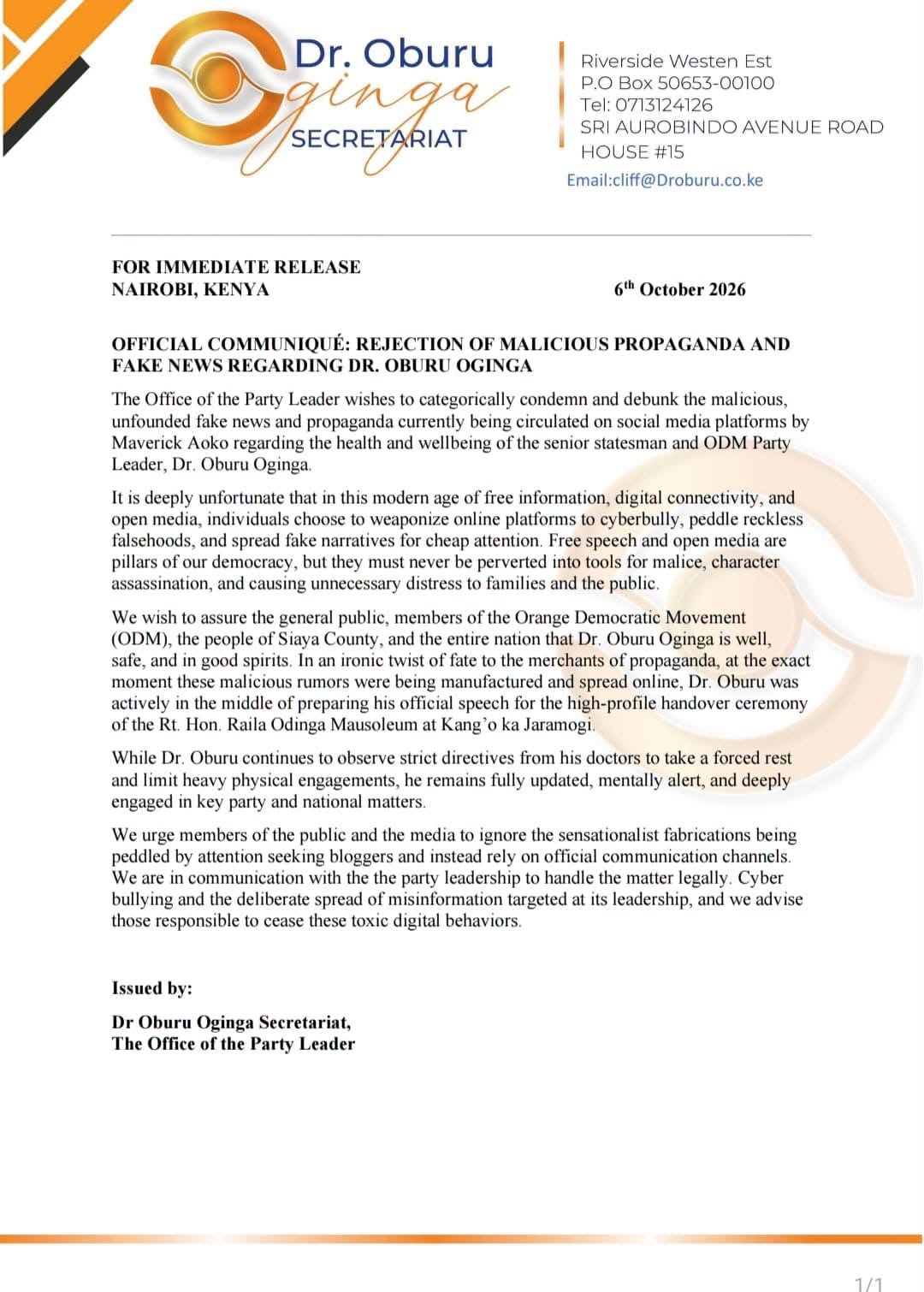
Dr. Oburu Oginga’s Secretariat has dismissed reports on his health, saying the ODM Party Leader is safe, in good spirits and recovering while following doctors’ advice.
-
President William Ruto will lead the dedication and official commissioning of the late Raila Odinga’s mausoleum at Kang’o Ka Jaramogi in Bondo, Siaya County.
-
Kenya's first confirmed Ebola case and the death of the patient at Nairobi Hospital have triggered an urgent response from KMPDU, which is demanding stronger protection for frontline healthcare workers and greater preparedness across health facilities. The union wants exposed healthcare workers to
-
 Deputy President Kithure Kindiki toured Kiambu County today, October 6, 2026, where he inspected development projects and announced plans to invest Sh290 million in student hostels at the KMTC Kiambaa Campus, alongside the expansion of the institution's tuition facilities. Kindiki said the governmen
 -
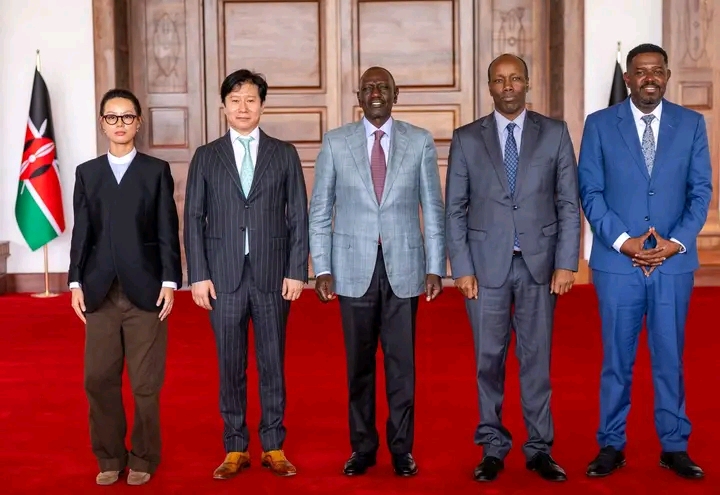
President William Ruto's witnessing of the signing of the US$3 billion, approximately KSh390 billion, electric mobility MoU marks an important development in Kenya's push for manufacturing, technology and green transportation. The proposed project includes electric vehicle assembly, production of tw
-
Kenya has confirmed its first Ebola case after a patient who had travelled from the Democratic Republic of Congo died while undergoing treatment in Nairobi. Health authorities are tracing and monitoring people who may have been exposed.