



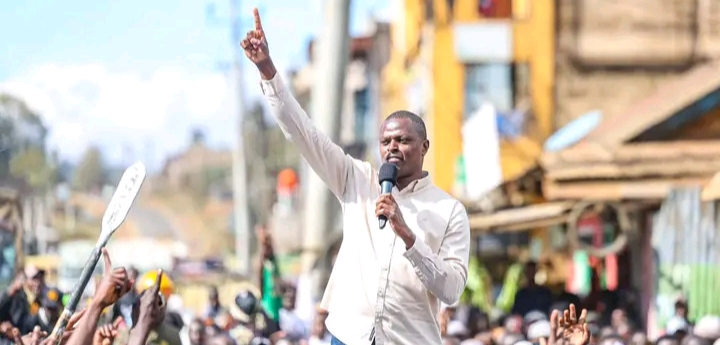
Ndindi Nyoro Gives Ruto 14 Days to Reveal the Secret Dangote Refinery Deal
Ndindi Nyoro's 14-day ultimatum to President William Ruto has intensified scrutiny of the proposed Dangote East Africa Refinery just days after its groundbreaking in Lamu. While the government presents the project as a historic investment capable of transforming Kenya's energy sector and strengthening East African industrialisation, Nyoro and other critics want Kenyans to see the actual agreement and understand the commitments made by the State. At the heart of the dispute is the question of whether a project involving billions of dollars, government assets and strategic national interests should be accompanied by full public disclosure. As the 14-day deadline approaches, attention will be focused on how President Ruto's administration responds and whether the details sought by Nyoro and other critics will be made available. The debate is therefore no longer simply about whether Kenya should host the Dangote refinery. It is increasingly about how the project will be financed, who will own it, what Kenya is contributing, what Kenyans will receive and whether the agreement adequately protects the country's long-term interests.
Kiharu Member of Parliament and People’s Party of Kenya (PPK) leader Ndindi Nyoro has given President William Ruto 14 days to make public the agreement between the Kenyan government and Dangote over the planned Dangote East Africa Refinery in Lamu, intensifying the political debate surrounding the multi-billion-dollar investment. Nyoro says Kenyans have a right to examine the terms of the agreement, particularly because public resources and national assets could be involved in the project.
The demand comes shortly after President Ruto and Nigerian businessman Aliko Dangote officially broke ground for the proposed refinery in Lamu on September 30, 2026. The project has been presented by the government and its investors as a major industrial investment that could transform Kenya's energy sector, strengthen regional fuel security and position Lamu as a major petroleum hub in East Africa.
Nyoro's 14-day ultimatum
Nyoro issued the ultimatum while speaking in Kirinyaga during the funeral of Mwalimu Jackson Karua on October 3. He challenged President Ruto to release the agreement within 14 days so that Kenyans can scrutinise the commitments made by the government.
The PPK leader said his demand should not be interpreted as opposition to foreign investment. Instead, he argued that major investment agreements involving the government should be subjected to transparency and public scrutiny.
Nyoro's position is that while Kenyans may welcome the refinery and the economic opportunities associated with it, they also need to understand exactly what Kenya has committed to the project and what the country stands to receive in return.
His remarks have therefore shifted the discussion from simply celebrating the refinery investment to examining the contractual, financial and ownership arrangements behind it.
Questions about ownership and shareholders
One of the major issues Nyoro has raised concerns the ownership structure of the refinery.
Earlier in October, he demanded the publication of the names of the shareholders in Dangote East Africa Petroleum, together with information showing how shares will be divided between the various investors and governments. He has also questioned the proposed stake that Kenya and other East African governments are expected to acquire.
According to reports, the regional governments could collectively hold approximately 30 percent of the refinery, while the project is expected to provide opportunities for public participation through share ownership.
President Ruto has also indicated that Kenya intends to use assets, including land, as part of its contribution and that the National Infrastructure Fund would play a role in the investment. These statements have prompted questions about how the government's contribution will be valued and converted into equity.
Nyoro wants those details contained in the actual agreement to be made available to the public rather than relying solely on statements from government officials.
The issue of public resources
Another major concern raised by Nyoro relates to land and other assets that could be committed to the project.
The proposed refinery is a massive undertaking and requires significant land and infrastructure. Nyoro has questioned the amount of land being allocated and the value of that land, particularly where taxpayers may have financed compensation for affected landowners.
He wants Kenyans to understand whether land provided by the government will simply be made available to the investor or whether its value will be converted into an ownership stake in the refinery.
These questions have become increasingly important because the project is expected to involve significant public and private investment. Nyoro argues that Kenyans should therefore be able to establish exactly what the country is contributing and what it will receive in exchange.
A $16 billion project
The Dangote refinery project is estimated at about $16 billion, making it one of the largest proposed investments in Kenya and the wider East African region.
The facility is planned for Lamu and is expected to have the capacity to process up to 700,000 barrels of crude oil per day when completed. The project is intended to serve markets across East Africa and reduce the region's dependence on imported refined petroleum products.
The project is also expected to be supported by extensive infrastructure and energy facilities. Its promoters have presented it as more than simply a refinery, arguing that it could stimulate industrialisation, create employment, attract additional investors and increase economic activity around Lamu.
Reuters reported that the refinery is expected to be completed around 2030 and that the project could become a major source of refined petroleum products for Kenya and neighbouring countries.
Government defends the investment
The Ruto administration has continued to defend the refinery project, portraying it as a strategic investment that could transform Kenya's energy and industrial sectors.
The President has previously said Kenya will not receive the project for free but will use its assets and the National Infrastructure Fund to participate in the investment. The government has also maintained that the project will create opportunities for Kenyans to participate in ownership.
However, critics argue that these broad explanations are not enough and that Kenyans need access to the contractual documents to establish the precise terms.
That is the gap Nyoro is seeking to address with his 14-day demand.
Ruto says Parliament can access the agreement
The debate has also involved questions about whether the refinery agreement should be made publicly available immediately.
President Ruto has defended his administration against criticism over the deal and has indicated that the agreement can be obtained through parliamentary channels. This position has not satisfied all critics, who argue that a project involving major public interests should be subjected to broader disclosure.
Nairobi Senator Edwin Sifuna has also entered the debate, arguing that Kenyans have a constitutional right to access information held by the State. He has referred to Article 35 of the Constitution, particularly in relation to agreements involving major government commitments.
The discussion therefore extends beyond politics and touches on broader questions about transparency, accountability and public access to government information.
Legal scrutiny also emerges
The refinery project is facing scrutiny from outside Parliament as well.
Reuters reported on October 2 that a consumer-rights group had filed a legal challenge concerning the project, citing concerns about transparency and the disclosure of important information. The legal challenge adds another layer of scrutiny to a project that has already attracted questions over land, environmental issues and public participation.
The existence of these concerns means the government could face increasing pressure to explain the investment arrangements in greater detail.
For Nyoro, disclosure would allow Kenyans to determine whether the agreement adequately protects national interests.
Concerns about financial obligations
Another question at the centre of the debate is whether the refinery agreement could create financial obligations for the Kenyan government.
Opposition figures want to know whether taxpayers could eventually be required to finance part of the project, provide guarantees or honour purchasing commitments.
Nyoro has specifically called for disclosure of the commitments Kenya has made, including arrangements concerning the purchase of petroleum products and the prices involved.
Such information would help Parliament, investors and ordinary citizens understand the financial implications of the project.
The issue is particularly significant because the refinery is expected to involve billions of dollars in investment. Even a relatively small government commitment could translate into substantial public expenditure over many years.
Supporters point to economic benefits
Despite the controversy, the Dangote refinery has attracted considerable support from those who believe it could transform Kenya's economy.
Supporters argue that local refining could reduce dependence on imported petroleum products, strengthen energy security and create new industrial opportunities.
The refinery is also expected to create employment during construction and operation while stimulating demand for transport, logistics, engineering, manufacturing and other services.
Its location at Lamu could further strengthen the importance of Lamu Port as a regional trade and logistics centre.
The project's promoters have also presented it as an African-led investment that could benefit several countries in the region.
Transparency remains the central issue
Nyoro's 14-day ultimatum has consequently placed transparency at the centre of the Dangote refinery debate.
The politician says the issue is not about rejecting Dangote or discouraging foreign investors. Instead, he wants the public to know the details of the agreement before Kenya commits itself to arrangements that could have long-term consequences.
This distinction is important because Kenya is seeking major foreign investment while also facing growing public demands for accountability over government contracts.
The government must therefore balance two objectives: protecting commercially sensitive information where necessary while providing sufficient information to demonstrate that public interests have been safeguarded.
What Kenyans will be watching
The next major question is whether the government will respond to Nyoro's 14-day deadline by releasing the agreement or providing further details about its contents.
Kenyans are likely to pay particular attention to the project's ownership structure, the government's proposed stake, the value and status of land being contributed, financing arrangements, public participation, petroleum supply commitments and any potential liabilities for taxpayers.
The disclosure debate could also influence public confidence in the refinery itself.
If the government releases comprehensive documentation, it could help address some of the questions being raised by politicians, civil society and members of the public. If it does not, the controversy could continue to grow.

You Might Also Like
-
Dr. Oburu Oginga’s Secretariat has dismissed reports on his health, saying the ODM Party Leader is safe, in good spirits and recovering while following doctors’ advice.
-
President William Ruto will lead the dedication and official commissioning of the late Raila Odinga’s mausoleum at Kang’o Ka Jaramogi in Bondo, Siaya County.
-
Kenya's first confirmed Ebola case and the death of the patient at Nairobi Hospital have triggered an urgent response from KMPDU, which is demanding stronger protection for frontline healthcare workers and greater preparedness across health facilities. The union wants exposed healthcare workers to
-
 Deputy President Kithure Kindiki toured Kiambu County today, October 6, 2026, where he inspected development projects and announced plans to invest Sh290 million in student hostels at the KMTC Kiambaa Campus, alongside the expansion of the institution's tuition facilities. Kindiki said the governmen
 -
President William Ruto's witnessing of the signing of the US$3 billion, approximately KSh390 billion, electric mobility MoU marks an important development in Kenya's push for manufacturing, technology and green transportation. The proposed project includes electric vehicle assembly, production of tw
-
Kenya has confirmed its first Ebola case after a patient who had travelled from the Democratic Republic of Congo died while undergoing treatment in Nairobi. Health authorities are tracing and monitoring people who may have been exposed.