Pioneer Affordable Housing Project in Eldoret: 21-Year-Old Abigael Chepkemboi’s Bedsitter Ownership Story Sparks Online Debate
The Pioneer Affordable Housing Project in Eldoret has become a significant talking point following President William Ruto's handover of keys to 2,157 homeowners on October 18, 2026. The KSh5.3 billion development combines residential units with commercial, educational and recreational facilities, while the government says the broader programme is also creating opportunities for local businesses and artisans. Among the stories emerging from the handover, 21-year-old Abigael Chepkemboi's ownership of a bedsitter has attracted particular attention. As an electrical engineering student, she represents a young homeowner whose achievement has encouraged discussion about financial independence, early property ownership and the possibilities available to Kenya's younger generation. Her story is inspiring, but it also highlights the need for a wider conversation about fair access to housing, transparent financing and the economic realities facing young people.
The Pioneer Affordable Housing Project in Eldoret has attracted widespread public attention after President William Ruto handed over keys to 2,157 homeowners, marking an important milestone in the government's affordable housing programme. The event has generated conversations both online and offline, particularly after the story of 21-year-old Abigael Chepkemboi, who owns a bedsitter in the development, drew attention to the changing possibilities of homeownership among young Kenyans.For many Kenyans, owning a house remains a major financial goal that can take years of saving, borrowing and sacrificing other needs. The rising cost of construction materials, expensive land in urban areas and increasing rental expenses have made homeownership difficult, particularly for young people entering the job market.
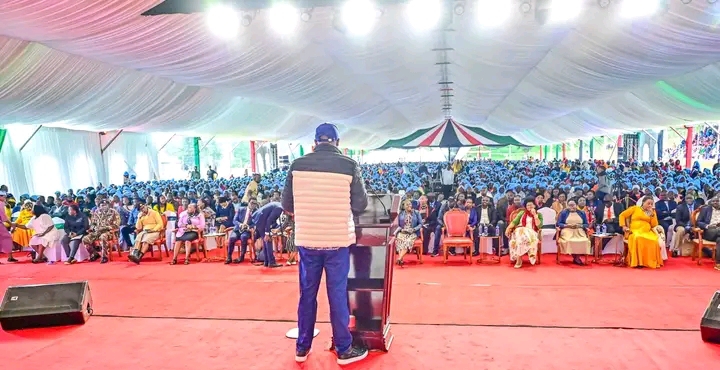
Against this background, the Pioneer project has become a focal point in the national conversation about whether affordable housing programmes can provide a realistic pathway for ordinary citizens to acquire homes. Abigael's story has added a personal dimension to the discussion, with her age prompting questions about financial discipline, access to housing opportunities and the future of homeownership for Kenya's younger generation.President William Ruto officially handed over keys to 2,157 homeowners at the Pioneer Affordable Housing Project on Sunday, October 18, 2026, during his development tour of the North Rift region. The KSh5.3 billion development is part of the government's Affordable Housing Programme, which aims to increase access to decent homes while supporting employment and economic activity.
The handover marked a significant moment for beneficiaries who had been waiting to take possession of their homes. For the new homeowners, receiving the keys represented more than a formal ceremony; it marked the beginning of a new chapter involving housing security, financial commitments and the opportunity to establish roots in a growing city.The project is also an example of the government's effort to combine residential accommodation with facilities that make an estate more convenient for its residents. Rather than constructing apartments alone, the development incorporates commercial spaces, recreational facilities and areas intended to serve families and the wider community.
The event attracted attention because of the scale of the development and the diversity of people who stand to benefit from the housing programme. Among the most discussed stories was that of Abigael Chepkemboi, a 21-year-old electrical engineering student who owns a bedsitter at the estate. President Ruto highlighted her achievement while explaining the government's ambition to make homeownership accessible to people who might otherwise struggle to purchase a house through conventional arrangements. Abigael is an electrical engineering student, making her achievement particularly notable because she is still pursuing her education while taking a significant step towards property ownership.
Her story has resonated with young people who face uncertainty about employment, income and the cost of living. Many students leave college with the expectation that they must first secure a stable job, earn a regular salary and spend several years saving before considering property ownership.
Abigael's example has brought a different possibility into the discussion: that some young adults may begin the process of acquiring a home while still studying or building their careers, depending on their financial circumstances and the available payment arrangements.However, her achievement should not be interpreted as evidence that every young Kenyan can easily afford a house. Individuals have different incomes, family responsibilities, savings and access to financial support. Her circumstances and the precise financing arrangements behind her purchase should be understood on their For many Kenyans, homeownership is associated with middle age, years of employment and accumulated savings. Seeing a university student among the beneficiaries of a major housing development has therefore prompted discussion about financial planning, opportunity and the affordability of property in Kenya.
Some of the public interest centres on the possibility of young people acquiring property before completing their education. Others are likely to question how accessible the same opportunity would be to students without family assistance, a steady income or substantial savings.
These are important questions, especially in a country where young people face difficulties securing employment and meeting everyday expenses. Owning a home can reduce exposure to future rental increases, but property ownership also involves continuing financial responsibilities.The Pioneer development is a substantial residential investment designed to provide housing alongside community amenities. According to reports on the October 18 handover, the KSh5.3 billion estate includes 104 shops, a kindergarten, playgrounds, green open spaces, a clubhouse and a swimming pool. Plans also include a junior school, two basketball courts and a football pitch.
These facilities are intended to support a residential environment where people can live, raise families, access basic services and participate in recreational activities.
The 104 shops are particularly significant because they could create opportunities for traders and small businesses serving residents. As more households settle into the estate, demand for groceries, food, household goods and other everyday services could create opportunities for entrepreneurs.
The inclusion of recreational facilities also highlights a broader approach to housing development. Modern residential planning involves more than the number of apartments constructed; it also considers shared spaces, accessibility and the quality of the surrounding environment.
Nevertheless, the story has given a human face to a large public housing project. While figures such as billions of shillings invested and thousands of completed units demonstrate the scale of construction, the experience of an individual homeowner helps illustrate what the programme is intended to achieve.President Ruto said KSh264 million in opportunities had gone to 84 Jua Kali associations in Eldoret through activities connected to the project. He also cited opportunities valued at KSh3.8 billion for artisans across the North Rift and KSh61 billion nationally. These figures were presented as part of the government's account of how the housing programme supports local enterprise.
The construction sector supports various occupations, including masonry, plumbing, electrical installation, painting, metalwork and transport. Housing developments can also create demand for suppliers, retailers and service providers.
For local artisans, participation in public projects may offer an opportunity to earn income, expand their businesses and acquire experience that can be used in future contracts.
The government has also highlighted the involvement of local artists, including painters, in beautifying housing developments. Such activities can provide work for people in the creative economy while contributing to the appearance of residential spaces.More Housing Projects Planned for Eldoret
The Pioneer handover forms part of a wider plan to expand housing provision in Uasin Gishu County.
President Ruto outlined additional developments, including 2,231 homes at Eldoret Railway City, 1,800 units at Kidiwa Phase Two and approximately 2,000 homes at Lumumba. He also said that 12,429 affordable housing units worth KSh29.9 billion were planned or under construction across the county.
These plans reflect the government's intention to respond to housing demand as Eldoret continues to develop as a major urban centre.Although the handover was a milestone for the 2,157 homeowners, the wider debate around affordability remains important.
A house described as affordable is not automatically within the financial reach of every household. The real cost to an individual depends on the price of the unit, deposit requirements, instalments, financing terms and other household expenses.
The official Boma Yangu project listing has previously displayed different unit categories and prices, including social housing options and larger affordable or market-rate apartments. These listings help illustrate that the estate serves different housing categories rather than one uniform price level. Actual availability and current terms should be confirmed through the official programme.

You Might Also Like
-
Self-proclaimed preacher Paul Mackenzie and 29 co-accused have been found guilty on all 191 murder counts in the Shakahola case, marking a major development in one of Kenya’s most disturbing criminal investigations. The case is linked to the deaths of followers associated with Mackenzie’s Good N
-
President William Ruto has received the APSCA 2026 Continental Leadership Award for Visionary Governance and Human Capital Transformation, with Deputy Head of Public Service Amos Gathecha accepting the honour on his behalf. The recognition highlights the importance of leadership, effective governanc
-
Kenya is expected to experience varied weather conditions during this week's forecast period, with rainfall anticipated across western Kenya, the Lake Victoria Basin, the Rift Valley, Central Kenya, Nairobi and selected eastern and coastal areas. Thunderstorms are possible in some locations, while o
-
Siaya Governor James Orengo has condemned attacks and alleged propaganda directed at the Odinga family, describing them as a betrayal of the political struggles and sacrifices associated with the late former Prime Minister Raila Odinga. His remarks come amid growing political tensions over Raila’s
-
Over 6,000 widows meet in Kericho.Led by Governor Eric Mutai, Woman Representative Beatrice Kemei and Principal Secretary Ann Wangombe, the initiative brought attention to the need for sustainable programmes that enable widows to support their families and participate meaningfully in community devel
-
The decision by some farmers in Kapkoros, Bomet Central, to begin uprooting tea bushes has brought renewed attention to the challenges facing smallholder tea growers in Kenya. The reported KSh17-per-kilogramme bonus at Kapkoros for the 2025/2026 financial year has added to concerns about rising pro