President Ruto Assents to County Governments Additional Allocations Bill, 2026, at Eldoret State Lodge
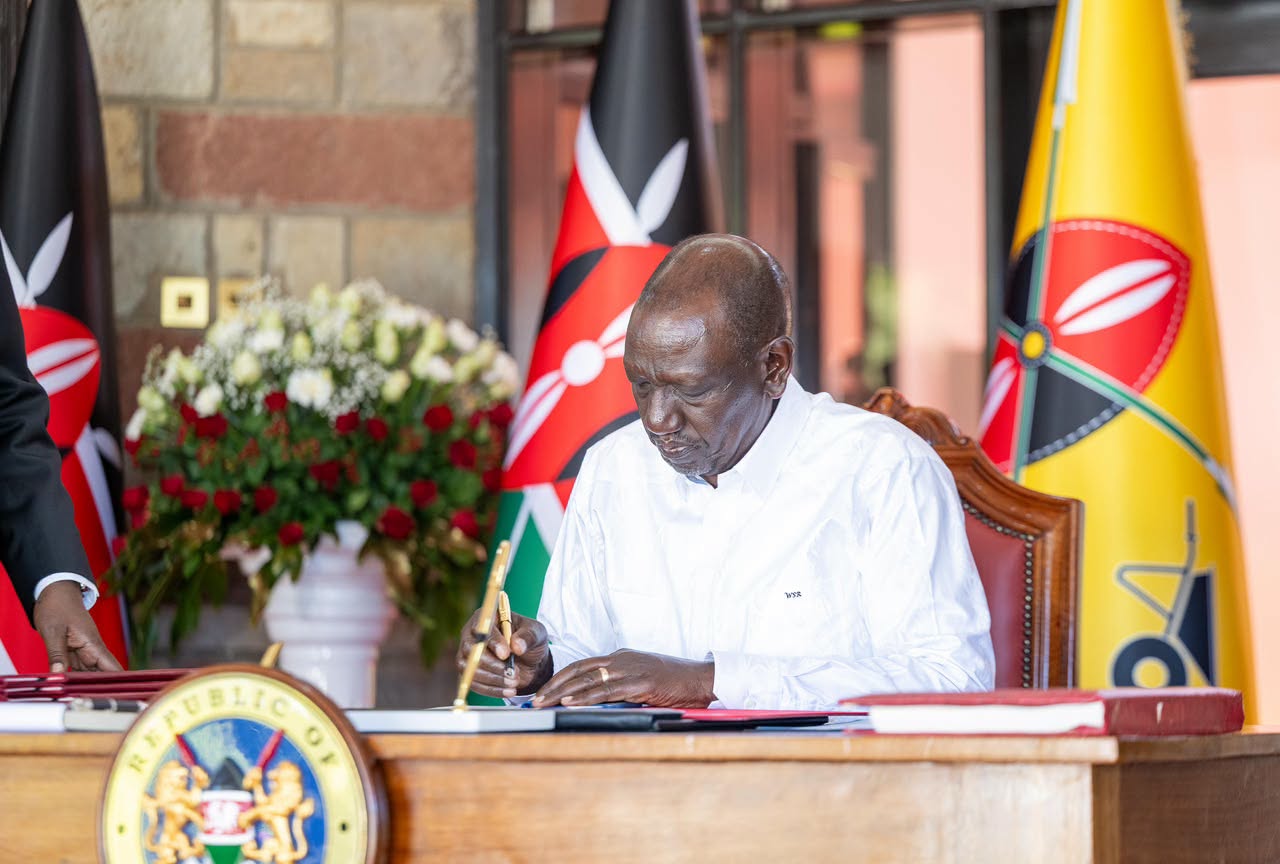
President William Ruto has assented to the County Governments Additional Allocations Bill, 2026, at Eldoret State Lodge in Uasin Gishu County. The legislation is expected to strengthen devolution by providing additional resources to county governments to support development projects and improve service delivery. The move highlights the importance of collaboration between the national government and county administrations in advancing Kenya’s development agenda. County governments play a critical role in delivering essential services, including healthcare, water, agriculture, and local infrastructure. The additional allocations are expected to help counties address the needs of residents, support ongoing development programmes, and improve access to public services. Effective utilisation of the resources will be crucial in ensuring that the funds translate into tangible benefits for communities across the country. The government continues to emphasise the importance of devolution in promoting equitable development and improving the welfare of Kenyans. Attention will now focus on how county governments utilise the additional resources to accelerate development and strengthen service delivery.
President William Ruto has assented to the County Governments Additional Allocations Bill, 2026, at Eldoret State Lodge in Uasin Gishu County, marking an important step in the legislative process governing additional funding for county governments.
The development places renewed focus on the financing of devolved units and the resources available to county administrations to support public services, development projects and other responsibilities assigned to them under Kenya’s devolved system of government.
The County Governments Additional Allocations Bill, 2026, concerns the provision of additional allocations to county governments. Such allocations are an important part of Kenya’s public finance framework because county administrations rely on funds from the national government and other legally recognised sources to finance their operations and deliver services to residents.
Presidential assent is a significant stage in the legislative process, marking the President’s formal approval of a Bill passed through Parliament. The legal effect and implementation arrangements of the legislation depend on its provisions and the applicable commencement requirements.
The signing at Eldoret State Lodge also brings attention to the role of Uasin Gishu County in hosting a presidential engagement focused on legislation affecting county governments across the country.
While the specific amounts, distribution formula and conditions attached to the 2026 additional allocations should be established from the final enacted law and its accompanying documents, the legislation highlights the continuing importance of financial cooperation between the national government and county administrations.
Kenya introduced devolution under the 2010 Constitution, establishing 47 county governments with responsibilities that include healthcare services, county roads, agriculture, local planning, markets and other functions outlined in the Constitution.
The financing of these responsibilities remains central to the effectiveness of devolution and the ability of county governments to respond to the needs of their residents.
Funding for County Governments
The County Governments Additional Allocations Act, 2026, provides for approximately KSh71.09 billion in additional resources for county governments during the 2026/2027 financial year. The amount is intended to support various county programmes and devolved functions through a combination of national government funding and resources from development partners.
The allocation represents an increase from approximately KSh70.67 billion provided for the previous financial year, reflecting changes in the funding arrangements for county programmes.
The additional funding is separate from the equitable share of nationally raised revenue allocated to counties through the wider revenue-sharing framework. It provides another mechanism through which specific programmes and projects can receive financial support.
For county administrations, access to these funds is important because devolved units are responsible for delivering a wide range of services that directly affect residents. These include county healthcare facilities, agricultural extension services, local roads, markets, urban planning and other functions assigned to counties under the Constitution.
The amount received by each county and the conditions attached to particular allocations depend on the schedules and provisions contained in the enacted law.
The funding is not necessarily distributed equally among all 47 counties. Some allocations are conditional and designated for particular programmes, while others depend on specific financing arrangements or eligibility requirements.
Supporting Healthcare and Community Services
Healthcare is among the important areas supported through additional allocations to county governments.
County administrations manage many essential health services, including county hospitals, health centres, dispensaries and community-level healthcare programmes. These facilities provide services to residents in both urban and rural areas.
Additional funding designated for healthcare can help counties implement specific programmes, meet eligible expenditure and strengthen the delivery of services within their mandates.
The associated funding framework includes allocations for Community Health Promoters and support towards transitioning Universal Health Coverage workers to permanent and pensionable terms. The allocations include KSh3.23 billion for Community Health Promoters and KSh8.61 billion towards the transition of UHC workers to permanent and pensionable terms.
Community Health Promoters play a role in connecting households with the healthcare system through health education, basic follow-up and referrals to health facilities.
Their work can be particularly important in communities where residents face challenges accessing medical services or travelling long distances to hospitals.
The proposed transition of eligible UHC workers to permanent and pensionable terms also highlights the importance of staffing arrangements and workforce stability in delivering public healthcare.
The actual impact of these allocations will depend on how the funds are released, the applicable conditions and the ability of the relevant institutions to implement the programmes effectively.
Strengthening Devolution Across the 47 Counties
Devolution remains one of the defining features of Kenya's constitutional framework.
The establishment of 47 county governments was intended to bring decision-making and public services closer to the people while allowing local administrations to address needs specific to their areas.
Counties have different development priorities depending on population, geography, economic activity and infrastructure needs. Some may place greater emphasis on healthcare access, while others may prioritise agricultural services, urban development, local roads or water-related projects.
Additional allocations can support these priorities when the funds are directed towards their intended purposes and managed in accordance with the law.
For residents, the value of devolution is often experienced through everyday services: whether a local health facility has the necessary supplies, whether roads are accessible, whether markets are properly maintained and whether agricultural support reaches farmers.
County governments must therefore ensure that resources are used transparently and in line with approved budgets and the conditions attached to the funding.
The national government, Parliament, county assemblies and relevant oversight institutions also have responsibilities in ensuring that public money is accounted for and that allocations deliver the intended results.
The signing of the Bill establishes the legislative basis for the additional allocations, but effective implementation will depend on the work that follows at both national and county levels.
Funding Development Programmes and Local Infrastructure
Beyond healthcare, additional allocations can contribute to county development programmes in areas such as agriculture, affordable housing, urban development and climate resilience.
Agriculture remains a major source of livelihoods in many parts of Kenya, making county-level support important for farmers who depend on extension services, market access and initiatives intended to improve productivity.
Where funding is designated for agricultural programmes, county administrations are responsible for implementing the relevant activities and ensuring that the intended beneficiaries receive support in accordance with the law.
The additional allocations framework also includes support for County Aggregation and Industrial Parks, which are intended to contribute to agricultural value addition and local economic activity. Other allocations are directed towards specific development programmes, including affordable housing-related initiatives and climate resilience.
Such programmes can help address local development challenges, although their effectiveness depends on implementation, financing conditions and proper oversight.
For urban areas, investments in planning and infrastructure can support the management of growing populations and the delivery of essential services. In rural communities, development programmes can address barriers to accessing markets and public facilities.
County administrations must identify their priorities within the applicable legal and budgetary frameworks while ensuring that conditional funding is used for its designated purpose.
Accountability and Proper Use of Public Funds
The release and management of additional allocations also place responsibility on county governments to demonstrate accountability.
Public funds must be spent according to approved budgets, applicable procurement rules and the conditions governing each allocation. County assemblies and oversight institutions have important roles in examining expenditure and monitoring the implementation of development programmes.
Residents also have a stake in understanding how their county receives and spends public money. Transparent reporting can help communities assess whether funded programmes are progressing and whether public resources are producing tangible results.
The signing of the Bill should therefore be followed by effective planning, timely implementation and clear reporting on how the funds are used.
The amounts allocated on paper are only one part of the process. The ultimate measure of their value will be whether the intended programmes are implemented and whether residents benefit from improved services and development opportunities.
President William Ruto’s assent to the County Governments Additional Allocations Bill, 2026, at Eldoret State Lodge in Uasin Gishu County marks an important step in providing additional resources for Kenya’s devolved units.
The legislation provides for approximately KSh71.09 billion in additional allocations for the 2026/2027 financial year, supporting programmes across areas that include healthcare, agriculture, housing-related initiatives and other devolved functions.
Attention will now turn to the implementation of the funding arrangements, compliance with the law and the ability of county administrations to use the resources effectively.
For Kenyans, the key question will be how these allocations translate into improved healthcare, stronger local services and meaningful development across the 47 counties.
As implementation proceeds, accountability, transparency and coordination between the national and county governments will remain essential to ensuring that the additional resources serve their intended purpose.

You Might Also Like
-
Self-proclaimed preacher Paul Mackenzie and 29 co-accused have been found guilty on all 191 murder counts in the Shakahola case, marking a major development in one of Kenya’s most disturbing criminal investigations. The case is linked to the deaths of followers associated with Mackenzie’s Good N
-
President William Ruto has received the APSCA 2026 Continental Leadership Award for Visionary Governance and Human Capital Transformation, with Deputy Head of Public Service Amos Gathecha accepting the honour on his behalf. The recognition highlights the importance of leadership, effective governanc
-
Kenya is expected to experience varied weather conditions during this week's forecast period, with rainfall anticipated across western Kenya, the Lake Victoria Basin, the Rift Valley, Central Kenya, Nairobi and selected eastern and coastal areas. Thunderstorms are possible in some locations, while o
-
Siaya Governor James Orengo has condemned attacks and alleged propaganda directed at the Odinga family, describing them as a betrayal of the political struggles and sacrifices associated with the late former Prime Minister Raila Odinga. His remarks come amid growing political tensions over Raila’s
-
Over 6,000 widows meet in Kericho.Led by Governor Eric Mutai, Woman Representative Beatrice Kemei and Principal Secretary Ann Wangombe, the initiative brought attention to the need for sustainable programmes that enable widows to support their families and participate meaningfully in community devel
-
The decision by some farmers in Kapkoros, Bomet Central, to begin uprooting tea bushes has brought renewed attention to the challenges facing smallholder tea growers in Kenya. The reported KSh17-per-kilogramme bonus at Kapkoros for the 2025/2026 financial year has added to concerns about rising pro