Ruto Assures Kenyans of Measures to Address Food Shortages Caused by Drought
President William Ruto has assured Kenyans that the government is taking measures to address food shortages caused by drought and below-average rainfall across the country. The interventions include reducing the cost of fertiliser and seeds to support farmers, alongside plans to expand irrigation and invest in water infrastructure through the construction of dams. The measures aim to boost agricultural production, stabilise food supplies, cushion vulnerable households against the effects of drought and reduce Kenya’s reliance on rain-fed agriculture. Attention now turns to the implementation of these initiatives and their impact on farmers, food prices and national food security.
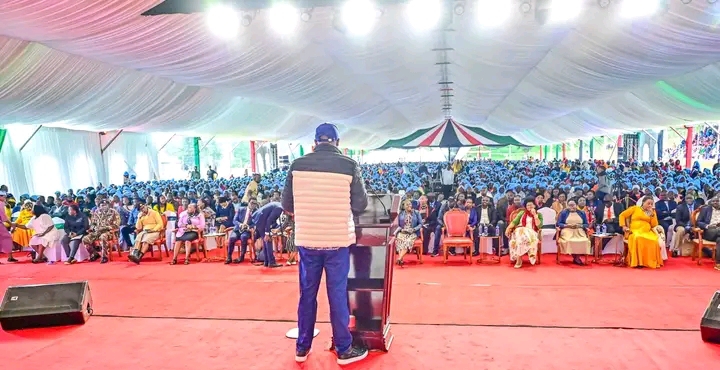
President William Ruto has assured Kenyans that the government is implementing measures to address food shortages caused by drought and below-average rainfall, with a focus on supporting farmers, increasing agricultural production and strengthening the country's food security.
The President said the government was working to cushion farmers affected by poor weather conditions, particularly in areas that experienced reduced rainfall during the planting season. The situation has raised concerns about crop production, food availability and the livelihoods of households that depend on agriculture for income and sustenance.
Among the measures announced by the government are plans to reduce the cost of agricultural inputs, including fertiliser and seeds, to enable farmers to take advantage of expected rains and plant food crops. The administration is also pursuing long-term investments in water harvesting, storage infrastructure and irrigation to reduce the country's dependence on rain-fed agriculture.
The interventions are intended to help farmers recover from crop losses, improve production during subsequent planting seasons and reduce the risk of recurring food shortages across the country.
The President's assurance comes amid continued efforts to strengthen Kenya's agricultural sector and reduce its vulnerability to unpredictable weather patterns. Agriculture remains a major source of employment and livelihoods for millions of Kenyans, making reliable rainfall and access to affordable farm inputs essential to national food security.
Government Moves to Support Farmers Affected by Drought
President Ruto has acknowledged the difficulties facing farmers following below-average rainfall in parts of the country, including areas that contribute significantly to national food production.
Poor rainfall can disrupt planting schedules, reduce crop yields and increase the risk of harvest failure. For small-scale farmers, the consequences can be particularly severe because many depend on seasonal harvests to feed their families, earn an income and finance the next planting season.
The government has therefore identified support for farmers as an important part of its response to the threat of food shortages.
One of the measures involves reducing the cost of fertiliser and seeds to make agricultural inputs more affordable. Lower production costs could enable farmers to plant larger portions of their land and improve their chances of recovering from previous crop losses when weather conditions become favourable.
Access to affordable inputs is especially important for farmers who have limited savings and may struggle to purchase fertiliser and quality seeds at prevailing market prices.
The government is also encouraging farmers to prepare for expected rainfall by ensuring that the necessary inputs are available for planting. The timing of such support is important because delays in accessing seeds and fertiliser can prevent farmers from taking full advantage of a favourable planting season.
However, the effectiveness of these interventions will depend on the availability of inputs, the reliability of rainfall and farmers' ability to access the support provided.
Irrigation Identified as a Long-Term Solution
Beyond immediate support for farmers, President Ruto has emphasised the need to invest in water infrastructure as a long-term response to drought and recurring food shortages.
The government plans to expand water harvesting and storage through the construction of large, medium-sized and small dams. The proposed programme includes 50 mega dams, 200 medium dams and 1,000 micro dams, intended to increase water availability for agricultural production and other uses.
The investments are expected to support the expansion of irrigation, particularly in arid and semi-arid areas where rainfall is often unreliable.
For decades, many Kenyan farmers have depended heavily on seasonal rains to grow maize, beans, vegetables and other food crops. When rainfall fails or arrives late, agricultural production can decline sharply, leaving households exposed to food shortages and reduced incomes.
Irrigation offers an alternative by allowing farmers to access water beyond the rainy seasons, although its success depends on adequate water supplies, appropriate infrastructure and effective management.
Expanding irrigation could enable farmers to grow crops more consistently, improve yields and reduce the risk of widespread harvest failures during dry periods.
It could also create opportunities for farmers in areas that have traditionally experienced limited agricultural production because of insufficient rainfall.
The planned water projects will require substantial investment, careful planning and coordination between national and county governments. Their long-term impact will depend on how quickly projects are implemented, how effectively water resources are managed and whether farmers can access affordable irrigation services.
Food Security Remains a National Priority
Food security continues to be a major concern for the government because of the direct relationship between agricultural production, food prices and household welfare.
When drought reduces the supply of staple foods, households may face higher prices for basic commodities, making it more difficult for families to afford sufficient and nutritious meals.
The impact is often more pronounced among low-income households, which spend a significant proportion of their earnings on food. Families that depend on casual employment, small-scale farming or livestock keeping may also experience declining incomes during prolonged dry periods.
Reduced agricultural production can affect the wider economy by limiting the supply of raw materials to food processors, increasing pressure on food distribution systems and creating additional demand for imported commodities.
For this reason, the government's response focuses not only on helping farmers recover from drought but also on increasing domestic production and improving the country's ability to withstand future weather shocks.
Increasing the supply of locally produced food could help stabilise markets over time, although prices are also influenced by transport costs, storage, demand, imports and other factors.
The government has consequently placed greater emphasis on agricultural productivity, access to farm inputs and investment in infrastructure that can support reliable production.
These efforts are intended to strengthen the country's capacity to feed its growing population while reducing its exposure to repeated disruptions caused by unfavourable weather.
Reducing Dependence on Rain-Fed Agriculture
Kenya's agricultural sector remains vulnerable to changes in rainfall because a substantial proportion of crop production depends on rain-fed farming.
This dependence creates challenges when rains are delayed, irregular or insufficient to sustain crops throughout the growing season.
Farmers may be forced to replant, abandon crops or reduce the acreage under cultivation when rainfall conditions deteriorate. Such disruptions can lead to lower harvests and reduced earnings, particularly for households that rely on farming as their primary source of income.
President Ruto's emphasis on irrigation and water storage reflects the government's intention to reduce these risks by making water available for agricultural production throughout the year.
Under the proposed approach, dams and other water infrastructure would provide a more reliable supply for irrigation, helping farmers plan their activities with greater certainty.
The strategy could also encourage diversification into crops suited to different climatic conditions and support agricultural activities in areas where conventional rain-fed farming has been difficult.
However, irrigation alone cannot eliminate every challenge facing the agricultural sector. Farmers also need access to quality seeds, affordable financing, reliable markets, agricultural extension services and appropriate technologies.
Investment in these complementary areas would be important in ensuring that water infrastructure translates into higher production and improved livelihoods.
The government will therefore need to coordinate its water investments with broader agricultural policies to maximise their benefits.
Supporting Farmers Through Affordable Agricultural Inputs
The cost of farm inputs remains an important consideration for farmers seeking to increase production.
Fertiliser helps replenish soil nutrients, while quality seeds can improve crop establishment and yield potential when combined with suitable weather conditions and sound farming practices.
When these inputs become expensive, some farmers may apply less fertiliser than recommended, purchase lower-quality seeds or reduce the area they cultivate. Such decisions can affect overall productivity and the amount of food available after harvest.
The government's efforts to lower the cost of fertiliser and seeds are intended to ease this burden and encourage farmers to maintain or increase production.
Affordable inputs could be particularly beneficial to small-scale farmers who operate with limited capital and face difficulties securing credit.
Nevertheless, access to subsidised inputs must be accompanied by effective distribution systems to ensure that the intended beneficiaries receive the support at the appropriate time.
Farmers also require timely information about planting schedules, expected rainfall and suitable crop varieties so that they can make informed decisions.
By combining input support with agricultural advice and improved access to water, the government hopes to strengthen the resilience of farming households and improve food production.
Impact on Households and Livestock Farmers
Drought affects more than crop production. In areas where livestock keeping is a major economic activity, prolonged dry conditions can reduce the availability of pasture and water for animals.
Pastoral households may face rising costs as they travel longer distances in search of grazing land and water. In severe conditions, livestock can become weak, lose market value or die, threatening the income and food supplies of affected families.
Reduced crop production can also affect households that rely on farming to meet their own food needs. When harvests decline, families may have to purchase more food from markets at a time when their earnings are already under pressure.
These challenges demonstrate why drought response requires coordination across agriculture, water, livestock and social protection programmes.
In areas facing serious shortages, the identification of vulnerable households and timely delivery of appropriate assistance can be important in preventing the situation from worsening.
National and county authorities also need reliable information on rainfall, food prices, crop performance and livestock conditions to determine where assistance is most urgently required.
Such information can help guide interventions and ensure that limited public resources are directed towards communities facing the greatest risks.
Coordination Between National and County Governments
Addressing food shortages caused by drought requires cooperation between national and county governments because the effects of poor rainfall vary across regions.
County administrations are often well positioned to identify local challenges affecting farmers, pastoralists and vulnerable households. They can also support agricultural extension services, local water projects and other programmes intended to improve resilience.
The national government, meanwhile, plays an important role in coordinating broader agricultural policies, supporting major infrastructure projects and facilitating the distribution of resources.
Effective cooperation can help prevent duplication of programmes and ensure that interventions respond to the specific conditions experienced in different areas.
It is also important that farmers and local communities participate in decisions concerning water projects, irrigation schemes and other investments that affect their livelihoods.
Proper planning and public accountability can help ensure that projects are completed and maintained effectively.
The success of the government's measures will ultimately depend on the availability of resources, the timely implementation of programmes and the ability of institutions to respond to changing weather conditions.
Focus Shifts to Implementation
President Ruto's assurances outline a combination of immediate agricultural support and longer-term investments intended to address the causes and consequences of recurring food shortages.
In the short term, reducing the cost of seeds and fertiliser is expected to help farmers prepare for planting and recover from the effects of poor rainfall.
Over the longer term, the proposed construction of dams and expansion of irrigation are intended to improve water availability and reduce the country's dependence on unpredictable weather.
The impact of these measures will depend on their implementation, the accessibility of support to farmers and the ability of agricultural production to recover during subsequent seasons.
For households facing rising food expenses, the key concern will be whether these interventions contribute to more reliable food supplies and affordable prices.
Farmers will also be watching whether input support reaches them in time and whether investments in irrigation provide practical opportunities to increase production.
As the government advances its food security agenda, sustained investment in agriculture, effective coordination and transparent use of public resources will remain essential.
Ultimately, addressing drought-related food shortages will require both immediate assistance for affected communities and long-term measures that make farming more resilient to changing climatic conditions. The government's challenge will be to turn its commitments into practical results that strengthen agricultural production, protect vulnerable households and improve food security across Kenya.

You Might Also Like
-
Self-proclaimed preacher Paul Mackenzie and 29 co-accused have been found guilty on all 191 murder counts in the Shakahola case, marking a major development in one of Kenya’s most disturbing criminal investigations. The case is linked to the deaths of followers associated with Mackenzie’s Good N
-
President William Ruto has received the APSCA 2026 Continental Leadership Award for Visionary Governance and Human Capital Transformation, with Deputy Head of Public Service Amos Gathecha accepting the honour on his behalf. The recognition highlights the importance of leadership, effective governanc
-
Kenya is expected to experience varied weather conditions during this week's forecast period, with rainfall anticipated across western Kenya, the Lake Victoria Basin, the Rift Valley, Central Kenya, Nairobi and selected eastern and coastal areas. Thunderstorms are possible in some locations, while o
-
Siaya Governor James Orengo has condemned attacks and alleged propaganda directed at the Odinga family, describing them as a betrayal of the political struggles and sacrifices associated with the late former Prime Minister Raila Odinga. His remarks come amid growing political tensions over Raila’s
-
Over 6,000 widows meet in Kericho.Led by Governor Eric Mutai, Woman Representative Beatrice Kemei and Principal Secretary Ann Wangombe, the initiative brought attention to the need for sustainable programmes that enable widows to support their families and participate meaningfully in community devel
-
The decision by some farmers in Kapkoros, Bomet Central, to begin uprooting tea bushes has brought renewed attention to the challenges facing smallholder tea growers in Kenya. The reported KSh17-per-kilogramme bonus at Kapkoros for the 2025/2026 financial year has added to concerns about rising pro