



Shakahola: Families Given 21 Days to Claim 443 Unidentified Remains as Kilifi Plans Burial
On September 21, 2026, Kilifi County announced that families of people believed to have died in the Shakahola tragedy have been given 21 days to come forward and claim or identify their relatives’ remains, with 443 bodies and human remains still being preserved at Malindi Sub-County Hospital. The announcement followed the completion of forensic investigations by the Directorate of Criminal Investigations (DCI), with officials saying only a small number of the remains have so far been identified through DNA matching. Kilifi County plans to proceed with the burial of any remains that remain unclaimed, with officials targeting December 2026 for the interment. Authorities have also been urged to publicise the notice widely through television, radio and social media so that affected families do not miss the deadline. The county says the burial arrangements will preserve records and identification possibilities for families who may come forward in the future, while the wider Shakahola investigations and related legal proceedings continue.
The Shakahola tragedy has returned to the national spotlight after the Kilifi County Government announced a new development concerning the hundreds of bodies and human remains recovered from the Shakahola Forest mass graves.
On Monday, September 21, 2026, Kilifi County gave families of people believed to have died in the Shakahola tragedy 21 days to come forward, identify and claim the remains of their relatives. The announcement comes more than three years after the discovery of mass graves in Shakahola, Kilifi County, in an investigation that shocked Kenya and attracted international attention.
According to officials, 443 bodies and human remains recovered during the exhumation exercise are still being preserved at Malindi Sub-County Hospital. The county says the Directorate of Criminal Investigations (DCI) has completed its investigations involving the remains and has given the county permission to proceed with the next stage of the process.
The development means families who are still searching for relatives linked to the Shakahola tragedy now have a limited period in which to come forward before the county begins the process of interring remains that remain unclaimed.
21-day notice issued to families
Kilifi County Executive Committee Member for Health Peter Mwarogo announced the development during a meeting involving the Senate committees on Health and County Public Investments and Special Funds at Malindi Sub-County Hospital.
Mwarogo said the county had received clearance from the DCI after the completion of forensic investigations on the remains. He explained that the 443 remains had been embalmed and were being preserved at the county facility.
The county has therefore issued a notice giving relatives 21 days from the publication of the notice to identify or claim their loved ones.
The decision is significant because the remains have been held for years as investigators worked to identify victims and gather forensic evidence. According to the county, the identification process has involved DNA matching between recovered remains and relatives who reported missing family members.
However, despite the lengthy identification exercise, many of the remains have not been claimed.
Reports indicate that only 14 of the 443 remains currently held by the county have been identified by families through DNA matching, leaving hundreds still unclaimed.
County plans burial by December
Kilifi County has indicated that it wants the process of dealing with the unclaimed remains completed by December 2026.
The county says it has identified land near the Shakahola Forest where the unclaimed remains can be interred. However, officials have also indicated that the burial will have to be conducted in a manner that preserves the possibility of future identification.
This is particularly important because relatives could potentially come forward even after burial. Officials have therefore said the graves must be clearly marked and records properly maintained so that identification can still take place in the future.
Peter Mwarogo said the Directorate of Criminal Investigations would guide the county on how the remains should be buried to ensure they remain identifiable for years to come.
Kilifi Governor Gideon Mung'aro also said the county had permission to use land at Shakahola for the interment of the remains.
The proposed burial therefore represents another major stage in the long-running aftermath of the Shakahola tragedy.
Why the remains have remained unclaimed
One of the major challenges highlighted by county officials is that identifying victims has not necessarily resulted in families coming forward to collect their remains.
Mwarogo told senators that some families had managed to trace their relatives through the identification process but had nevertheless declined to collect the bodies.
He attributed some of these cases to the stigma associated with the Shakahola tragedy.
The Shakahola case has remained deeply sensitive because of the circumstances surrounding the deaths and the allegations made against people associated with the religious organisation at the centre of the investigation.
For some families, therefore, dealing with the remains of their relatives has involved not only forensic identification but also emotional, social and cultural difficulties.
The county's latest announcement seeks to bring the remains issue closer to a conclusion while still allowing families an opportunity to come forward.
Senators call for wider publicity
The 21-day notice has also raised questions about how effectively the information will reach families who may still be looking for their relatives.
Senators who were visiting the area urged Kilifi County to go beyond publishing a formal Gazette notice.
Elgeyo Marakwet Senator William Kisang questioned whether ordinary members of the public would actually see a Gazette notice and called for the information to be disseminated through television, radio and other media platforms.
The concern is particularly important in the Shakahola case because some affected families may live far away from Kilifi and may not regularly monitor official government notices.
Kisang urged the county to use vernacular radio stations, television and social media to ensure the message reaches as many families as possible before the deadline expires.
The senators' intervention highlights the importance of making the identification process accessible to families who may have previously been unable to participate or may not have known that their relatives' remains had been recovered.
Some remains are body parts
The identification process has also been complicated by the condition of some of the remains recovered from the mass graves.
According to the county, the 443 remains do not consist entirely of complete bodies. They include both complete bodies and body parts recovered during the exhumation exercise.
Officials said some remains were in poor condition and that, in some instances, the passage of time and exposure to the elements and wild animals affected the bodies.
This has made the forensic process more complicated and helps explain why identification has taken such a long period.
Nevertheless, DNA technology has provided investigators with an important method of connecting recovered remains to families.
The county says records of the DNA matching and identification process remain with the DCI because of the continuing legal proceedings connected to the Shakahola case.
The hospital has faced storage pressure
Another issue behind the latest decision is the pressure placed on Malindi Sub-County Hospital by the prolonged storage of the remains.
The 443 remains are being kept separately from the hospital's ordinary mortuary operations.
According to reports, the hospital's normal mortuary has a capacity of 25 bodies and was holding 22 bodies at the time of the county's announcement.
Kilifi County is also constructing a new mortuary at the hospital to increase capacity and improve the management of deceased persons. The new facility was reported to be approximately 90 per cent complete.
The continued preservation of hundreds of Shakahola remains has therefore presented both forensic and logistical challenges for the county health system.
The Shakahola tragedy
The latest development comes more than three years after the discovery of mass graves in Shakahola Forest.
The tragedy was linked to followers of Pastor Paul Mackenzie and the organisation known as the Good News International Church. Investigations alleged that followers were subjected to extreme forms of religious indoctrination and starvation.
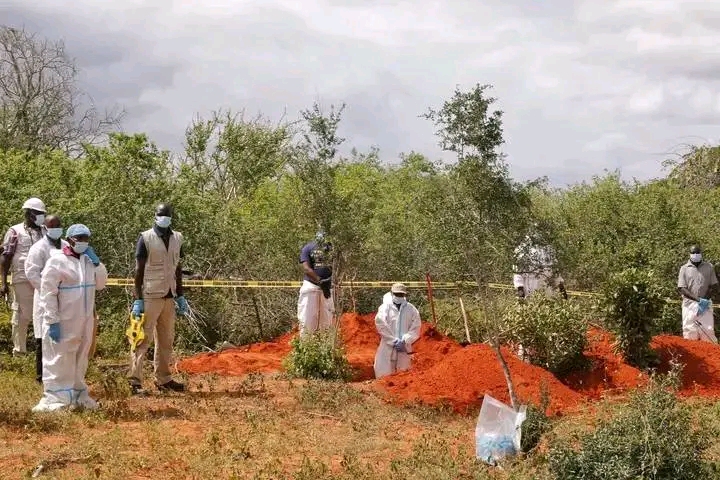
The discovery of the graves in 2023 triggered a major investigation, followed by extensive exhumation operations.
Hundreds of bodies were eventually recovered from the forest. The case became one of Kenya's most closely watched criminal investigations because of the scale of the deaths and the questions it raised about religious extremism, child protection, regulation of religious organisations and the responsibility of authorities to identify warning signs before large-scale loss of life occurs.
The recovery process was also extremely challenging. Investigators had to work through numerous graves while preserving evidence that could assist in establishing the identities of victims and the circumstances surrounding their deaths.
Legal proceedings remain important
The decision to proceed with the handling of the unclaimed remains does not mean that all legal issues surrounding the Shakahola case have ended.
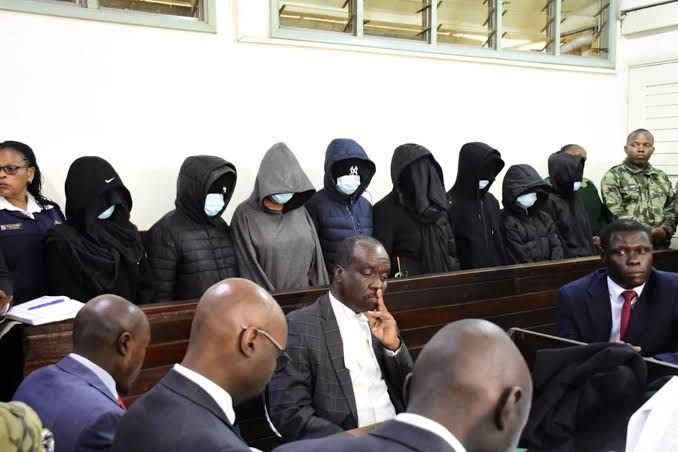
The criminal investigations and court proceedings connected to the deaths remain an important part of the wider Shakahola story.
The forensic examination of the remains was particularly important to investigators because evidence obtained from the bodies could help establish identities and contribute to criminal cases.
The county has therefore emphasised that any burial must be conducted in a way that does not prevent future identification or interfere with records required for legal purposes.
What happens after the 21 days?
The immediate focus is now on the 21-day period.
Families who believe their relatives may have been among those recovered from Shakahola are expected to come forward and seek identification and collection of the remains.
If the deadline passes without relatives claiming the remains, Kilifi County says it will proceed according to the applicable legal procedures.
Reports indicate that the county may seek a court order authorising the interment of remains that remain unclaimed. The burial would be organised in a manner that allows future identification should a family come forward at a later date.
This approach is intended to balance two concerns: the need to provide a dignified final resting place for the remains and the need to preserve the possibility of identification in the future.
A difficult chapter moves toward another stage
The announcement made on September 21 marks another significant stage in Kenya's long-running effort to deal with the consequences of the Shakahola tragedy.
For families still searching for missing relatives, the 21-day notice provides another opportunity to establish whether their loved ones are among the recovered remains.
For Kilifi County, the planned interment is also an attempt to resolve the prolonged storage of hundreds of remains while maintaining records that can support future identification and legal proceedings.
The latest figures show how difficult the identification exercise has been. Of the 443 remains currently being preserved, only a small number have been identified and claimed by families through DNA matching.
The situation also demonstrates that the consequences of the Shakahola tragedy extend far beyond the original discovery of the mass graves. Questions of identification, burial, justice, family trauma, stigma, religious accountability and public safety continue to shape the aftermath.
The call by senators for wider publicity is therefore important because the success of the 21-day process depends largely on whether affected families receive the information in time.
As Kilifi County works toward its December target, attention will now turn to the families who may still come forward, the identification process and the legal steps that will precede the eventual interment of any remains that remain unclaimed.
For the families involved, the issue is not simply about numbers. Behind every recovered body or body part is a missing person whose relatives may still be waiting for answers.
The latest announcement is consequently both an administrative decision and another deeply sensitive chapter in the continuing aftermath of the Shakahola tragedy.

You Might Also Like
-
Rachel Ruto's recent participation in the United Nations discussion on safer digital systems for children forms part of a broader series of engagements involving First Ladies and other spouses of world leaders. From Nairobi to the G7 discussions in France and now the United Nations in New York, the
-
President William Ruto's meeting with US Secretary of State Marco Rubio in New York on September 21, 2026, focused on a broad range of issues affecting Kenya-US relations and wider international affairs. The discussions covered trade and AGOA, artificial intelligence, critical minerals, nuclear ene
-
A woman was arrested at Buruburu Police Station in Nairobi after police officers allegedly discovered bhang concealed inside a loaf of bread she had brought for her boyfriend, who was being held at the station. According to police reports, officers inspected the unsealed loaf and allegedly found fiv
-
Kenya is expected to experience mixed weather conditions this week, from September 22 to September 28, 2026. Western Kenya, parts of the Rift Valley, the Lake Victoria Basin and sections of Central Kenya are among the areas where rainfall is expected, with Kakamega, Vihiga and Bungoma highlighted fo
-
The High Court in Kibra has denied bail to eight minors facing charges linked to the Untumishi Girls fire tragedy, which claimed the lives of 16 girls on May 28. The suspects will remain in custody as the case proceeds.
-
The Mount Longonot charity hike has once again placed the education needs of persons with visual impairments in the spotlight. The event brought together supporters, organizations and disability advocates for a common cause: raising awareness and resources for learners who require specialized suppor