100 Buildings Have Collapsed in Kenya Over 30 Years, Leaving More Than 40 Dead in Five Years
Kenya is facing growing concerns over building safety following revelations that approximately 100 buildings have collapsed across the country over the past 30 years, resulting in more than 40 deaths in the last five years alone. The alarming figures have renewed questions about construction standards, structural inspections, professional supervision and the enforcement of building regulations. Recent tragedies in Eastleigh and Syokimau have further highlighted the dangers associated with unsafe construction practices, with families losing loved ones and several people sustaining injuries. Inspection findings have also raised concerns, with thousands of construction sites reportedly suspended after failing to meet required standards. As demand for residential and commercial buildings continues to rise, pressure is mounting on government agencies, county authorities, developers and construction professionals to strengthen inspections, ensure compliance and hold those responsible for negligence accountable. The latest revelations have once again brought the urgent need for safer buildings and stronger enforcement of construction laws into focus.
Kenya is facing renewed concerns over the safety of buildings following revelations that approximately 100 buildings have collapsed across the country over the past 30 years, according to data from the Ministry of Lands, Public Works, Housing and Urban Development. The figures paint a worrying picture of the challenges facing the construction sector, particularly regarding compliance with building regulations, supervision of construction projects and enforcement of safety standards.
The ministry's data further indicates that more than 40 people have lost their lives in building-related collapses over the last five years alone. These incidents have raised serious questions about the safety of residential apartments, commercial buildings and other structures occupied or used by members of the public.
Building collapses have become a major concern for residents, property owners, construction workers and government agencies responsible for regulating the sector. Every incident brings renewed attention to the need for proper planning, professional supervision and strict adherence to approved construction standards.
The reported 100 collapses over three decades demonstrate the scale of the problem and the need for sustained action to prevent further disasters. Although buildings are expected to provide safe shelter, workplaces and business premises, structural failures can turn them into dangerous environments, putting the lives of occupants, workers and neighbouring communities at risk.
The deaths of more than 40 people within five years are particularly concerning, considering that building collapses often occur suddenly, leaving those inside with little time to escape. In some cases, people may become trapped beneath concrete slabs, bricks, steel bars and other construction materials, making rescue operations difficult and time-consuming.
The incidents also place a significant burden on emergency response teams, who are frequently required to work under challenging conditions to locate survivors and recover victims from collapsed structures.
Kenya has experienced several building collapses in different parts of the country, with Nairobi and its surrounding areas repeatedly drawing attention because of the concentration of high-rise developments and rapidly expanding residential estates.
Recent incidents have brought the issue back into the national spotlight. On November 13, 2026, an eight-storey building under construction in Syokimau, Machakos County, collapsed, killing six people and leaving five others injured. The disaster occurred as workers were undertaking construction activities at the site. Rescue teams were deployed to search for survivors and account for everyone who had been working at the building.
The Syokimau tragedy came less than a month after another deadly incident in Nairobi's Eastleigh area, where an 18-storey building under construction collapsed on October 23, 2026. The collapse claimed eight lives, while several people were initially reported missing. The building was located along 9th Street, near Yusuf Haji Avenue, in an area with busy commercial and residential activities.
The Eastleigh incident sparked widespread concern over how buildings are approved, inspected and allowed to continue operating even when questions arise about their structural safety. Authorities also faced pressure to establish whether the building had the necessary approvals and whether construction activities followed the approved plans.
Another major incident occurred in South C, Nairobi, where a 16-storey building collapsed earlier in 2026, killing two people. The repeated incidents involving high-rise structures have intensified calls for more thorough inspections and stronger action against developers who disregard construction regulations.
The latest figures also point to fluctuations in the number of building collapses recorded annually. According to the ministry's data, 13 incidents were reported in 2022, making it the year with the highest number of collapses in the period highlighted. Twelve incidents were recorded in 2021, with another 12 reported in 2023.
In 2018, nine buildings collapsed, while seven incidents were recorded in 2015 and another seven in 2019. The country recorded four collapses in 2024 and a similar number in 2025. These figures demonstrate that building failures have remained a persistent challenge despite previous interventions and repeated warnings from professionals in the construction industry.
Inspections Reveal Widespread Non-Compliance
Beyond the number of collapses, inspection findings from the National Construction Authority have raised further concerns about the condition of construction projects across the country.
Between July 2025 and April 2, 2026, the authority inspected 21,282 construction sites across 14 regions. Of these, 12,018 sites were suspended after failing to meet the required standards, while 9,264 were found to be compliant.
The findings translate to a compliance rate of approximately 43.5 per cent, suggesting that more than half of the inspected sites did not meet the required construction standards at the time of assessment.
Nairobi recorded the highest number of inspections, with 3,908 construction sites assessed. Out of these, 1,647 were suspended for various compliance concerns, while the region recorded a compliance rate of 57.86 per cent.
The Western region recorded the highest compliance rate at 77.83 per cent, followed by the Mount Kenya region at 65.88 per cent. Meanwhile, North Eastern recorded the lowest compliance rate, with only 11 out of 220 inspected sites meeting the required standards, representing five per cent.
Other regions also recorded concerning compliance levels. Upper Eastern registered 14.93 per cent, Central Rift 18.38 per cent and the Coast region 20.25 per cent. North Rift recorded 29.64 per cent, while Central Eastern had a compliance rate of 32.88 per cent.
The figures suggest that construction safety challenges are not limited to Nairobi but affect different parts of the country. They also highlight the importance of strengthening inspection systems beyond major urban centres, where rapid development and population growth continue to increase demand for housing and commercial buildings.
What Causes Buildings to Collapse?
Building collapses can occur for several reasons, including poor structural design, weak foundations, substandard construction materials, poor workmanship and inadequate supervision. In some cases, developers may attempt to reduce construction costs by using fewer materials or ignoring technical recommendations made by qualified professionals.
A building's safety depends on several stages, beginning with proper planning and architectural design. Engineers must assess the soil conditions, determine the appropriate foundation and establish whether the proposed structure can safely support the expected weight.
The quality of materials used during construction is equally important. Concrete, steel reinforcement and other essential materials must meet the required standards. When inferior materials are used, the strength and durability of a structure may be compromised.
Another concern is the involvement of unqualified individuals in construction projects. Buildings require the expertise of registered architects, engineers, contractors and other professionals who understand the technical requirements governing construction.
When developers rely on unlicensed individuals or bypass professional supervision, mistakes may go undetected until they create serious structural weaknesses.
Changes made during construction can also increase the risk of collapse, particularly when additional floors are introduced without proper engineering assessments and approval. A structure designed to support a particular number of floors may not safely withstand additional weight if its foundation, columns and other supporting elements are not strengthened accordingly.
Overloading, poor maintenance and construction on unsuitable ground can also contribute to structural failure. These risks make regular inspections necessary, including for buildings that have already been completed and occupied.
Questions Over Enforcement and Accountability
The recurring incidents have also raised questions about accountability within the construction sector. Whenever a building collapses, attention often turns to the developer, contractor, engineers, county officials and regulatory agencies involved in approving and supervising the project.
Investigations are necessary to establish whether the collapse resulted from negligence, poor workmanship, unauthorised construction or failure to enforce existing regulations.
However, concerns have been raised about whether investigations consistently lead to successful prosecutions and meaningful penalties for those found responsible.
The National Building Code 2024 provides standards governing building design, construction and maintenance. Its requirements are intended to improve the quality of structures, protect public health and promote safety across the built environment.
For these regulations to achieve their intended purpose, relevant authorities must ensure that developers comply with them throughout the construction process. Approvals should not simply be treated as administrative documents but as part of a wider system designed to protect lives.
County governments also have an important responsibility in monitoring developments within their jurisdictions. They are expected to ensure that construction projects receive the necessary approvals and that work on site follows the approved plans.
The Human and Economic Cost
Beyond the statistics, building collapses have devastating consequences for families and communities. When a structure comes down, families may lose loved ones, homes and sources of income. Survivors may suffer serious injuries that require prolonged medical attention, while workers can lose their livelihoods.
Businesses operating within or around affected buildings may also suffer significant financial losses. Shops, offices and other commercial premises can be destroyed, while surrounding roads and neighbourhoods may be temporarily affected by rescue operations and investigations.
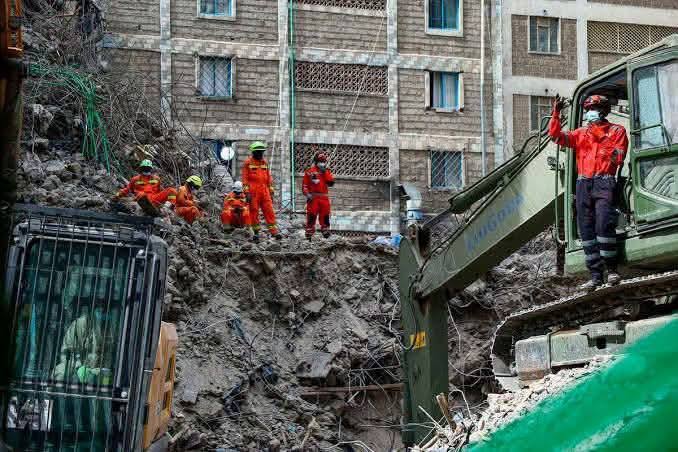
Rescue operations can also be complex because collapsed structures often leave heavy concrete slabs, twisted metal and other materials piled on top of one another. Emergency responders must carefully remove debris while trying to locate people who may still be alive beneath the rubble.
The process requires specialised equipment, trained personnel and coordination among different emergency agencies. Time is particularly important during such operations because people trapped beneath debris may face serious risks from injuries, restricted movement and limited access to air.
Calls for Stronger Preventive Measures
The growing concern over building safety has renewed calls for a more effective approach that prioritises prevention rather than responding only after disasters occur.
Construction sites should undergo regular inspections, and any project found to violate safety requirements should be stopped until the identified problems are addressed. Developers who disregard official instructions should face appropriate legal consequences.
There is also a need to strengthen public awareness so that property owners, tenants and prospective buyers understand the importance of checking the safety and approval status of buildings before occupying or purchasing property.
Tenants should not assume that a building is safe simply because it has several occupied floors or has been operating for years. Structural concerns should be reported to the relevant authorities for professional assessment.
Property developers, on their part, must recognise that cutting corners during construction can have serious consequences. The responsibility to provide safe buildings extends beyond meeting financial targets or completing projects within tight deadlines.
As Kenya continues to experience rapid urbanisation and increased demand for housing, the construction industry is expected to play a major role in supporting economic growth. However, that growth must be accompanied by strict adherence to professional standards and effective regulation.
The reported 100 building collapses over 30 years and more than 40 deaths in the last five years serve as a warning that construction safety cannot be taken for granted. The recent tragedies in Eastleigh and Syokimau have further demonstrated the devastating consequences of structural failures.
Preventing future disasters will require cooperation between national and county governments, regulatory agencies, construction professionals and property developers. Effective inspections, proper supervision, quality materials and accountability must become essential parts of every construction project.
What matters now is ensuring that lessons from previous tragedies translate into practical measures that protect lives and prevent similar incidents from happening again.

You Might Also Like
-
Several businesses at Keumbu Market in Kisii County have been destroyed following a devastating midnight fire that left traders counting heavy losses on Saturday, November 14, 2026. Market chairman Samwel Ombui Ongaki said the fire was suspected to have started at a stall operating as a hotel before
-
A family in Ilula Village, Ainabkoi Constituency, Uasin Gishu County, is mourning the death of their loved one, Silah Kimutai Arusei, who reportedly died in April 2026 while fighting in the Russia-Ukraine war. Kimutai travelled to Qatar in 2022 in search of employment before moving to Russia, where
-
The Energy and Petroleum Regulatory Authority (EPRA) has maintained fuel prices for the November 15 to December 14, 2026 pricing cycle, keeping pump prices unchanged following its latest monthly review. In Nairobi, Super Petrol will retail at KSh226.96 per litre, Diesel at KSh227.76 and Kerosene at
-
The Maa Cultural Festival in Narok County was disrupted by chaos after violent confrontations erupted between two rival groups at Sekenani Gate on Saturday, November 14, 2026. Videos circulating on social media captured shocking scenes of attendees scampering for safety as the confrontation intensif
-
The death toll following the tragic Riverside wall collapse in Ngara, Nairobi County, has risen to four, with authorities confirming that search and rescue operations have officially come to an end after all individuals believed to have been at the site were accounted for. Kileleshwa Officer Command
-
Director of Criminal Investigations Mohamed Amin has called for heightened vigilance against narcotics trafficking, warning that proceeds from the illegal drug trade could be channelled into political campaigns or used to purchase influence within Kenya’s political and public institutions. Amin ca