Chaos Erupts at Maa Cultural Festival as Rival Groups Clash at Sekenani Gate in Narok
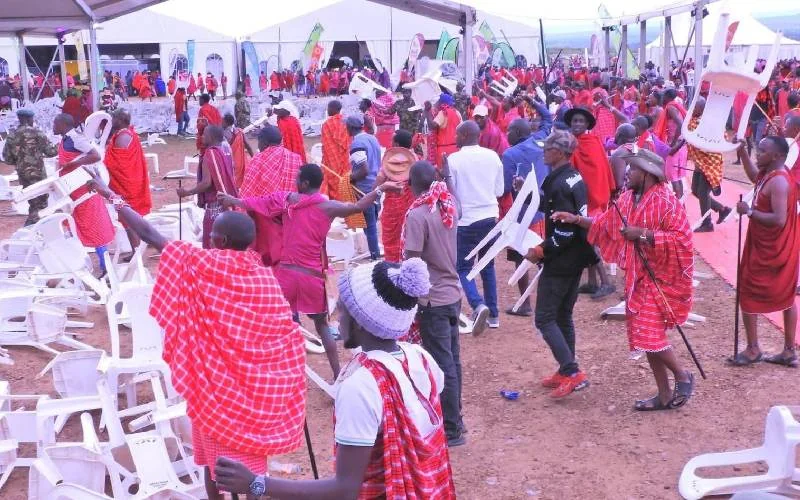
The Maa Cultural Festival in Narok County was disrupted by chaos after violent confrontations erupted between two rival groups at Sekenani Gate on Saturday, November 14, 2026. Videos circulating on social media captured shocking scenes of attendees scampering for safety as the confrontation intensified, with several chairs overturned and individuals seen throwing objects at one another. The clashes interrupted activities at the festival venue, leaving sections of the grounds in disarray and raising concerns about security arrangements during the highly anticipated cultural gathering. The incident occurred as President William Ruto was expected to attend the celebrations, which bring together members of the Maa community, cultural enthusiasts and political leaders to celebrate Maa traditions, heritage and identity. The circumstances that triggered the confrontation remain unclear, while attention has shifted to the disruption and the need to maintain peace and order during public gatherings.
The Maa Cultural Festival was thrown into confusion after violent confrontations erupted between two rival groups at Sekenani Gate in Narok West, disrupting activities at the cultural gathering and forcing several attendees to flee for safety.
The incident, which occurred on Saturday, November 14, 2026, attracted widespread attention after videos capturing scenes of disorder began circulating on social media platforms.
In the footage, festival attendees could be seen running in different directions as tensions escalated at the venue, with some individuals attempting to escape the confrontation while others remained caught up in the unfolding chaos.
Several chairs were overturned during the incident, while individuals from the opposing groups were seen throwing objects at one another, creating panic among those who had gathered to participate in the celebrations.
The confrontation disrupted the atmosphere of the festival, which had brought together members of the Maa community, cultural enthusiasts, political leaders and other guests for a celebration of Maa heritage, traditions and identity.
The footage captured scenes of confusion as people scrambled to find safety, with sections of the venue left in disarray following the confrontation.
The incident raised concerns about security arrangements at the festival, particularly given the presence of large crowds and prominent political leaders who had been expected to attend the event.
The Maa Cultural Festival is an important cultural gathering aimed at celebrating the traditions, identity and heritage of the Maa community. It provides an opportunity for members of the community to showcase their cultural practices, traditional attire, music, dance and other aspects of their way of life.
The annual gathering also offers a platform for cultural exchange, community engagement and discussions surrounding the preservation of Maa traditions for future generations.
However, the reported clashes threatened to overshadow the cultural significance of this year's celebrations, as attention shifted towards the confrontation and the disruption witnessed at Sekenani Gate.
According to the circulating footage, the situation became chaotic as individuals from the rival groups confronted one another, with some attendees appearing to throw objects during the incident.
People who had attended the festival were forced to move away from the affected area as the confrontation continued, while overturned chairs and scattered items illustrated the extent of the disorder.
The incident also disrupted activities that had been planned for the gathering, leaving some attendees unable to continue participating in the celebrations as they sought safer areas.
The circumstances that triggered the confrontation remained a major concern, with questions emerging over what caused the two groups to clash during an event intended to bring members of the community together.
The incident occurred at a time when the festival had attracted considerable political attention, with several leaders expected to attend the celebrations.
President William Ruto was among the prominent figures scheduled to grace the event at Sekenani Gate, where cultural activities were expected to take centre stage.
His presence had attracted political interest, with the festival providing an opportunity for leaders to interact with residents and members of the Maa community.
However, the confrontation disrupted the proceedings and raised questions about the management of political and public gatherings attended by large numbers of people.
The videos circulating online showed attendees attempting to distance themselves from the confrontation as the situation deteriorated.
The scenes also highlighted the potential risks associated with confrontations at crowded public events, where panic and confusion can quickly spread when groups begin fighting.
The Maa Cultural Festival had been expected to provide a peaceful environment for celebrating the community's cultural heritage, bringing together people from different parts of the country to participate in traditional activities and engage with leaders.
The clashes, however, created an unexpected interruption, with the situation at the venue drawing attention away from the cultural performances and other planned activities.
The confrontation also raised concerns about the safety of ordinary attendees, particularly families and other visitors who had travelled to Sekenani Gate to witness the celebrations.
For many people attending such gatherings, cultural festivals provide an opportunity to reconnect with their traditions, interact with members of their communities and celebrate their shared identity. Any form of violence at these events can undermine their intended purpose and expose innocent attendees to unnecessary risks.
The incident has also renewed discussions about the importance of maintaining order during public gatherings, especially those attracting thousands of people and prominent political figures.
Organisers of major public events are generally expected to coordinate with security agencies to ensure adequate arrangements are in place to manage crowds, prevent confrontations and respond quickly whenever disturbances arise.
The presence of competing groups at political and cultural gatherings can sometimes create tensions, particularly where disagreements emerge among supporters. However, maintaining peace and ensuring the safety of all participants remains essential.
The scenes witnessed at Sekenani Gate have therefore placed renewed attention on the need for dialogue, restraint and responsible conduct during public events.
The Maa Cultural Festival is also an important platform for showcasing the cultural richness of the Maa community, whose traditions have remained an integral part of Kenya's cultural identity.
Through traditional songs, dances, clothing, storytelling and other cultural practices, the festival provides an opportunity for younger generations to appreciate their heritage while allowing older members of the community to pass down important cultural knowledge.
It also creates opportunities for cultural tourism, with visitors gaining an opportunity to experience traditional Maa practices and learn more about the community's history.
Narok County, which is closely associated with Maa culture and heritage, continues to attract visitors interested in experiencing the region's cultural and tourism attractions.
The festival therefore carries significance beyond entertainment, as it provides a platform for promoting cultural preservation, tourism and community engagement.
The disruption witnessed during this year's celebrations has consequently raised concerns about the importance of protecting such gatherings from incidents that could compromise their objectives.
Meanwhile, the circulation of videos showing the confrontation has continued to attract public attention, with social media users sharing different reactions to the scenes captured at the venue.
The footage has provided a glimpse of the disorder that unfolded, particularly as attendees attempted to escape the confrontation and move away from the affected sections of the festival grounds.
Several chairs could be seen lying upside down, while scattered items and individuals throwing objects illustrated the confusion that characterised the incident.
Although the videos captured part of the confrontation, the full circumstances surrounding the incident remained unclear. Further information would be necessary to establish what triggered the clashes, the individuals involved and whether anyone sustained injuries.
There were also questions surrounding the security arrangements at the venue and the measures taken to restore order following the confrontation.
The incident serves as a reminder of the importance of peaceful coexistence, particularly during gatherings intended to unite communities and celebrate shared cultural values.
As the country continues to host major cultural, political and social events, organisers and relevant authorities face the responsibility of ensuring that participants can attend and enjoy such gatherings without fear of violence or intimidation.
The developments at Sekenani Gate have also placed the broader importance of separating cultural celebrations from confrontational behaviour into focus.
Regardless of the differences that may exist among individuals or groups, public gatherings should provide safe spaces for people to interact, express themselves and participate in activities without putting others at risk.
For the Maa community, the festival remains an important opportunity to showcase its heritage, promote cultural identity and strengthen connections among members.
The confrontation witnessed during the celebrations, however, threatened to overshadow these objectives as scenes of disorder spread across social media.
Attention now remains on the circumstances that led to the clashes and whether further clarification will be provided regarding the incident.
The priority remains ensuring the safety of attendees and maintaining peaceful conditions during public gatherings.
The clashes at Sekenani Gate have cast a shadow over the Maa Cultural Festival, turning a celebration of heritage and identity into scenes of panic, confusion and disorder.

You Might Also Like
-
Several businesses at Keumbu Market in Kisii County have been destroyed following a devastating midnight fire that left traders counting heavy losses on Saturday, November 14, 2026. Market chairman Samwel Ombui Ongaki said the fire was suspected to have started at a stall operating as a hotel before
-
A family in Ilula Village, Ainabkoi Constituency, Uasin Gishu County, is mourning the death of their loved one, Silah Kimutai Arusei, who reportedly died in April 2026 while fighting in the Russia-Ukraine war. Kimutai travelled to Qatar in 2022 in search of employment before moving to Russia, where
-
Kenya is facing growing concerns over building safety following revelations that approximately 100 buildings have collapsed across the country over the past 30 years, resulting in more than 40 deaths in the last five years alone. The alarming figures have renewed questions about construction standar
-
The Energy and Petroleum Regulatory Authority (EPRA) has maintained fuel prices for the November 15 to December 14, 2026 pricing cycle, keeping pump prices unchanged following its latest monthly review. In Nairobi, Super Petrol will retail at KSh226.96 per litre, Diesel at KSh227.76 and Kerosene at
-
The death toll following the tragic Riverside wall collapse in Ngara, Nairobi County, has risen to four, with authorities confirming that search and rescue operations have officially come to an end after all individuals believed to have been at the site were accounted for. Kileleshwa Officer Command
-
Director of Criminal Investigations Mohamed Amin has called for heightened vigilance against narcotics trafficking, warning that proceeds from the illegal drug trade could be channelled into political campaigns or used to purchase influence within Kenya’s political and public institutions. Amin ca