



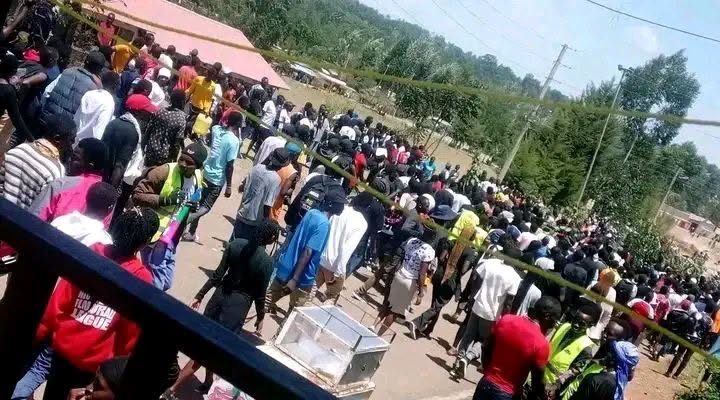
Bomet University Students Take to the Streets Over Welfare and Infrastructure Concerns
Bomet University students have taken to the streets over unresolved welfare concerns, including water shortages, Chepkosa Dam, delayed bridge works, inadequate security lighting and rising accommodation costs.
Bomet University students have taken to the streets to protest what they describe as unresolved welfare, safety and infrastructure challenges affecting their daily lives and academic experience.
The students are demanding urgent action from the university administration, Bomet County Government and other relevant authorities, citing concerns over water shortages, the closure of Chepkosa Dam, the delayed completion of Chebirir Bridge, inadequate security lighting and rising rental costs around the institution.
The protest comes amid growing concerns about student safety following the death of a first-year student at Chepkosa Dam on September 18, 2026. Reports indicate that the student drowned while attempting to fetch water from the dam, an incident that has intensified calls for authorities to address the water situation around the university.
Water Shortage Raises Concern
Water availability has emerged as one of the major grievances raised by the students.
Students say inadequate water supply has created difficulties in their day-to-day lives, with concerns that some are being forced to look for alternative sources of water outside the university environment.
The recent drowning incident at Chepkosa Dam has brought renewed attention to the issue. According to reports, students organised a peaceful march to the dam to demand its closure and to remember colleagues who have lost their lives at the site.
The students' concerns come against the backdrop of broader water-supply challenges in Bomet Town. The county government has previously acknowledged that demand for water in the town, including demand generated by institutions such as Bomet University, significantly exceeds the available production capacity. In October 2025, the county said Bomet Town's demand stood at about 4,500 cubic metres per day, while the Bomet Water Supply Scheme was producing approximately 1,200 cubic metres.
For students, the issue is not simply about convenience. Reliable access to clean and safe water is essential for sanitation, accommodation, food preparation and general wellbeing.
Chepkosa Dam Closure Demanded
The Chepkosa Dam has become a central point of the students' protest following the recent drowning.
Students have called for the water body to be closed as they seek measures to prevent further loss of life. Reports indicate that the students planned a remembrance session at the dam before proceeding to present their grievances to county officials.
The demand has also raised questions about why students would need to access the dam for water in the first place.
Students argue that addressing the underlying water shortage would reduce the need for them to seek alternative water sources and could help prevent similar tragedies in the future.
The latest incident has therefore transformed the water shortage from a welfare complaint into a broader question of student safety and access to essential services.
Chebirir Bridge Becomes Another Key Grievance
Infrastructure is another major issue at the centre of the students' demands.
The students are calling for the completion of the Chebirir Bridge, which they say is important for safe and easier movement between the university and surrounding areas.
Reports indicate that the students planned to assemble at the bridge and address the media after presenting their concerns to county officials.
County planning documents have previously listed several bridge and road projects in the wider Chebirir and Bomet University area. More recently, a county tender document shows that construction works for the Kygong Transformer–Chebirir footbridge were contracted under the 2025/2026 financial year.
The students' renewed demand therefore places attention on the progress and completion of infrastructure projects that affect movement and connectivity around the institution.
For students walking to accommodation areas, businesses and other facilities, reliable infrastructure can have a direct impact on safety and the amount of time spent travelling.
Security Lighting Concerns
The students have also raised concerns about inadequate security lighting around the university and neighbouring areas.
Poorly lit roads and pathways can make movement difficult, particularly in the evening and early morning hours when students may be travelling to and from residences, libraries, study areas or other facilities.
The students have specifically linked their concerns to areas around Chebirir, calling for improved lighting as part of measures to enhance their safety.
They want the relevant authorities to identify areas that require additional lighting and ensure that existing installations are functional and adequately maintained.
The issue of lighting has therefore become part of the wider demand for an environment where students can move freely without unnecessary safety concerns.
Rising Rental Costs
Housing has also emerged as an important concern.
Students living outside the university are facing increasing accommodation expenses, adding financial pressure at a time when many households are already dealing with the high cost of living.
The growth of Bomet University has increased demand for accommodation and other services around Bomet Town. The institution's official website says the university currently serves about 8,400 students, reflecting substantial growth from its early years.
As the student population grows, pressure on nearby housing, transport, water and other services is also likely to increase.
Students are consequently asking authorities and other stakeholders to consider measures that can make accommodation more accessible and affordable.
Students Seek Engagement With Authorities
The students' protest is also a call for dialogue.
Their concerns are directed not only at the university administration but also at Bomet County Government and agencies responsible for water, roads, infrastructure and security.
According to reports, student representatives planned to present their grievances to county officials and Bomet Water and Sewerage Company as part of their protest activities.
Bomet University already has established student leadership structures. The university's Students Governing Council states that its leadership is responsible for representing student interests, promoting welfare and strengthening communication between students and the administration.
This structure could provide an avenue for continued discussions between students, university management and county authorities as they seek solutions to the concerns raised.
Call for Urgent Action
The students are now calling for concrete action rather than prolonged discussions.
Among their demands are improved water supply, action regarding Chepkosa Dam, completion of the Chebirir Bridge, better security lighting and measures to address the rising cost of accommodation.
The recent death at Chepkosa Dam has added urgency to the debate, with students insisting that safety and access to basic services cannot be treated as secondary matters.
At the same time, the authorities will need to establish the practical steps, timelines and responsibilities required to address the various concerns.
For the students, the protest represents a demand to be heard and to have their welfare concerns addressed.
For the university and county authorities, the situation presents an opportunity to engage directly with the student community, clarify ongoing projects and identify immediate interventions where possible.
A Growing Institution Under Pressure
Bomet University has undergone significant growth since its establishment. The university says it became the country's 36th chartered university on February 4, 2026, and currently serves about 8,400 students.
Such growth can bring increased demand for infrastructure and essential services.
Water systems, roads, bridges, security facilities and accommodation must keep pace with an expanding student population.
The current protest highlights the challenges that can emerge when surrounding infrastructure and public services struggle to match that growth.
As the students continue pressing their demands, attention will now turn to how quickly the university administration, county government and other responsible agencies respond.
The students have made their concerns clear: they want reliable water, safer surroundings, improved infrastructure and affordable living conditions.
With the recent tragedy at Chepkosa Dam still fresh in the minds of the university community, the calls for action have gained additional urgency.
The immediate challenge for authorities will be to turn the students' grievances into concrete discussions, practical interventions and measurable progress while ensuring that the safety and welfare of the university community remain a priority.

You Might Also Like
-
The meeting by Kipkelion elders to appreciate President William Ruto over the proposed Londiani Referral Hospital reflects the deep importance the community attaches to the project. For years, residents have looked forward to a major referral facility that could improve access to specialised health
-
Deputy Inspector General Eliud Lagat's engagement in Nakuru has placed youth involvement, community safety and professional policing at the centre of the security conversation. His strongest warning was directed at young people whom he urged not to accept money to act as political goons or fight on
-
Former President Uhuru Kenyatta has handed over the leadership of the Jubilee Party to Fred Matiang’i ahead of the party’s National Delegates Convention. Uhuru says he will remain a Jubilee member and serve in a senior advisory role.
-
PS Beatrice Inyangala has drawn attention to a serious concern in Kenya's education sector, citing research that 90 per cent of students have experienced violence either as victims or perpetrators. She said the research showed that women represented 65 per cent of those affected, compared with 35 pe
-
Interior Cabinet Secretary Kipchumba Murkomen has launched the Kenya National Mediation Hub, an initiative aimed at strengthening peaceful conflict resolution, dialogue and preventive security in schools, colleges, TVET institutions and universities. Launched at the University of Nairobi under the J
-
Deputy President Kithure Kindiki has emerged as a central government coordinator in Kenya's proposed Sh2.2 trillion Lamu oil refinery, after President William Ruto tasked him with chairing the committee working with private investors and government agencies. With the planned September 30, 2026 grou