




Murkomen Unveils National Mediation Hub, Targets Peace and Stability in Kenya’s Learning Institutions
Interior Cabinet Secretary Kipchumba Murkomen has launched the Kenya National Mediation Hub, an initiative aimed at strengthening peaceful conflict resolution, dialogue and preventive security in schools, colleges, TVET institutions and universities. Launched at the University of Nairobi under the Jukwaa La Wasomi programme, the hub is expected to connect more than 30,000 mediation hubs across learning institutions with National Government Administration Officers and other government agencies. Murkomen urged newly trained mediators to promote dialogue, civility and peaceful engagement, particularly as Kenya approaches the 2027 General Election, while the government plans to give student leaders and academic administrators a greater role in security discussions.
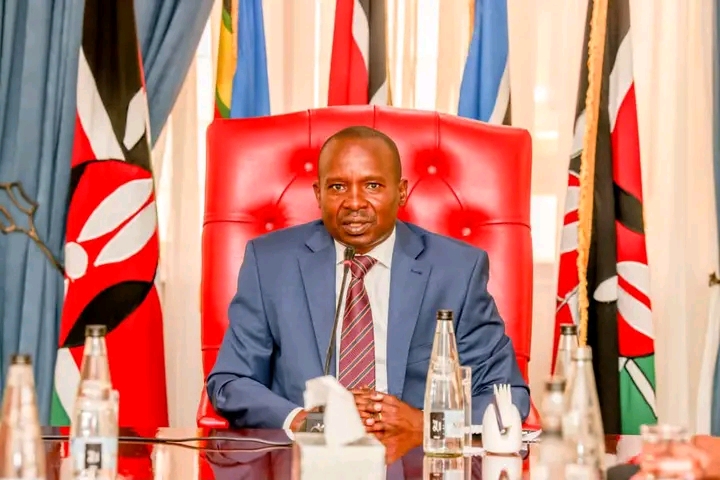
Interior and National Administration Cabinet Secretary Kipchumba Murkomen has launched the Kenya National Mediation Hub, a new initiative designed to strengthen peaceful dispute resolution, dialogue and preventive security in learning institutions across the country.
The hub was launched on Monday, September 21, 2026, at the Wangari Maathai Institute for Peace and Environmental Studies at the University of Nairobi. The initiative was unveiled under the Jukwaa La Wasomi programme and is expected to connect more than 30,000 school-, college-, TVET- and university-based mediation hubs with National Government Administration Officers and other government agencies.
The launch came at a time when the government is placing increased emphasis on conflict prevention, student safety and peaceful engagement in learning institutions. It also coincided with the graduation of Certified Professional Mediators who had undergone training through the Jukwaa La Wasomi Mediation and Preventive Security Training Programme.
The ceremony further marked the 2026 International Day of Peace and the second annual Jukwaa La Wasomi Summit.
National mediation hub
The newly launched Kenya National Mediation Hub is intended to provide a coordinated structure through which conflicts and grievances in learning institutions can be addressed before they escalate.
According to reports on the launch, the hub will connect mediation structures established in schools and campuses with National Government Administration Officers and relevant government agencies. The aim is to strengthen communication and coordination when institutions face disputes, security challenges or other situations requiring intervention.
The initiative is based on the principle that disputes should, where possible, be resolved through dialogue and mediation rather than force.
This means that students, school administrators, lecturers, student leaders and other stakeholders will have mechanisms through which disagreements can be discussed and addressed.
The government expects the approach to help prevent student unrest and improve security within and around learning institutions.
Murkomen's message to trained mediators
Speaking during the event, Murkomen challenged the newly trained mediators to become active promoters of peace in their respective institutions.
The CS said emotions could become heightened in campuses as students express different political views, particularly as Kenya approaches the 2027 General Election.
He urged mediators not to remain passive when they encounter hostile debates or growing tensions.
Murkomen told the mediators that where debates become hostile, they should encourage civility, while situations involving anger should be addressed through calm and dialogue.
His message placed considerable responsibility on the newly trained mediators because they are expected to identify emerging disagreements before they develop into larger conflicts.
The programme therefore seeks to establish a culture in which students can disagree without resorting to violence or destruction.
Focus on the 2027 General Election
The launch also comes as Kenya moves closer to the 2027 General Election.
Murkomen said political emotions were likely to rise in learning institutions as students participate in political discussions and express different opinions.
The CS also raised concerns about the possibility of students being mobilised by political actors and subsequently becoming involved in violent activities.
He urged the trained mediators to identify such situations early and help protect students from being exploited in political activities.
The government's approach, as outlined during the launch, is not to prevent students from participating in political discussions but to encourage peaceful and responsible engagement.
Universities and colleges traditionally provide spaces where young people discuss national issues, political ideas and social challenges. The mediation initiative seeks to ensure that such discussions do not develop into violence.
Students to have a greater role in security decisions
One of the major announcements made by Murkomen was the government's plan to give student leaders and academic administrators a formal role in security decision-making structures.
The CS said a new framework was being developed to bring student leaders and academic administrators directly into security and intelligence committees.
According to Murkomen, this would give students a direct voice in decisions concerning their safety.
The proposal reflects an approach in which security is not viewed solely as the responsibility of government security agencies.
Instead, students and administrators would participate in identifying security concerns and developing possible solutions.
This could also provide authorities with information about problems within institutions that might otherwise go unreported until they become serious.
Jukwaa La Wasomi initiative
The National Mediation Hub is part of the wider Jukwaa La Wasomi initiative.
The programme brings together student leaders, institutional management and security officials to identify security challenges, develop preventive measures, resolve conflicts and promote safety within learning institutions.
The initiative is being implemented nationally through the Universities and Colleges Students' Peace Association of Kenya (UCSPAK) in collaboration with the Ministry of Interior and National Administration.
Other government institutions involved include the Executive Office of the President, the Ministry of Education, the Ministry of Health and the Judiciary, alongside other ministries, departments and agencies.
The programme was initially established as the Zero Radicalisation Campaign before being incorporated into a broader national security approach.
Graduation of professional mediators
The launch of the National Mediation Hub coincided with the graduation of a group of Jukwaa La Wasomi Certified Professional Mediators.
The graduates are expected to contribute to peacebuilding and conflict-resolution efforts in learning institutions.
Their training is intended to equip them with skills that can help students and institutional stakeholders address disagreements constructively.
Murkomen said the new mediators would also contribute to efforts to tackle drug and substance abuse, strengthen cohesion and promote civility in national discourse.
The mediators are therefore expected to have responsibilities extending beyond resolving ordinary disagreements.
Their work could involve identifying tensions, encouraging communication between conflicting parties and supporting preventive interventions where disputes threaten to escalate.
Addressing student unrest
Student unrest has periodically disrupted learning in different parts of the country.
When disagreements between students and administrators are not addressed, they can sometimes escalate into demonstrations, destruction of property, confrontations or prolonged interruptions of academic programmes.
The National Mediation Hub is intended to provide an alternative mechanism for addressing such grievances.
Instead of waiting until a dispute becomes a security incident, mediation allows the concerned parties to sit down and discuss the issues involved.
The government expects this approach to contribute to peaceful learning environments.
Reports on the launch indicate that the hub is specifically intended to help institutions address grievances, prevent student unrest and promote peaceful dispute resolution through dialogue and mediation rather than force.
Concerns about violence among students
The importance of the initiative was also highlighted by Principal Secretary for Higher Education and Research Dr Beatrice Inyangala.
During the summit, Inyangala cited research indicating that 90 per cent of students had experienced violence either as victims or perpetrators.
She said the research indicated that women accounted for 65 per cent of those affected while men accounted for 35 per cent.
The figures cited at the event underline the challenges surrounding safety and peaceful coexistence among young people.
Inyangala said the Jukwaa La Wasomi Summit should provide an opportunity to examine how trust can be built and how dialogue can become part of everyday life.
She also emphasised the importance of equipping young people with skills to handle disagreements constructively.
Tackling drugs and substance abuse
The mediation programme will also form part of efforts to address drug and substance abuse within learning institutions.
Murkomen said the newly trained mediators would support the government's fight against drug and substance abuse among students.
This is significant because substance abuse can create additional challenges for students, families and educational institutions.
By involving trained mediators and student leaders, the government hopes that problems can be identified earlier and appropriate support or intervention provided.
The approach also gives students an opportunity to participate in addressing challenges affecting their own communities.
Strengthening cohesion
Another objective of the programme is to promote cohesion among young people.
Learning institutions bring together students from different counties, communities and social backgrounds. They therefore provide an important environment for young people to learn how to interact with people who may hold different opinions or come from different backgrounds.
Through mediation and dialogue, students can be encouraged to address disagreements without turning differences into hostility.
Murkomen said the new mediators would help strengthen cohesion and promote a culture of civility in national discourse.
Government plans to institutionalise Jukwaa La Wasomi
Murkomen also announced plans to institutionalise the Jukwaa La Wasomi initiative.
The Interior Ministry is developing a multi-agency framework that is expected to give the programme a more formal structure.
According to Murkomen, the institutionalisation process was expected to be undertaken within two weeks.
The move is part of a broader effort to involve citizens and communities in security management.
The government has also been seeking to strengthen community participation in security matters, with the Jukwaa La Wasomi model extending that approach into learning institutions.
Giving young people a voice
A central feature of the initiative is the increased involvement of students in discussions concerning their own safety.
For many years, security decisions affecting institutions of higher learning have largely involved administrators and government agencies.
The framework announced by Murkomen seeks to give student representatives a direct role.
Student leaders can provide information about issues affecting their peers and help authorities understand challenges from the perspective of the student population.
The government hopes that this participation will contribute to early identification of problems and more effective conflict prevention.
Importance of dialogue
At the centre of the National Mediation Hub is the idea that dialogue can prevent disputes from becoming serious security problems.
Mediation involves bringing parties in conflict together and helping them communicate in an effort to find acceptable solutions.
In learning institutions, this can be particularly important because disagreements can involve large groups of students and administrators.
A structured mediation system can provide a platform where grievances are heard before frustration turns into confrontation.
The approach also encourages students to develop skills that can be useful beyond their years in school or university.
A nationwide network
The planned connection of more than 30,000 mediation hubs represents one of the most significant aspects of the programme.
The network will cover universities, TVET institutions, colleges and schools, creating a broad national structure for mediation and preventive security.
Connecting these institutions with National Government Administration Officers and other agencies is expected to improve coordination.
It could also make it easier for institutions to seek assistance when a dispute cannot be resolved internally.
Looking ahead
The launch of the Kenya National Mediation Hub marks a new stage in the government's Jukwaa La Wasomi programme.
Its success will depend on how effectively mediation structures operate within individual institutions, how students and administrators participate and how quickly emerging disputes are identified.
The initiative is expected to remain particularly relevant as Kenya approaches the 2027 General Election and political activity increases.
For the government, the objective is to ensure that learning institutions remain spaces for education, debate and personal development rather than becoming centres of violent confrontation.
The launch therefore places trained mediators, student leaders, administrators and government officials at the centre of a preventive approach to security.
With the planned connection of more than 30,000 mediation hubs, the government is seeking to create a nationwide system through which grievances can be addressed through dialogue and peaceful dispute resolution.
The Kenya National Mediation Hub is consequently expected to play an important role in promoting peace, cohesion and constructive dialogue in learning institutions. Murkomen's launch, together with the graduation of certified professional mediators, signals the government's intention to strengthen preventive approaches to conflict rather than waiting for disputes to escalate.
As the programme is institutionalised, its implementation across schools, colleges, TVET institutions and universities will determine how effectively the mediation structures can support students, administrators and government agencies in dealing with grievances and security concerns.

You Might Also Like
-
Deputy Inspector General Eliud Lagat's engagement in Nakuru has placed youth involvement, community safety and professional policing at the centre of the security conversation. His strongest warning was directed at young people whom he urged not to accept money to act as political goons or fight on
-
Former President Uhuru Kenyatta has handed over the leadership of the Jubilee Party to Fred Matiang’i ahead of the party’s National Delegates Convention. Uhuru says he will remain a Jubilee member and serve in a senior advisory role.
-
PS Beatrice Inyangala has drawn attention to a serious concern in Kenya's education sector, citing research that 90 per cent of students have experienced violence either as victims or perpetrators. She said the research showed that women represented 65 per cent of those affected, compared with 35 pe
-
Deputy President Kithure Kindiki has emerged as a central government coordinator in Kenya's proposed Sh2.2 trillion Lamu oil refinery, after President William Ruto tasked him with chairing the committee working with private investors and government agencies. With the planned September 30, 2026 grou
-
Prime Cabinet Secretary Musalia Mudavadi has called for lasting peace in Sudan, emphasizing the need for accountability, reconciliation and national healing to help the country recover from conflict.
-
Rachel Ruto's recent participation in the United Nations discussion on safer digital systems for children forms part of a broader series of engagements involving First Ladies and other spouses of world leaders. From Nairobi to the G7 discussions in France and now the United Nations in New York, the