



Uhuru Hands Over Jubilee Party Leadership to Fred Matiang’i
Former President Uhuru Kenyatta has handed over the leadership of the Jubilee Party to Fred Matiang’i ahead of the party’s National Delegates Convention. Uhuru says he will remain a Jubilee member and serve in a senior advisory role.
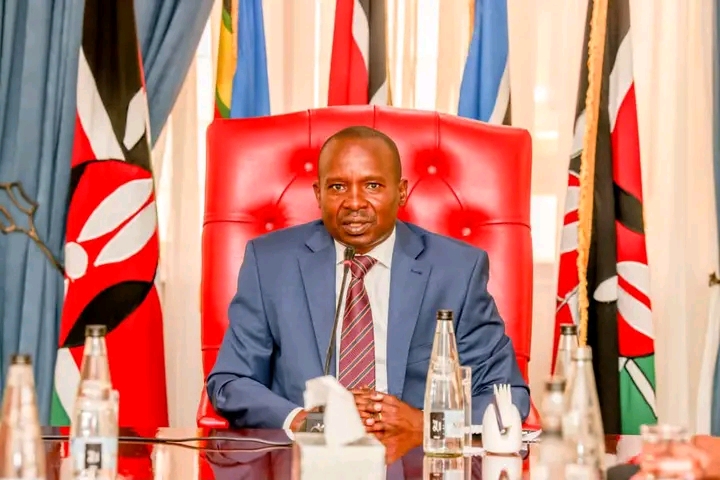
Former President Uhuru Kenyatta has officially handed over the leadership of the Jubilee Party to his deputy, former Interior Cabinet Secretary Fred Matiang’i, as the party prepares for its National Delegates Convention (NDC) and a new phase of political organisation.
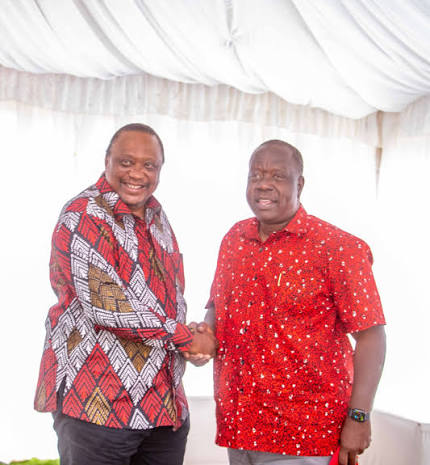
The handover took place in Nairobi on Tuesday, September 22, 2026, during a meeting involving Uhuru and Jubilee Party officials. Uhuru confirmed that although he was relinquishing the formal leadership position, he would remain a member of the party and continue supporting its activities in a senior advisory capacity.
The transition follows a recent High Court ruling concerning the ability of retired presidents to hold formal leadership positions in political parties. On September 14, Justice Lawrence Mugambi upheld Section 6 of the Presidential Retirement Benefits Act, which restricts retired presidents from holding party leadership positions beyond six months after leaving office.
The ruling did not, however, bar former presidents from belonging to political parties or participating in political activities. Uhuru subsequently indicated that he would respect the court decision and facilitate the transition in accordance with the law and Jubilee Party's constitution.
The former president had previously said the delay in completing the Jubilee leadership transition was linked to an internal dispute that required legal clarification. Following the court ruling, his office said the legal position had become clear and that Uhuru was ready to oversee an orderly handover.
The latest development now places Matiang’i at the centre of Jubilee's leadership as the party prepares for its next phase. Matiang’i has been serving as Jubilee's deputy party leader and was previously endorsed by the party as its presidential candidate for the 2027 General Election.
His assumption of the leadership comes at a significant moment for Jubilee, which has been reorganising its structures and positioning itself within Kenya's changing political landscape.
The National Delegates Convention is expected to provide an important platform for addressing the party's leadership structure and other organisational matters. The convention will also come against the backdrop of internal discussions over who should occupy senior positions within the party.
Before the handover, Jubilee Deputy Party Leader Jeremiah Kioni had publicly offered himself for the position of party leader. Kioni said he would seek the position through the party's established democratic processes, arguing that the leadership should ultimately be determined by delegates at the National Delegates Convention.
Kioni's position highlighted the internal discussions that had emerged following Uhuru's decision to leave the formal leadership of the party. He called for an open, transparent and lawful transition and said Jubilee should rely on its constitutional processes when selecting its next leaders.
The handover to Matiang’i therefore comes amid a broader conversation within Jubilee about its future leadership and political direction.
For Uhuru, the change represents a shift from formal party leadership to an advisory role. His continued membership means he can remain involved in political activities associated with the party, although the court ruling limits his ability to occupy a formal party leadership position.
The distinction between party membership and party office has become central to the transition. The High Court ruling specifically addressed the holding of formal leadership positions, while maintaining that retired presidents retain their rights to belong to political parties and participate in political activities.
Uhuru's continued advisory role could therefore allow him to offer guidance to Jubilee officials and members while leaving the day-to-day formal leadership to the new party structure.
Matiang’i, meanwhile, takes over at a time when several political parties and alliances are undergoing significant changes ahead of the 2027 General Election.
The former Interior Cabinet Secretary has in recent months become increasingly active in national politics after returning to the political arena. He has participated in engagements with opposition figures and has spoken on a range of national issues.
On September 21, for example, Matiang’i called for greater transparency regarding Kenya's Government-to-Government oil importation arrangement, demanding disclosure of the agreement and scrutiny of the role of intermediaries.
His political activities have also coincided with wider consultations among opposition parties and leaders seeking to establish possible alliances ahead of the next General Election.
The Jubilee leadership transition is taking place alongside changes within the broader opposition political landscape. On September 21, the Azimio la Umoja coalition announced that it would operate under the name Ukombozi Alliance as part of its restructuring ahead of the 2027 elections.
These developments have increased attention on the role of Jubilee and its leadership as political parties prepare for the next electoral cycle.
Uhuru's continued political involvement is also being discussed within the wider opposition space. Although he has relinquished formal leadership of Jubilee, the former president remains a member of the party and has indicated that he will continue offering guidance.
The court ruling did not prevent him from participating in political activities, meaning his political engagement can continue even though he can no longer occupy the formal party leadership position covered by the law.
The handover also marks an important organisational moment for Jubilee, a party that has undergone several changes since its formation and its role in the 2017 General Election.
Under Uhuru's leadership, Jubilee became one of Kenya's major political parties and served as the principal political vehicle associated with his administration. Following the 2022 General Election, the party moved into a different political phase and became part of the opposition landscape.
The party has since been working to reorganise its structures and strengthen its political presence.
Matiang’i's role could therefore become central to how Jubilee approaches the coming political period. His leadership will be closely connected to the party's internal organisation, grassroots mobilisation and engagement with other political formations.
However, the handover itself does not automatically settle all questions surrounding Jubilee's future political alliances. Those issues will continue to be determined through the party's formal structures and consultations with its members and other political organisations.
The National Delegates Convention is expected to be particularly important because delegates will have a role in determining the party's leadership and organisational direction.
The transition has also raised questions about the future roles of other senior Jubilee officials, including Kioni. His earlier declaration that he was willing to contest the party leadership demonstrated that there were different views within Jubilee about how the succession process should be handled.
The eventual structure agreed upon by the party will determine how Jubilee operates in the period leading to the 2027 General Election.
For now, Uhuru's position has shifted from formal party leader to senior adviser, while Matiang’i takes a more prominent role within the party's leadership structure.
Speaking during the Nairobi meeting, Uhuru reaffirmed his intention to remain part of Jubilee and continue supporting the party. His decision ensures that the transition does not amount to a complete departure from the organisation he helped establish and lead.
The development also demonstrates how the High Court ruling is affecting the political roles of retired presidents. Rather than preventing Uhuru from political participation altogether, the decision has resulted in a separation between formal party office and continued political involvement.
As Jubilee moves towards its National Delegates Convention, attention will now turn to how the party formalises its leadership arrangements and defines its political direction.
The convention will come at a time when Kenya's political parties are already preparing for an increasingly active pre-election period. Parties are reviewing their structures, strengthening grassroots networks and engaging in discussions about possible coalitions and political partnerships.
For Jubilee, the leadership transition provides an opportunity to address these organisational questions while preparing for the next stage of its political journey.
Matiang’i will now have a central role in guiding the party through this period, while Uhuru is expected to continue contributing as a senior adviser and party member.
The transition is therefore both a legal and organisational development for Jubilee. It follows a court decision on the formal political roles of retired presidents while also opening a new chapter in the leadership of the party.
As the National Delegates Convention approaches, Jubilee members and delegates will have the opportunity to shape the party's leadership and future direction through its established internal processes.
For Uhuru Kenyatta, the handover marks the end of his formal leadership of Jubilee but not his association with the party. For Fred Matiang’i, it marks a new stage in his political role within Jubilee.
The coming months are expected to reveal how the new leadership structure works, how the party positions itself within the wider political landscape and how Jubilee engages with other political formations ahead of the 2027 General Election.

You Might Also Like
-
Bomet University students have taken to the streets over unresolved welfare concerns, including water shortages, Chepkosa Dam, delayed bridge works, inadequate security lighting and rising accommodation costs.
-
Deputy Inspector General Eliud Lagat's engagement in Nakuru has placed youth involvement, community safety and professional policing at the centre of the security conversation. His strongest warning was directed at young people whom he urged not to accept money to act as political goons or fight on
-
PS Beatrice Inyangala has drawn attention to a serious concern in Kenya's education sector, citing research that 90 per cent of students have experienced violence either as victims or perpetrators. She said the research showed that women represented 65 per cent of those affected, compared with 35 pe
-
Interior Cabinet Secretary Kipchumba Murkomen has launched the Kenya National Mediation Hub, an initiative aimed at strengthening peaceful conflict resolution, dialogue and preventive security in schools, colleges, TVET institutions and universities. Launched at the University of Nairobi under the J
-
Deputy President Kithure Kindiki has emerged as a central government coordinator in Kenya's proposed Sh2.2 trillion Lamu oil refinery, after President William Ruto tasked him with chairing the committee working with private investors and government agencies. With the planned September 30, 2026 grou
-
Prime Cabinet Secretary Musalia Mudavadi has called for lasting peace in Sudan, emphasizing the need for accountability, reconciliation and national healing to help the country recover from conflict.