



Kindiki Takes Charge as Sh2.2 Trillion Lamu Oil Refinery Set to Transform Kenya’s Energy Sector
Deputy President Kithure Kindiki has emerged as a central government coordinator in Kenya's proposed Sh2.2 trillion Lamu oil refinery, after President William Ruto tasked him with chairing the committee working with private investors and government agencies. With the planned September 30, 2026 groundbreaking, attention is now shifting from discussions and feasibility work toward implementation. The proposed 700,000-barrel-per-day facility is expected to strengthen petroleum supply, support industrialisation, create jobs and increase economic activity around Lamu and the wider region. At the same time, the project faces important questions surrounding crude supply, financing, environmental protection and community participation. Lamu residents have made clear that they want the investment to bring tangible benefits to local people while protecting their livelihoods and environment. The coming months will therefore be significant as Kindiki and other government officials work with Dangote Industries and other stakeholders to move the refinery from preparation into construction. Its eventual success will depend not only on the size of the investment but also on the ability of the government and investors to address the project's technical, environmental, financial and social challenges.
Kenya’s proposed oil refinery in Lamu has entered a major implementation phase, with Deputy President Kithure Kindiki playing a central role in coordinating the government’s preparations for the project. The refinery, being developed in partnership with Nigerian billionaire Aliko Dangote, is expected to become one of the largest private investments in Kenya and a major energy project for East Africa.
The government has placed the project at the centre of its plans to strengthen energy security, promote industrialisation, create employment and expand Kenya’s role as a regional petroleum hub. Recent developments indicate that preparations are advancing toward the planned groundbreaking ceremony on September 30, 2026.
Kindiki's role in the refinery project
President William Ruto previously appointed Deputy President Kithure Kindiki to chair the government committee responsible for coordinating the refinery project with private investors and other stakeholders. The committee was established to help bring together the different government agencies involved in the investment and ensure that preparations move forward.
The President described the refinery as one of the largest investments expected in Kenya, with the project estimated at approximately Sh2.2 trillion. Kindiki's responsibility therefore goes beyond attending meetings. His role involves coordinating government institutions, investors and other stakeholders as the country prepares for construction.
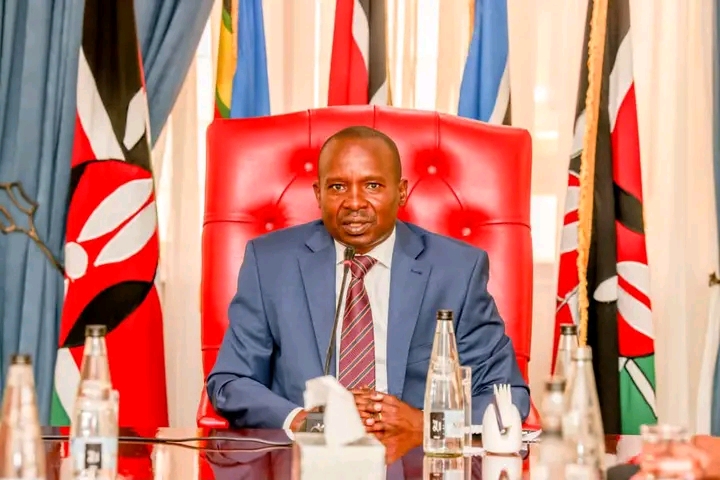
On September 9, Kindiki chaired a high-level inter-ministerial and inter-agency meeting to prepare for the launch ceremony. The meeting brought together government institutions involved in the project and focused on preparations for the groundbreaking.
Kindiki described the refinery as a "one-in-a-generation investment", underlining the government's view that the project could have effects extending beyond the energy sector.
What the Lamu refinery will involve
The planned facility is expected to have a refining capacity of approximately 700,000 barrels of crude oil per day. If completed at the proposed capacity, it would become the largest refinery in East Africa and one of the largest refining facilities on the African continent.
The project is being promoted by Dangote Industries, whose owner Aliko Dangote already operates a major refinery in Nigeria.
The company has indicated that the Kenyan project is expected to take roughly 30 months to three years to construct. Its financing plan includes internally generated funds, bonds and proceeds from a planned initial public offering, according to Reuters.
The proposed facility in Lamu is expected to supply refined petroleum products to Kenya and other countries in the region. This is important because East African countries currently depend heavily on imported refined petroleum products.
The proposed refinery could therefore change the way petroleum products are supplied across the region if it is successfully completed and operates at the planned scale.
Why Lamu was selected
The selection of Lamu followed months of discussions about where the East African refinery should be located. Tanzania had previously been considered as a possible location, but Dangote Industries eventually selected Lamu in Kenya.
The location has several strategic considerations. Lamu has a deep-water port and is linked to the wider Lamu Port-South Sudan-Ethiopia Transport (LAPSSET) Corridor. The refinery could therefore become an important industrial anchor for the port and the broader corridor.
Lamu Port is intended to serve as a major gateway connecting Kenya with neighbouring countries and the wider Horn of Africa. The refinery could increase activity at the port by creating demand for crude oil imports, petroleum exports, transportation services and other logistics.
The EastAfrican has reported that the investment could give LAPSSET a new economic role by attracting additional industries and businesses around Lamu Port.
Jobs and economic opportunities
One of the most significant issues surrounding the refinery is employment.
The government expects the wider development associated with the refinery and related industrial activities to create more than 60,000 jobs, with approximately half expected to be skilled positions.
The employment opportunities could range from engineers and technicians to construction workers, drivers, security personnel, logistics workers and service providers.
The project could also generate indirect employment. Businesses supplying equipment, food, accommodation, transportation, construction materials and other services could benefit from increased economic activity.
For young people in Lamu and neighbouring counties, the project could create opportunities for technical training and employment. However, questions have also been raised by local residents about whether they will receive a substantial share of those opportunities.
Lamu residents demand involvement
While the government and investors have highlighted the potential economic benefits, some residents and local leaders have called for greater transparency and community participation.
Residents have said they are not necessarily opposed to the refinery but want to be properly involved in decisions affecting their land, environment and livelihoods.
Some local representatives have particularly raised concerns about fishing communities. Lamu has a strong fishing economy, and residents want assurances that industrial development will not damage traditional fishing grounds or marine ecosystems.
Community representatives have also called for local employment and business opportunities.
This means the government faces an important task in ensuring that the project is not only implemented quickly but also accompanied by meaningful engagement with people living in the affected area.
Environmental concerns
Environmental considerations are another major part of the refinery debate.
Lamu is an environmentally sensitive coastal area, and environmental organisations have raised concerns about the potential effects of large-scale fossil-fuel infrastructure on marine ecosystems and local communities.
Greenpeace Africa, for example, has called for the project to undergo further scrutiny, arguing that the environmental and social effects should be properly assessed and subjected to public participation. .Africa
The government's position is focused on the project's potential economic and energy benefits, while environmental groups have emphasised the need for safeguards.
The eventual implementation of the refinery will therefore require balancing industrial development with environmental protection, particularly because Lamu's economy and way of life are closely connected to the coast and marine resources.
Energy security
For Kindiki and the government, one of the most important arguments for the refinery is energy security.
East African countries spend significant amounts importing refined petroleum products. International disruptions can therefore affect fuel availability and prices in the region.
A large refinery located closer to East African markets could potentially reduce dependence on distant sources of refined petroleum products.
The refinery could also create a more integrated petroleum supply chain, involving crude imports, refining, storage, transportation and distribution.
However, the project still faces questions about where it will obtain the large volumes of crude oil needed to operate at 700,000 barrels per day. Reuters has highlighted crude supply as one of the key challenges facing the proposed project because Kenya does not currently have commercial oil production on a scale that could supply such a refinery.
Link to Kenya's oil resources
President Ruto has also linked the refinery project to Kenya's broader plans for developing its petroleum and mineral resources.
The President has spoken about the need for Kenya to focus more strongly on resources beneath the ground, including oil and minerals. He has also discussed the possibility of a crude oil pipeline associated with the refinery project.
This could eventually connect Kenya's petroleum infrastructure with crude oil resources and regional supply networks.
The development would therefore not be limited to the refinery itself. It could involve pipelines, storage facilities, transportation infrastructure and petrochemical industries.
Dangote's investment
Aliko Dangote's involvement has given the project significant attention because of his experience in the African energy sector.
Dangote operates a major refinery in Nigeria, which has a capacity of approximately 650,000 barrels per day. His company plans to use a combination of internal financing, bonds and an IPO to finance the proposed Kenyan refinery.
The Kenyan refinery would represent Dangote Industries' biggest refining investment outside Nigeria.
The company's decision to select Lamu has also ended months of uncertainty over whether the refinery would be located in Kenya or Tanzania.
The September 30 groundbreaking
The Kenyan government is now preparing for the planned groundbreaking ceremony on September 30, 2026.
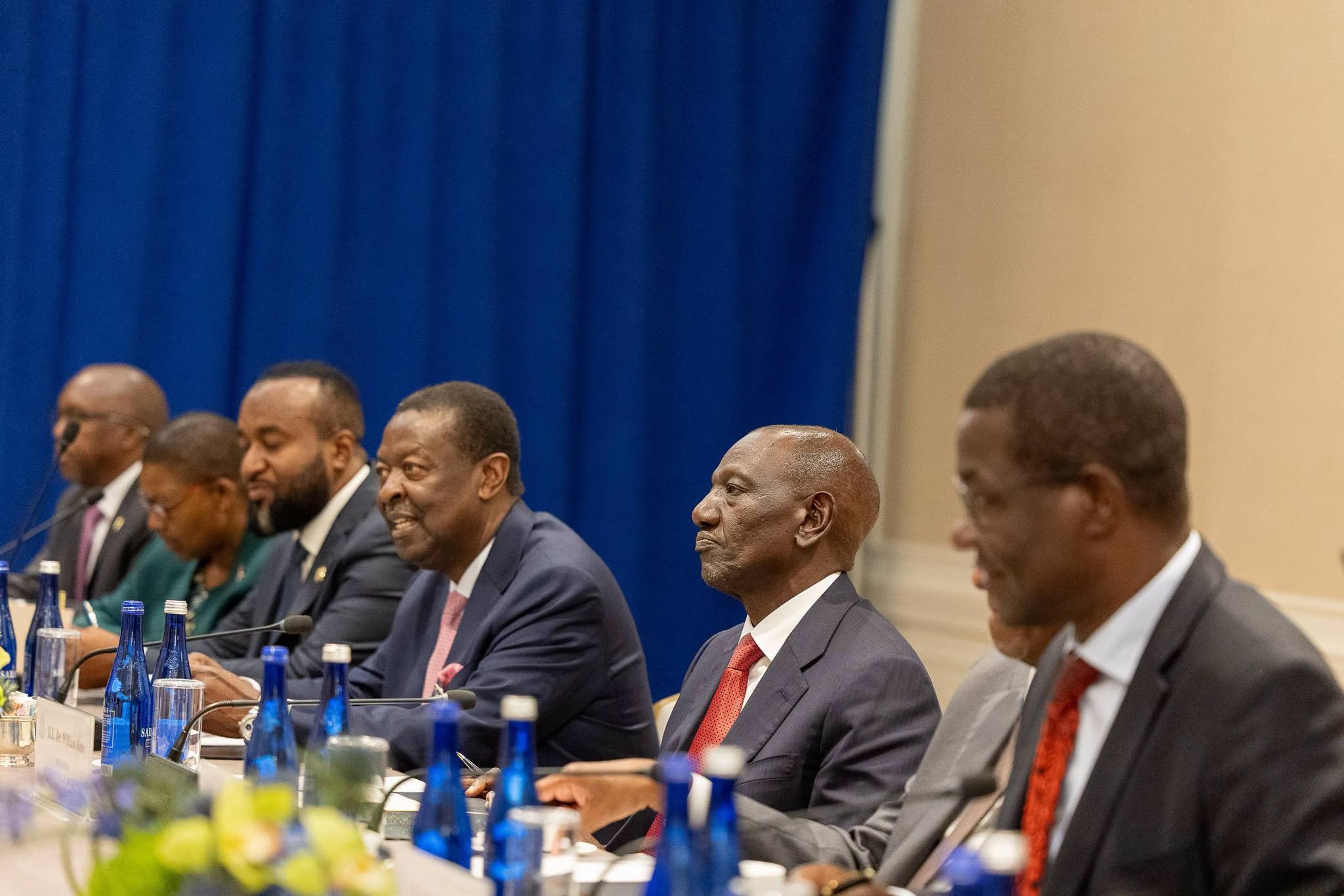
President Ruto has said Kenya is ready to break ground on the East Africa refinery after discussions with Dangote and Africa Finance Corporation officials in New York. He said the discussions focused on financing and final preparations for the project.
Kindiki's coordination role is particularly important at this stage because the government needs to ensure that the different agencies involved are prepared for the commencement of the project.
The Deputy President's recent meeting with ministers and government agencies shows that the administration is treating the refinery as a major national investment rather than an ordinary private-sector development.
What the refinery could mean for Lamu
If successfully implemented, the refinery could significantly change Lamu's economic landscape.
The county could see increased demand for housing, transportation, construction, hospitality, logistics and other services.
Lamu Port could also receive increased activity, while the wider LAPSSET corridor could benefit from new industrial investment.
The development could encourage other investors to establish businesses around the refinery, potentially creating an industrial cluster involving petroleum storage, petrochemicals, manufacturing and logistics.
However, these benefits will depend on how the project is implemented and whether local communities participate meaningfully in the economic opportunities.
Challenges ahead
Despite the optimism surrounding the project, several challenges remain.
The first is financing. Although Dangote has outlined a financing strategy, a project of this scale requires substantial capital.
The second is crude supply. A refinery designed to process 700,000 barrels per day needs a reliable and economically viable source of crude oil. Reuters has identified this as one of the major challenges facing the project.
The third is environmental protection. Lamu's coastal ecosystem requires careful management, particularly because local communities depend on fishing and tourism.
The fourth is community participation. Residents have requested greater transparency and assurances that they will benefit from employment and business opportunities.
The fifth involves infrastructure. A refinery of this size requires roads, pipelines, storage facilities, electricity, water, port infrastructure and other supporting facilities.

You Might Also Like
-
Deputy Inspector General Eliud Lagat's engagement in Nakuru has placed youth involvement, community safety and professional policing at the centre of the security conversation. His strongest warning was directed at young people whom he urged not to accept money to act as political goons or fight on
-
Former President Uhuru Kenyatta has handed over the leadership of the Jubilee Party to Fred Matiang’i ahead of the party’s National Delegates Convention. Uhuru says he will remain a Jubilee member and serve in a senior advisory role.
-
PS Beatrice Inyangala has drawn attention to a serious concern in Kenya's education sector, citing research that 90 per cent of students have experienced violence either as victims or perpetrators. She said the research showed that women represented 65 per cent of those affected, compared with 35 pe
-
Interior Cabinet Secretary Kipchumba Murkomen has launched the Kenya National Mediation Hub, an initiative aimed at strengthening peaceful conflict resolution, dialogue and preventive security in schools, colleges, TVET institutions and universities. Launched at the University of Nairobi under the J
-
Prime Cabinet Secretary Musalia Mudavadi has called for lasting peace in Sudan, emphasizing the need for accountability, reconciliation and national healing to help the country recover from conflict.
-
Rachel Ruto's recent participation in the United Nations discussion on safer digital systems for children forms part of a broader series of engagements involving First Ladies and other spouses of world leaders. From Nairobi to the G7 discussions in France and now the United Nations in New York, the