




DIG Eliud Lagat Issues Stern Warning to Nakuru Youths: “Don’t Allow Politicians to Turn You Into Goons”
Deputy Inspector General Eliud Lagat's engagement in Nakuru has placed youth involvement, community safety and professional policing at the centre of the security conversation. His strongest warning was directed at young people whom he urged not to accept money to act as political goons or fight on behalf of others. At the same time, he ordered a three-day crackdown on bhang and illicit brews in identified parts of Nakuru, commissioned the East Gate Police Post in Rafiki and called on police officers to provide professional services. He also urged parents to take an active role in guiding their children and preventing them from becoming involved in criminal activities. With Kenya heading toward the 2027 General Election, Lagat's remarks underline the importance authorities are placing on maintaining security while discouraging youth involvement in political violence. The opening of additional police infrastructure in Nakuru and the targeted operations against drugs and illicit alcohol are part of the security response being implemented in the county.
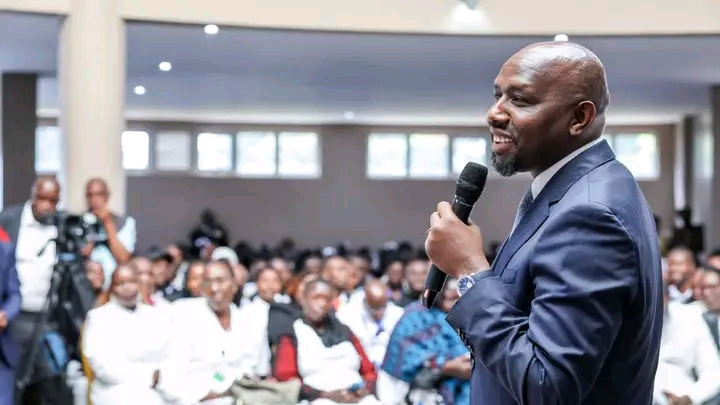
Deputy Inspector General of Police Eliud Lagat has issued a strong warning to young people in Nakuru and across Kenya against allowing themselves to be recruited and used as political goons, urging them to reject money offered in exchange for participating in violence or confrontations during political activities.
Lagat delivered the message while engaging security officials in Nakuru and during the commissioning of the East Gate Police Post at Rafiki in Rongai Sub-County. His remarks come as Kenya gradually moves toward the 2027 General Election, a period in which political activities and public gatherings are expected to increase.
Warning to youths
A central part of Lagat's message was directed at young people who may be approached by politicians, political groups or other individuals seeking people to participate in confrontations.
According to reports of his remarks, Lagat urged youths not to allow themselves to be used to fight on behalf of other people. He specifically warned against accepting money to become political goons.
His message was that young people should think carefully about the consequences of accepting such offers. While a young person may receive money for participating in a confrontation, the consequences could include arrest, injuries, criminal charges or even loss of life.
Lagat's warning therefore placed responsibility on youths to reject recruitment into political violence and instead pursue peaceful participation in political activities.
The warning is particularly relevant as the country approaches the 2027 General Election. Political campaigns, rallies and other activities typically bring large groups of people together, and security agencies have a responsibility to maintain public order while protecting citizens' rights.
Security concerns in Nakuru
Lagat's remarks were made against the backdrop of broader security concerns in parts of Nakuru County.
During his engagement with the Nakuru County Police Command, the Deputy Inspector General addressed issues involving crime, drugs, illicit alcohol and the need for stronger police presence in communities.
He specifically directed police commanders in areas including Keringet in Kuresoi South, Kampi ya Moto and Rafiki in Mogotio to conduct a three-day operation targeting the distribution of bhang and illicit brews. Officers were instructed to pursue people involved in the illegal trade and take appropriate action under the law.
The directive demonstrates that Lagat's security message was not limited to politics. He also connected community security with the fight against drugs and illicit alcohol, particularly where these problems can contribute to crime and other forms of insecurity.
East Gate Police Post
Another major development associated with Lagat's visit was the commissioning of the East Gate Police Post at Rafiki in Rongai Sub-County.
The establishment of the police post is intended to increase the accessibility of security services to residents in the area. The post initially received eight police officers, with further expansion expected as police infrastructure and accommodation are developed.
Local leaders welcomed the police post, pointing to the area's sizeable population, including university students.
The presence of a police facility within a community can make it easier for residents to report crimes, seek assistance and receive faster responses to security incidents. It can also improve police visibility and strengthen cooperation between law enforcement officers and residents.
Rongai MP Paul Chebor was among those who welcomed the development, while Nakuru Woman Representative Liza Chelule and Kuresoi North MP Alfred Mutai also linked improved security services to the wellbeing and development of local communities.
Police urged to serve professionally
Lagat also challenged police officers to ensure that police stations become centres of excellence in service delivery.
His message to officers was that security work should be conducted professionally and in accordance with the Constitution. This places emphasis not only on fighting crime but also on the manner in which police officers interact with members of the public.
Professional policing involves responding to complaints, assisting victims, respecting legal procedures and treating members of the public appropriately.
For communities, trust in law enforcement is important. Residents are more likely to report criminal activity when they believe that their complaints will be handled fairly and professionally.
Lagat's call therefore highlighted the importance of improving the relationship between the police and the communities they serve.
Parents urged to guide young people
The Deputy Inspector General also brought parents into the discussion about youth security.
He urged parents to remain closely involved in the lives of their children and to provide guidance that can help young people avoid criminal activities and other harmful behaviour.
This aspect of his remarks reflects the broader idea that security cannot be achieved through police action alone. Families, schools, religious institutions, community leaders and other stakeholders also have roles to play in helping young people make responsible decisions.
Young people can face different pressures, including unemployment, peer influence, drugs, criminal networks and political mobilisation. Parents and guardians can help by maintaining communication with their children and understanding the challenges they face.
Lagat's message therefore placed part of the responsibility for youth safety within the family and community environment.
Connection to the Utumishi Girls tragedy
Lagat also referred to the tragic incident at Utumishi Girls High School in Gilgil, Nakuru County, in discussing the importance of parents remaining involved in their children's lives.
The May 28, 2026, dormitory fire at the school killed 16 students and injured 79 others. The incident resulted in a major government and security response, investigations and the eventual reopening of the school.
The school tragedy has remained a significant security and safety issue in Nakuru County. Authorities have also emphasised the need for safety measures and support for students following the incident.
Lagat's reference to the tragedy in the context of parenting underscored his wider argument that adults have a responsibility to remain attentive to the wellbeing and behaviour of young people.
Youths and the 2027 political period
The warning against political goonism comes at a time when political activity is expected to become increasingly prominent ahead of the 2027 elections.
Young people form a substantial part of Kenya's population and frequently participate in political campaigns, rallies and community mobilisation. Their participation in democratic activities is lawful, but Lagat's warning focused on situations where youths could be recruited specifically to intimidate opponents or participate in violence.
The distinction is important.
Young people have the right to participate in political activities, express their views and support political candidates or parties of their choice. Lagat's warning was directed at participation in violence and confrontations rather than peaceful political engagement.
His message was therefore for youths to protect their future and avoid being used by others to carry out activities that could expose them to criminal or personal consequences.
Crackdown on drugs and illicit alcohol
The security operation ordered by Lagat also focused on bhang and illicit alcoholic drinks.
The areas specifically mentioned in reports were Keringet, Kampi ya Moto and Rafiki. The police commanders in those areas were given three days to conduct operations against people involved in the distribution of the substances.
Drug and illicit alcohol concerns are frequently treated by security agencies as both public-safety and crime issues. Police operations can target suppliers and distributors, while communities and families can contribute by reporting suspicious activities and helping young people avoid substance abuse.
Lagat's directive therefore combined enforcement with his broader appeal for community responsibility.
Security and development
The commissioning of the East Gate Police Post also demonstrated the relationship between security and development.
Areas experiencing insecurity can face difficulties attracting investment, businesses and other services. Residents may also experience challenges travelling or conducting business if they feel unsafe.
Improved security infrastructure can help create an environment in which businesses, schools and other institutions operate more confidently.
Local leaders who welcomed the new police post therefore connected security with broader development objectives in Rongai and Nakuru County.
A message of responsibility
Taken together, Lagat's remarks focused on responsibility at several levels.
For youths, the message was to reject recruitment into political violence and avoid criminal activities. For parents, he called for greater involvement in guiding children. For police officers, he demanded professionalism and constitutional conduct. For commanders, he ordered targeted action against drugs and illicit alcohol.
The approach reflects an emphasis on both enforcement and prevention.
Police can arrest people involved in criminal activities, but preventing young people from entering criminal networks can also require families and communities to intervene early.
Security preparations
Lagat's comments also fit into broader preparations by the National Police Service for emerging security challenges.
Earlier this month, while addressing newly trained General Service Unit recruits, Lagat emphasised discipline, readiness to serve and the need for officers to be prepared for different security circumstances. Reports also linked the wider security preparations to challenges such as banditry, severe weather and the 2027 General Election.
His latest engagement in Nakuru therefore forms part of a broader security agenda that combines increased police capacity, community policing, crime prevention and preparations for major national events.
What Lagat's message means for Nakuru youths
For young people in Nakuru, the most significant part of Lagat's message was the warning against becoming instruments of violence for other people.
His argument was that youths should not allow themselves to be persuaded by short-term financial offers into activities that could have long-term consequences.
Political participation itself remains different from political violence. Young people can attend rallies, discuss policies, vote, campaign peacefully and participate in civic activities without becoming involved in confrontations.
The warning also comes with a broader appeal for young people to consider their future. A criminal record, injury or involvement in violence could affect education, employment and family life.

You Might Also Like
-
Bomet University students have taken to the streets over unresolved welfare concerns, including water shortages, Chepkosa Dam, delayed bridge works, inadequate security lighting and rising accommodation costs.
-
Former President Uhuru Kenyatta has handed over the leadership of the Jubilee Party to Fred Matiang’i ahead of the party’s National Delegates Convention. Uhuru says he will remain a Jubilee member and serve in a senior advisory role.
-
PS Beatrice Inyangala has drawn attention to a serious concern in Kenya's education sector, citing research that 90 per cent of students have experienced violence either as victims or perpetrators. She said the research showed that women represented 65 per cent of those affected, compared with 35 pe
-
Interior Cabinet Secretary Kipchumba Murkomen has launched the Kenya National Mediation Hub, an initiative aimed at strengthening peaceful conflict resolution, dialogue and preventive security in schools, colleges, TVET institutions and universities. Launched at the University of Nairobi under the J
-
Deputy President Kithure Kindiki has emerged as a central government coordinator in Kenya's proposed Sh2.2 trillion Lamu oil refinery, after President William Ruto tasked him with chairing the committee working with private investors and government agencies. With the planned September 30, 2026 grou
-
Prime Cabinet Secretary Musalia Mudavadi has called for lasting peace in Sudan, emphasizing the need for accountability, reconciliation and national healing to help the country recover from conflict.