Musalia Mudavadi Engages Sberbank Top Management in Moscow as Kenya Seeks New Economic Opportunities
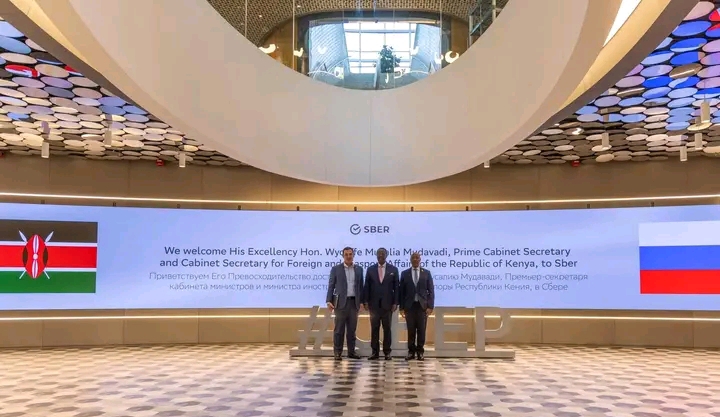
Musalia Mudavadi’s engagement with senior management at Sberbank’s headquarters in Moscow highlights Kenya’s efforts to strengthen economic diplomacy during the Third Russia–Africa Summit period. The meeting provides a potential platform for exploring financial services, digital innovation, investment and broader commercial cooperation. Kenya is pursuing expanded markets for tea, coffee and horticultural products while seeking partnerships in agriculture, energy, manufacturing, science and technology. These objectives form part of a wider effort to diversify international partnerships and promote economic growth.
Mudavadi is in Russia ahead of the Third Russia–Africa Summit and the accompanying Russia–Africa Economic and Humanitarian Forum, scheduled for October 28–30, 2026. Kenya is using the high-level engagements to pursue expanded markets for its agricultural products, encourage investment and explore partnerships in areas such as energy, manufacturing, science and technology. Sberbank is one of Russia’s major financial institutions and has expanded its activities into digital services, artificial intelligence and other technology-driven businesses. A meeting with its senior management therefore provides a potential platform for Kenya to explore cooperation beyond traditional banking, although the specific agreements, commitments or outcomes of Mudavadi’s engagement at the headquarters need to be confirmed through an official statement.
The meeting also highlights the importance of economic diplomacy in Kenya’s foreign policy. Through engagements with financial institutions, government officials and private-sector leaders, the country seeks to turn international relationships into practical opportunities for businesses, investors and citizens.Kenya seeks investment and stronger economic partnerships
Kenya has been working to diversify its economic partnerships and identify new sources of investment. The government has highlighted trade, energy, food security, manufacturing and emerging technologies as priority areas in its engagement with Russia.
Before departing for Moscow, Mudavadi discussed the objectives of Kenya’s participation in the summit with Russian Ambassador to Kenya Vsevolod Tkachenko. The discussions included expanding economic cooperation, attracting investment and pursuing opportunities for young innovators.
The meeting at Sberbank’s headquarters fits into this broader agenda by creating an opportunity to engage with an important player in Russia’s financial and technological sector.Sberbank’s experience in digital services could provide a basis for exploring areas of mutual interest with Kenyan institutions.
Potential areas for discussion could include:
Digital financial services: Exploring ways technology can make financial services more accessible and efficient.
Business financing: Identifying opportunities for financial partnerships that could support enterprises and investment projects.
Financial technology innovation: Encouraging exchanges of expertise in digital banking and technology-driven financial services.
Cybersecurity: Examining how financial institutions protect digital systems, transactions and customer information.
Skills development: Exploring professional exchanges and technical training in financial services and technology.Supporting Kenyan businesses and exporters
One of the central objectives of Mudavadi’s visit to Russia is to improve access to international markets for Kenyan products.
The government has specifically identified tea, coffee and horticultural produce as products for which Kenya wants stronger access to the Russian market. It is also pursuing opportunities in agriculture, manufacturing, energy, science and technology.
The engagement with Sberbank could be relevant to this wider commercial agenda if it leads to discussions with businesses or financial partners interested in supporting trade between the two countries.Technology is another important area in Kenya’s engagement with Russia.Manufacturing is equally important. Kenya wants to increase the value of goods produced locally, expand industrial capacity and create employment.
Financial institutions can contribute to these objectives by financing viable commercial projects, facilitating investment and supporting businesses seeking to expand into new markets.
However, the existence of these national priorities does not establish that Sberbank has committed funds to any particular Kenyan energy, agricultural or manufacturing project.
The next important step would be to identify specific projects, assess their financial viability and establish whether interested partners are prepared to provide funding, technology or expertise.
Mudavadi’s discussions with the Russian ambassador before the summit included emerging technologies, particularly artificial intelligence. The government has expressed interest in partnerships that can support innovation and create opportunities for young people.
Sberbank has developed technology capabilities extending into artificial intelligence and digital services. This makes its expertise potentially relevant to conversations about innovation, although the precise role of artificial intelligence in Mudavadi’s meeting has not been independently confirmed.
For Kenya, cooperation in technology could create opportunities in several areas.Technology is another important area in Kenya’s engagement with Russia.
Mudavadi’s discussions with the Russian ambassador before the summit included emerging technologies, particularly artificial intelligence. The government has expressed interest in partnerships that can support innovation and create opportunities for young people.
Sberbank has developed technology capabilities extending into artificial intelligence and digital services. This makes its expertise potentially relevant to conversations about innovation, although the precise role of artificial intelligence in Mudavadi’s meeting has not been independently confirmed.
For Kenya, cooperation in technology could create opportunities in several areas.Despite the potential opportunities, Kenya must carefully assess any proposed financial or technological partnership.
International business transactions require due diligence, transparent agreements and compliance with applicable financial regulations. Differences in regulatory environments, payment arrangements, currency movements and international restrictions may also affect commercial cooperation.
Kenya should ensure that any financial arrangements protect public resources, respect domestic laws and provide clear economic benefits.
Technology partnerships would require additional safeguards covering data privacy, cybersecurity and the protection of sensitive information.
The government should also communicate the outcomes of high-level meetings clearly. Where agreements are signed, the public should be informed about their objectives, the parties involved, the financial commitments and the expected benefits.The immediate expectation from Mudavadi’s visit is that Kenya will use its engagement with Russia to pursue stronger economic relationships and new commercial opportunities.
For Kenyan businesses, the key issues are whether access to the Russian market improves, whether investment becomes available and whether new partnerships create opportunities for local producers and innovators.
For the financial and technology sectors, any future cooperation would be most valuable if it improves access to services, supports local expertise and creates sustainable commercial opportunities.
For the government, the challenge will be to convert diplomatic goodwill into measurable results, including increased exports, investment, skills development and employment.
The Sberbank meeting is therefore significant as part of Kenya’s broader engagement with Russia, but its specific results should be judged by confirmed agreements and actions that follow.

You Might Also Like
-
Deputy President Kithure Kindiki's visit to Juja on Wednesday, October 28, 2026, centred on the launch of the approximately 14-kilometre Kimbo–Matangi–Gwa Kairu Road, a project valued at KSh1.2 billion. Kindiki assured residents that construction would not stall and called on political leaders
-
Chief Justice Martha Koome’s call for adequate funding and stronger institutional preparation highlights the important role the Judiciary will play in Kenya’s 2027 General Election. Her announcement on October 28, 2026, of specialised training targeting more than 400 judicial officers demonstrat
-
A Nairobi court has declined to review the bail terms of a manyoka stunt matatu driver accused of causing a fatal crash along Enterprise Road in June. The accident claimed the lives of three passengers and left several others injured, raising renewed concerns about reckless driving and passenger saf
-
President William Ruto's visit to Moscow for the Third Russia–Africa Summit and Economic and Humanitarian Forum is an important diplomatic engagement for Kenya. The government is seeking to expand export markets, attract Russian investment, strengthen manufacturing, explore energy and infrastructu
-
KEMSA's call for all 47 counties to allow SHA to facilitate payments for medicines highlights the need for a more dependable healthcare financing system in Kenya. The proposal seeks to improve the flow of money to the medical supply chain, reduce payment difficulties and help healthcare facilities m
-
William Owuor Ochieng’, popularly known on Facebook as “William Jahome,” has been arrested in Nairobi’s Central Business District over allegations of online threats, incitement to violence and ethnic hostility. The arrest has renewed attention on the growing concerns surrounding the misuse o