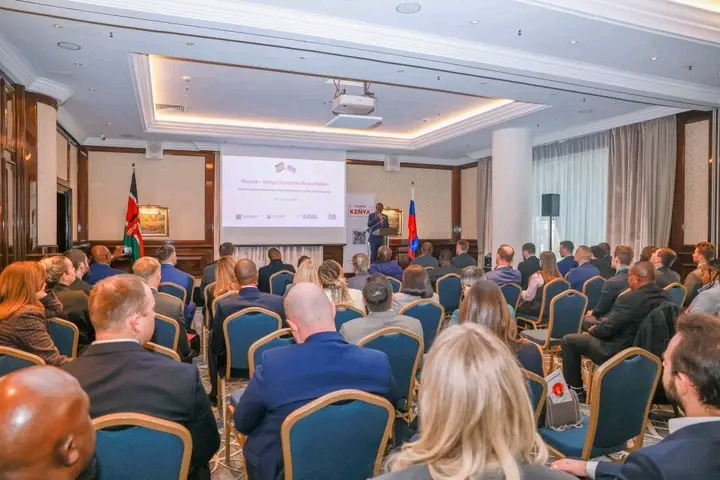
President William Ruto Visits Moscow for the Third Russia–Africa Summit: Kenya Seeks Trade, Investment and Stronger Diplomatic Relations
President William Ruto's visit to Moscow for the Third Russia–Africa Summit and Economic and Humanitarian Forum is an important diplomatic engagement for Kenya. The government is seeking to expand export markets, attract Russian investment, strengthen manufacturing, explore energy and infrastructure partnerships, improve food security and advance technology cooperation. The summit also offers Kenya an opportunity to engage other African leaders on peace, security and the continent's role in global affairs.
President William Ruto has arrived in Moscow, Russia, to represent Kenya at the Third Russia–Africa Summit and Russia–Africa Economic and Humanitarian Forum, scheduled for October 28–29, 2026, with related engagements running through October 30. The visit aims to strengthen Kenya's diplomatic relationship with Russia, expand trade opportunities, attract foreign investment and establish partnerships in strategic sectors that can support the country's economic development.
The visit marks President Ruto's first trip to Moscow since taking office in 2022. He is leading a high-level Kenyan delegation that includes Prime Cabinet Secretary and Cabinet Secretary for Foreign and Diaspora Affairs Musalia Mudavadi, alongside other senior government officials.One of the main objectives of President Ruto's visit is to strengthen economic cooperation between Kenya and Russia. The Kenyan government wants the relationship to produce tangible benefits for businesses, farmers, manufacturers and ordinary citizens.
According to reports from the Moscow business engagements, Ruto is seeking to narrow the imbalance in trade between the two countries by encouraging Russian companies to invest in Kenya and by improving access for Kenyan products in the Russian market.
The President is expected to promote Kenya as an attractive destination for international investors because of its strategic position in East Africa, skilled workforce, established financial services and access to the wider African market.Kenya is internationally recognised for its tea, coffee, flowers, fresh produce and other agricultural products. The government wants to expand the number of international markets available to Kenyan producers so that the country does not depend too heavily on a limited number of export destinations.
During the Moscow engagements, Ruto is expected to push for better access for Kenyan tea, coffee, cut flowers, horticultural produce and value-added agricultural goods.
Russia represents a potential market for Kenyan agricultural exports, but several challenges must be addressed. These include transportation costs, payment arrangements, distribution networks, trade restrictions and the need for direct commercial relationships between producers and buyers.Investment in manufacturing and industrial development
Another important priority is attracting Russian investment into Kenya's manufacturing sector.
President Ruto has argued for greater value addition so that African countries can move away from exporting raw materials and importing expensive finished goods.
According to reporting on his Moscow engagements, Kenya is seeking investment in agro-processing, engineering, fertiliser manufacturing, mining and other industrial activities.
Agro-processing could be particularly important for Kenya because it would allow farmers and agricultural businesses to process more of their produce locally before selling it.Russian companies could also explore opportunities to manufacture industrial inputs and equipment in Kenya. If implemented through viable partnerships, such projects could support technology transfer, create skilled jobs and reduce dependence on some imported products.
Nevertheless, investment proposals must be evaluated carefully. The government will need to consider financing arrangements, environmental standards, local employment commitments, taxation and the long-term commercial sustainability of proposed projects.
The objective should be to establish partnerships that strengthen Kenya's productive capacity rather than simply increase imports.Energy and infrastructure are also among the sectors Kenya is promoting during the visit.
Kenya needs reliable and affordable energy to support manufacturing, digital services, transport and other economic activities. The government is therefore interested in international partnerships that can support electricity generation, energy infrastructure and industrial development.
Ruto is expected to explore opportunities involving Russian companies in energy and infrastructure, including possible cooperation in engineering and technology. Renewable energy, geothermal development, green hydrogen and electric mobility are among the areas Kenya has identified as potential investment opportunities.
Kenya's experience in geothermal energy could provide a foundation for technical cooperation, research and investment discussions.Access to competitively priced agricultural inputs could help farmers manage production costs. If Russian companies establish viable local production or distribution partnerships, Kenya could also benefit from improved access to supplies.
However, any agreement would need to account for international sanctions, shipping arrangements, insurance, payment systems and other factors that can complicate trade with Russia.
The government must also ensure that any new supply arrangements are commercially sound and do not expose Kenya to unnecessary disruptions.
The wider goal is to strengthen agricultural productivity, improve food availability and reduce the vulnerability of consumers to international supply shocks.The meeting is expected to bring together representatives from 48 African countries, with 22 countries represented by their heads of state, according to information released by the Kremlin. The summit is scheduled for October 28–29, 2026, in Moscow.
The gathering provides a platform for discussions on trade, political cooperation, international peace, regional security and economic development.
A bilateral meeting between Ruto and Putin has been reported as a possibility, although it should not be presented as completed unless an official account confirms that it has taken place.
If the two leaders meet, Kenya could use the opportunity to discuss bilateral trade, investment, energy cooperation, agricultural supplies and the welfare of Kenyan citizens affected by the Russia–Ukraine war.Ruto is also expected to engage other African leaders and representatives of international institutions and major companies.
These meetings could help Kenya identify new partners and strengthen cooperation on issues that require a coordinated African response.
The summit also offers African countries an opportunity to discuss how they can secure better terms in international trade and gain a stronger voice in global decision-making.Peace, security and Africa's position in global affairs
Beyond economic cooperation, the Russia–Africa Summit is intended to address international peace and security.
African countries continue to face several challenges, including armed conflicts, terrorism, political instability and humanitarian emergencies. Discussions at the summit provide an opportunity for participating governments to exchange views on conflict prevention, mediation and regional stability.
Kenya has an interest in regional peace because instability in neighbouring countries can affect trade, security, migration and humanitarian operations.
The country can therefore use the gathering to advocate peaceful resolution of conflicts and stronger international cooperation.President Ruto's visit is taking place amid growing concern among Kenyan families whose relatives travelled to Russia after reportedly being promised civilian employment but later became involved in military service connected to the war against Ukraine.
The issue has placed an additional responsibility on Kenya's diplomatic engagement with Moscow.
Families have called on the government to help establish the whereabouts of missing relatives, secure the return of Kenyans who want to come home and facilitate the repatriation of the remains of those who have died.
Reporting ahead of the summit indicates that the government has acknowledged cases involving Kenyans connected to the conflict, although figures supplied by officials and families have differed. For young people, new investments in manufacturing, digital innovation and infrastructure could create employment and skills-development opportunities.
For local businesses, stronger commercial relationships could provide access to new customers, equipment, financing and technical expertise.
Consumers could benefit if trade cooperation improves the availability and affordability of essential commodities. However, such benefits are not guaranteed and will depend on market conditions and the agreements reached.
The government must also ensure that foreign investment generates local economic activity through employment, procurement, technology transfer and the development of Kenyan suppliers.
Transparent negotiations and effective implementation will be essential to ensuring that the partnerships are commercially sustainable and serve the public interest.

You Might Also Like
-
Deputy President Kithure Kindiki's visit to Juja on Wednesday, October 28, 2026, centred on the launch of the approximately 14-kilometre Kimbo–Matangi–Gwa Kairu Road, a project valued at KSh1.2 billion. Kindiki assured residents that construction would not stall and called on political leaders
-
Chief Justice Martha Koome’s call for adequate funding and stronger institutional preparation highlights the important role the Judiciary will play in Kenya’s 2027 General Election. Her announcement on October 28, 2026, of specialised training targeting more than 400 judicial officers demonstrat
-
A Nairobi court has declined to review the bail terms of a manyoka stunt matatu driver accused of causing a fatal crash along Enterprise Road in June. The accident claimed the lives of three passengers and left several others injured, raising renewed concerns about reckless driving and passenger saf
-
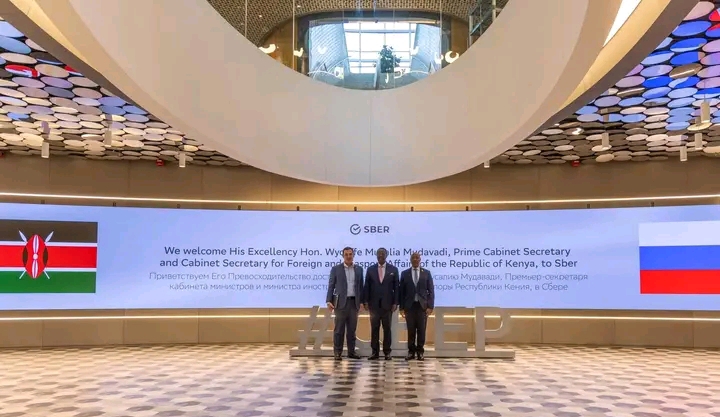 Musalia Mudavadi’s engagement with senior management at Sberbank’s headquarters in Moscow highlights Kenya’s efforts to strengthen economic diplomacy during the Third Russia–Africa Summit period. The meeting provides a potential platform for exploring financial services, digital innovation,
-
KEMSA's call for all 47 counties to allow SHA to facilitate payments for medicines highlights the need for a more dependable healthcare financing system in Kenya. The proposal seeks to improve the flow of money to the medical supply chain, reduce payment difficulties and help healthcare facilities m
-
William Owuor Ochieng’, popularly known on Facebook as “William Jahome,” has been arrested in Nairobi’s Central Business District over allegations of online threats, incitement to violence and ethnic hostility. The arrest has renewed attention on the growing concerns surrounding the misuse o