



Ruto Unveils Bold Plan to Boost Food Production, Cut Imports and Transform Kenya’s Agriculture at Jamhuri Park Summit
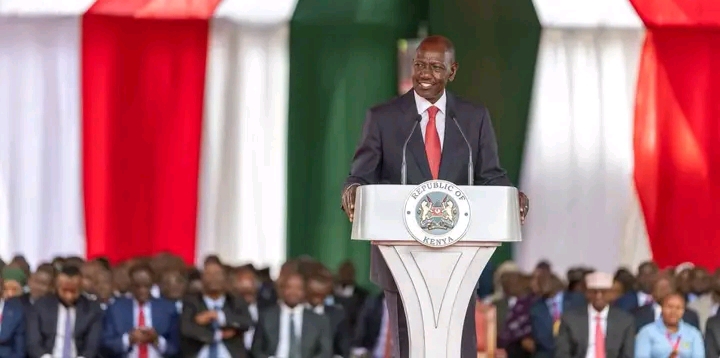
President William Ruto's remarks at the Agriculture and Food Security Transformation Summit at Jamhuri Park in Nairobi focused on making Kenyan agriculture more productive, commercially sustainable and less dependent on imported food. He highlighted the growth of milk, maize, cotton and rice production, defended fertiliser subsidies, outlined plans for expanding irrigation and announced commitments to address outstanding debts in the dairy, coffee and sugar sectors. The central message was that food security requires investment in the farm itself, alongside better infrastructure, agricultural financing, processing industries and dependable markets. He addressed the Agriculture and food security transformation summit at Jamhuri ask showground, Nairobi, bringing together 10,000 stakeholders to reflect on the gains and challenges in transforming the sector.
President William Ruto has used the Agriculture and Food Security Transformation Summit at Jamhuri Park ASK Showground in Nairobi to outline his administration’s plans to increase agricultural production, improve farmers’ earnings, reduce the cost of farm inputs and strengthen Kenya’s ability to feed its growing population.
The summit, held from October 7 to October 9, 2026, brought together farmers, government officials, agricultural experts, agribusiness investors and other stakeholders to discuss the future of the country’s food systems. Its central theme focused on advancing food sovereignty, job creation and shared prosperity.
Among the main issues highlighted by the President during the summit were fertiliser subsidies, dairy production, irrigation, digital registration of farmers, value addition and reducing the country's dependence on imported food.
According to reports published during the summit, Ruto defended his administration’s agricultural reforms, arguing that government support should focus on helping farmers produce more rather than relying mainly on interventions that lower food prices for consumers. President Ruto said Kenya must increase domestic food production and reduce its reliance on imported agricultural products. He pointed to the country’s growing food import bill, estimated at approximately $3 billion annually, with edible oils, wheat and rice among the major imports.
The President argued that depending heavily on imported food exposes Kenyan households to international price increases, supply-chain disruptions and production challenges in other countries. He said strengthening local agriculture would help protect consumers from external shocks while creating more opportunities for Kenyan farmers.
Ruto’s message was that Kenya should produce more of the food it consumes and strengthen the agricultural value chains that support the national economyAmong the main issues highlighted by the President during the summit were fertiliser subsidies, dairy production, irrigation, digital registration of farmers, value addition and reducing the country's dependence on imported food.
According to reports published during the summit, Ruto defended his administration’s agricultural reforms, arguing that government support should focus on helping farmers produce more rather than relying mainly on interventions that lower food prices for consumers. The issue is particularly important because agriculture supports millions of Kenyan households through crop production, livestock keeping, transport, processing and food trading.
Reducing food imports would require investment in farming, storage facilities, irrigation, processing industries and reliable market access. Farmers would also need affordable inputs and appropriate technology to compete with imported products.According to reports from the summit, Ruto said the government had subsidised approximately 38 million bags of fertiliser since 2022, reducing the price from KSh7,500 to KSh2,000 per bag. He argued that cheaper fertiliser had helped farmers lower production costs and increase yields.
Fertiliser is an important agricultural input because it helps replenish soil nutrients and supports crop growth. However, high fertiliser prices can make farming expensive, particularly for small-scale farmers who depend on seasonal earnings.The government's approach is intended to make fertiliser more accessible and encourage farmers to cultivate their land more effectively.
Ruto also highlighted the use of digital farmer registration and Ministry of Agriculture vouchers to improve the distribution of subsidised inputs. The system is intended to identify genuine farmers and reduce opportunities for intermediaries to divert subsidised fertiliser.
Nevertheless, the effectiveness of the programme will ultimately depend on whether farmers can obtain the required inputs on time, whether distribution is transparent and whether increased production translates into better incomes.The President also highlighted the dairy sector, claiming that Kenya had become Africa's largest milk producer.
Ruto said annual milk production had increased from approximately 4.5 billion litres to 5.6 billion litres in 2025. He attributed the increase to agricultural reforms, improved productivity and lower input costs, particularly fertiliser used to grow animal fodder.
He also discussed improvements in the returns received by dairy farmers. According to his remarks, the price paid to milk farmers had increased from approximately KSh35 per litre four years earlier to between KSh50 and KSh60.
The President maintained that farmers should benefit financially from increased production rather than simply producing larger quantities of milk.Ruto also addressed outstanding government-related debts affecting different agricultural industries.
According to reports of his summit remarks, he said the government would pay KSh8 billion owed by New Kenya Cooperative Creameries, commonly known as New KCC. He also pledged to clear KSh2.8 billion in outstanding coffee-sector debt and KSh1.8 billion in sugar-sector debt through the next Supplementary Budget.
The commitments are significant because outstanding payments can affect the ability of agricultural institutions to purchase produce, pay suppliers and maintain operations.According to figures presented during the summit, maize production increased from 34.3 million bags in 2022 to approximately 71 million bags in 2025. Cotton yields rose from 177 kilogrammes to 378 kilogrammes per acre, while rice production increased from 192,299 tonnes to more than 300,000 tonnes.
Maize remains one of Kenya's most important food crops. Changes in its production can influence flour prices, household food security and the supply of raw materials to millers.
Increased rice production could also help reduce reliance on imports, although achieving that goal requires improvements in irrigation, seed availability, mechanisation and post-harvest handling.Another important issue raised during the summit was the need to reduce Kenya's dependence on rain-fed agriculture.
Ruto called for a shift towards farming systems that give producers greater control over water availability and crop production. He questioned the reliability of depending entirely on rainfall and highlighted irrigation as a way to improve agricultural planning.
According to the figures reported at the summit, the area under irrigation had increased from 664,000 acres to 778,636 acres over four years. The government has set a target of expanding the area under irrigation to 2.5 million acres.Ruto also highlighted the use of technology and digital information to improve agricultural planning.
Reports from the summit indicated that approximately nine million farmers had been mapped and registered on a digital platform. The President said this information could help the government identify producers, improve the distribution of farm inputs and plan interventions according to the needs of different agricultural sectors.The summit's wider focus was not limited to growing more food. It also considered how Kenya could create more economic opportunities from agricultural production.
Value addition involves processing raw agricultural products into goods that can earn higher returns in domestic and international markets.
Examples include processing milk into yoghurt and cheese, turning coffee beans into packaged products, refining edible oils, processing rice and developing textile products from cotton.The President also highlighted financing for agricultural enterprises.
According to summit reports, the Agricultural Finance Corporation had disbursed KSh19.9 billion to more than 218,000 beneficiaries over the previous four years.
Access to finance can enable farmers to buy equipment, improve livestock breeds, expand irrigation, purchase inputs and invest in storage facilities.The Agriculture and Food Security Transformation Summit provided an opportunity for farmers and agricultural stakeholders to examine government policies, discuss challenges and consider how the country can improve food production.
The President's remarks placed emphasis on increasing yields, lowering input costs, expanding irrigation, improving farmer registration and addressing outstanding payments in several agricultural sectors.Farmers will be looking for reliable access to subsidised fertiliser, timely payments for produce, affordable credit, functioning irrigation systems and markets that offer reasonable returns.
Consumers, meanwhile, will be interested in whether increased domestic production can help stabilise food prices without weakening the incomes of agricultural producers.
The government's stated objectives will also need to be assessed against measurable outcomes, including the cost of production, actual farm-gate prices, the availability of essential foods and the amount spent on food imports.Access to finance can enable farmers to buy equipment, improve livestock breeds, expand irrigation, purchase inputs and invest in storage facilities.
However, agricultural lending comes with risks because farming income can be affected by drought, floods, pests, diseases and unstable market prices.
Affordable loans, suitable repayment schedules and agricultural insurance can help farmers manage these risks.
It is also important that financial support reaches small-scale producers, youth-led agribusinesses and women working in agricultural value chains.

You Might Also Like
-
The United States Embassy delegation's courtesy call on Inspector-General Douglas Kanja on October 9, 2026, highlighted the continuing security partnership between Kenya and the United States. Led by Assistant Secretary of State for Diplomatic Security Todd Wilcox, the delegation discussed police tr
-
Deputy President Kithure Kindiki's October 8, 2026, development tour of Gatanga in Murang’a County placed emphasis on road construction, market development, affordable housing, student accommodation, electricity connectivity and the fight against illicit alcohol. Among the main projects highlight
-
The Kenya Academy of Sports' launch of a five-day coaching programme in Nandi County represents an important effort to strengthen grassroots sports development as Kenya prepares for the 2026 Mashujaa Day celebrations.With 150 coaches participating in introductory courses covering football, volleybal
-
KUPPET's warning against participation in national examination duties until clear guidelines on terms and conditions are issued has brought teachers' remuneration back into the national education debate. Secretary-General Akello Misori has criticised the allowances paid during examination marking an
-
Uganda has ordered an immediate crackdown on alleged unlawful political and electoral activities involving its citizens crossing into Kenya ahead of the 2027 General Election. First Deputy Prime Minister Rebecca Alitwala Kadaga instructed security agencies and local leaders in eight border districts
-
Kenya has taken a major step towards improving transport and boosting economic growth following the commencement of construction of the Naivasha–Kisumu–Malaba Standard Gauge Railway (SGR) extension, with initial construction activities beginning in Narok County in July 2026. The railway project,