




Government Defends G-to-G Fuel Deal as Museveni Raises Fresh Questions Over Kenya’s Fuel Imports
Opiyo Wandayi’s defence of Kenya’s G-to-G fuel import arrangement has reopened an important national conversation about fuel security, foreign-exchange management, procurement transparency and the final price paid by consumers. The Energy CS maintains that the arrangement was introduced during a severe dollar shortage and was designed to prevent fuel-supply disruptions while reducing immediate pressure on Kenya’s foreign-exchange reserves. He has also defended the participation of Kenyan oil marketing companies, explaining that the international suppliers selected them after vetting. However, renewed scrutiny following President Museveni’s comments means questions about premiums, intermediaries and pricing are likely to remain part of Kenya’s public debate. The clearest way to settle competing claims would be through transparent disclosure of contracts, landed fuel costs, premiums, commissions and the complete pricing chain. For Kenyan consumers, the central issue remains how the importation system affects fuel availability, economic stability and ultimately the prices paid at petrol stations.
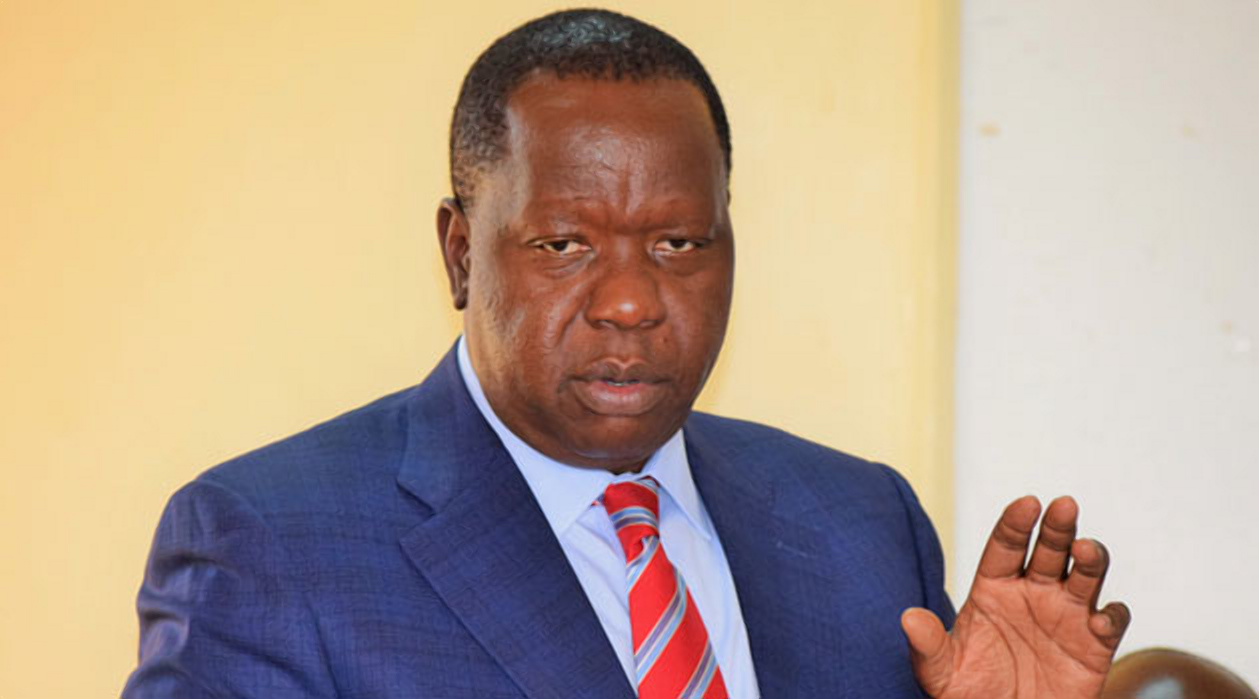
Energy and Petroleum Cabinet Secretary Opiyo Wandayi has strongly defended Kenya’s Government-to-Government (G-to-G) fuel importation arrangement amid renewed scrutiny over how the programme works, the companies involved and the cost of importing petroleum products.
Wandayi’s defence came on Sunday, September 20, 2026, after remarks by Uganda President Yoweri Museveni reignited debate over Kenya’s fuel-importation system. Museveni said Uganda had previously purchased petroleum products through intermediaries in Kenya at higher premiums before changing its procurement arrangement with Vitol.
The renewed debate has placed the G-to-G arrangement back at the centre of public discussion in Kenya, particularly because the programme was originally presented by the government as a response to a severe shortage of US dollars and challenges affecting the country’s ability to import fuel.
Why Kenya introduced the G-to-G arrangement
According to Wandayi, the circumstances surrounding the introduction of the G-to-G framework are important in understanding why the government adopted the system.
He said Kenya was facing serious foreign-exchange challenges when President William Ruto’s administration took office in September 2022. Petroleum imports placed significant pressure on the country’s available US-dollar reserves because oil importers previously had to settle their payments in dollars shortly after receiving their cargo.
The Energy Ministry said petroleum products accounted for a substantial portion of Kenya’s import bill. Wandayi stated that refined petroleum imports were worth about US$500 million and represented approximately 35 per cent of the total import bill at the time.
The dollar shortage was not limited to petroleum. The government said foreign currency was also needed for other essential imports, including pharmaceuticals and fertilisers.
Against this background, the government argued that continuing with the previous system would put additional pressure on the shilling and potentially threaten the security of fuel supplies.
The G-to-G framework was subsequently established in 2023.
The companies behind the arrangement
Kenya entered into agreements with three major international oil suppliers: Aramco Trading Fujairah FZE, Abu Dhabi National Oil Company Global Trading Limited, commonly known as ADNOC, and Emirates National Oil Company (Singapore) Private Limited, or ENOC.
Under the arrangement, petroleum products could be supplied on credit for up to 180 days. This was intended to give Kenya more time to settle the cost of imported fuel rather than requiring immediate payment in US dollars.
The government has argued that the extended credit period reduced the immediate demand for foreign currency and helped ease pressure on the country’s reserves.
The arrangement also involved Kenyan oil marketing companies in the local supply and logistics chain.
This aspect has become one of the most controversial issues in the current debate.
Wandayi’s explanation over the local oil companies
One of the major questions raised following Museveni’s comments is why local companies were involved in an arrangement commonly described as Government-to-Government.
Wandayi explained that the international oil companies supplying Kenya selected the Kenyan oil marketing companies that would act as local counterparties.
According to the CS, the Kenyan government provided a list of licensed oil marketing companies to the international suppliers for vetting. The suppliers then selected companies they considered suitable.
The initial companies included Gulf Energy Limited, Galana Energies Limited and Oryx Energies Kenya Limited. Other companies, including One Petroleum Limited, Asharami Synergy Limited and BE Energy Limited, were subsequently brought into the arrangement.
Wandayi argued that the government could not simply dictate which companies the international suppliers should work with.
He said the transactions involved very large amounts of money and substantial performance risks. According to his explanation, forcing the international oil companies to accept government-selected counterparties could have caused them to withdraw from the arrangement.
In that scenario, the government would have been left dealing with the same fuel-supply and foreign-exchange problems it was trying to solve.
Museveni’s criticism and Uganda’s alternative
The current controversy intensified after President Yoweri Museveni discussed Uganda’s previous fuel procurement arrangements.
Museveni said Uganda had previously obtained petroleum products through middlemen in Kenya. He said a Kenyan politician had alerted him to the issue, after which Uganda reviewed its procurement model.
According to Museveni, Uganda subsequently entered into an arrangement with Vitol. He cited reductions in premiums for different petroleum products.
For diesel, Museveni said the premium fell from US$118 per metric tonne to US$83. For petrol, he cited a reduction from US$97.50 to US$61.50 per metric tonne, while aviation fuel premiums reportedly fell from US$114.25 to US$79.25.
Museveni’s remarks prompted questions in Kenya about whether the G-to-G arrangement had created unnecessary costs through intermediaries.
However, the figures and their interpretation require context. Kenya’s government has maintained that the G-to-G framework was created primarily to address the country's foreign-exchange and fuel-supply challenges rather than as a simple mechanism for purchasing fuel at the lowest possible premium.
Wandayi rejects the suggestion that the arrangement was improperly structured
Wandayi’s latest statement sought to clarify the structure of the programme and reject suggestions of wrongdoing.
The CS said the selection of Kenyan oil marketing companies was undertaken by the international suppliers after vetting. He maintained that the government’s role was to facilitate the arrangement and provide the list of licensed companies rather than impose particular companies on the suppliers.
This distinction is important because critics have questioned how an arrangement involving private Kenyan oil marketers can accurately be described as Government-to-Government.
The government’s position is that the term refers to the framework between Kenya and major international suppliers, while licensed Kenyan companies participate in the domestic supply and logistics chain.
Claims about reduced costs
Wandayi also pointed to changes in the costs associated with transporting petroleum products.
According to the Energy Ministry, freight charges were initially higher when the arrangement began. They were subsequently reviewed and reduced.
For Super Petrol, the freight rate reportedly fell from US$97.50 per metric tonne initially to US$90 in September 2023 and later to US$84 in March 2025.
For diesel, the figure fell from US$118 to US$88 and subsequently to US$78 per metric tonne.
For Jet A1, the rate reportedly fell from US$114.25 to US$111.75 before reaching US$97 per metric tonne in March 2025. The ministry said these revised rates have remained unchanged since then.
The government therefore argues that the arrangement has not remained static and that negotiations have resulted in lower charges.
The foreign-exchange argument
One of the strongest arguments used by Wandayi in defending the G-to-G arrangement concerns the foreign-exchange market.
The government says the 180-day credit arrangement reduced the immediate need for oil marketing companies to obtain large quantities of US dollars.
This was particularly important during the period when the Kenyan shilling faced significant pressure against the dollar.
The government has also linked the arrangement to efforts to restore stability in the foreign-exchange market.
According to the Energy Ministry, petroleum products can be paid for in Kenya shillings under the financing structure, backed by letters of credit with the agreed credit period.
The government has argued that this helped reduce pressure on foreign-exchange reserves.
The controversy over fuel prices
Despite the government's explanation, fuel prices remain an important part of the debate.
Consumers ultimately judge the impact of any fuel-importation system through the prices they encounter at petrol stations.
Fuel prices also affect transportation, agriculture, manufacturing, food distribution and electricity generation. Consequently, changes in the cost of petroleum products can have effects throughout the Kenyan economy.
The renewed discussion has therefore attracted attention from motorists and consumer groups.
The Motorists Association of Kenya has called for a forensic audit of the G-to-G arrangement following Museveni’s remarks. The association has asked for greater disclosure of intermediaries, commissions, contracts, pricing formulas and the landed cost of fuel cargoes.
The association's position represents a demand for greater transparency, while the government's response has focused on explaining why the framework was created and how its procurement structure operates.
The earlier fuel controversy
The latest debate also comes after previous controversy surrounding petroleum imports.
In April 2026, the government ordered the removal of a 60,000-metric-tonne consignment of Super Petrol that it said had been imported in contravention of the G-to-G framework.
Wandayi said the consignment had been priced at Sh198,000 per metric tonne, compared with Sh140,000 for fuel imported under the G-to-G framework. The government calculated that the difference could have significantly increased the cost of fuel if the consignment had entered the pricing system.
That episode further intensified scrutiny of petroleum procurement and the role of different actors in the importation process.
It is therefore against this wider background that Wandayi’s latest defence should be understood.
Why the debate matters to Kenyans
The G-to-G debate is not merely about contracts between governments and oil companies.
It has wider implications for the cost of living and Kenya’s economic stability.
Petroleum is a major input in transportation. When fuel prices rise, transport operators can face higher operating costs, which can subsequently affect fares and the prices of goods.
Farmers also depend on petroleum products for transportation, machinery and distribution. Manufacturers use fuel directly and indirectly through logistics and transportation.
The government therefore maintains that securing predictable fuel supplies and reducing foreign-exchange pressure are important economic objectives.
Critics, meanwhile, have raised questions about transparency, the role of intermediaries and whether the structure provides consumers with the most competitive possible prices.
These are questions that can be addressed through disclosure, audits, procurement records and independent analysis of the pricing structure.
What Wandayi’s defence means
Wandayi’s latest explanation does not mean that all questions surrounding the G-to-G arrangement have disappeared.
Instead, it provides the government’s account of why the system was established, how suppliers selected local companies and why the administration believes the arrangement remains important.
The government says the programme was born out of an extraordinary foreign-exchange crisis and a threat to fuel security. It maintains that the 180-day credit arrangement eased pressure on Kenya’s dollar reserves and helped stabilise petroleum supplies.
At the same time, the latest controversy shows that there is continued public interest in understanding exactly how much consumers ultimately pay for imported petroleum and how much each participant in the supply chain receives.
Uganda’s decision to use a different procurement arrangement has provided another point of comparison. Museveni has cited lower premiums under Uganda’s current model, while Kenya has pointed out that lower premiums do not necessarily translate directly into lower retail fuel prices. Recent reporting has noted that pump prices in Kampala remained higher than those in Nairobi despite Uganda’s lower cited premiums

You Might Also Like
-
Kithure Kindiki's September 21 visit to Tharaka Nithi combined development inspections, public engagement and political messaging. He inspected road construction works, addressed residents at Gaciongo Market and defended the decision by Mount Kenya elders to endorse him as their spokesperson and rep
-
Azimio la Umoja has officially rebranded as the Ukombozi Alliance, with Wiper leader Kalonzo Musyoka announcing the new political identity ahead of the 2027 General Election.
-
The disappearance of 53-year-old Lily Chorono Kimtai from Kaplamai, Trans Nzoia County, has left her family facing unanswered questions since September 9, 2026. Her reported message about travelling to Mombasa, the subsequent loss of phone communication and the disappearance of her husband's license
-
The High Court has declared unconstitutional a law restricting retired presidents from engaging in active politics, affirming their constitutional right to participate in political activities as private citizens.
-
Former CS Fred Matiang’i is demanding full disclosure of Kenya’s G-to-G oil deal, citing concerns over transparency, accountability and the role of intermediaries in petroleum imports.
-
COTU Secretary-General Francis Atwoli is calling for constitutional reforms to clearly regulate the conduct and political activities of retired presidents, arguing that Kenya needs a framework that will apply to former heads of state beyond individual political circumstances.