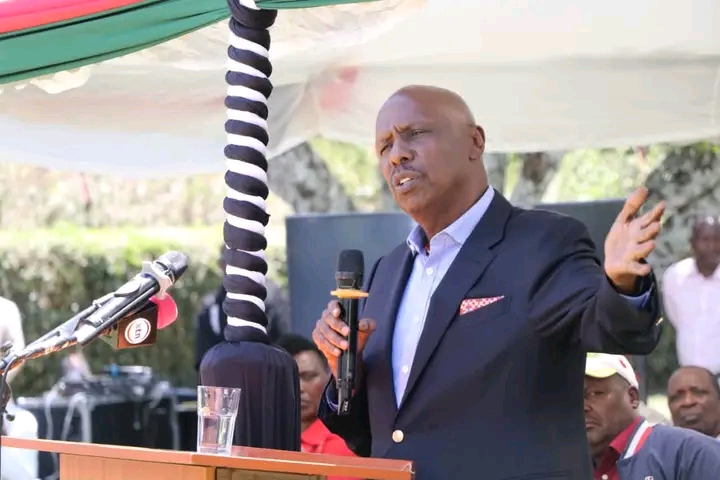
Johnson Sakaja demands answers over collapsed Eastleigh building and missing construction approvals
Nairobi Governor Johnson Sakaja has called on the architect linked to the collapsed Eastleigh building to explain how construction proceeded without the required approvals. The incident has raised concerns about building safety, compliance with construction regulations and the effectiveness of inspection procedures in Nairobi. Authorities are expected to establish the circumstances surrounding the collapse, examine the roles of the property owner and construction professionals, and determine whether the necessary approvals and safety standards were observed.
Nairobi Governor Johnson Sakaja has called for accountability following the collapse of a multi-storey building in Eastleigh, Nairobi, saying the architect responsible for the structure must explain how construction proceeded without the required approvals. His remarks have brought renewed attention to questions surrounding building regulations, the approval process for construction projects and the responsibility of professionals involved in the development of buildings.
The collapse has raised concerns about compliance with construction standards and the effectiveness of systems intended to ensure that buildings are safe for occupation and use. As investigations into the incident continue, attention is expected to focus on the approvals granted, the role of the property owner, the responsibilities of the architect and contractor, and whether the relevant authorities carried out the necessary inspections.
Sakaja’s remarks highlight the importance of establishing how the building was allowed to proceed through the construction process. Building projects typically involve several stages, including architectural design, structural engineering, approval of plans, site inspections and verification that construction follows the approved specifications. Each stage is intended to help identify potential risks and prevent structures from being developed in ways that could endanger workers, residents and members of the public.
The governor’s call for an explanation places the architect’s role among the issues that investigators may need to examine. Architects are responsible for preparing building designs and ensuring that their work complies with applicable planning and building requirements. Depending on the project and the relevant legal framework, they may also coordinate with engineers, contractors and other professionals to ensure that the proposed structure meets the necessary standards.
However, establishing responsibility for a building collapse requires more than identifying one professional associated with the project. Investigators need to determine the sequence of events that led to the incident and establish whether any failures occurred during planning, approval, construction, inspection or maintenance. The findings should clarify whether the required procedures were followed and identify any individuals or institutions whose actions or omissions may have contributed to the collapse.
The issue of construction approvals is particularly important because such requirements are intended to ensure that buildings meet minimum standards before and during development. Approved plans provide a framework for the construction process, setting out details that guide the work of contractors and other professionals. Where changes are made during construction, the relevant authorities may need to review whether those changes comply with applicable requirements.
If a project proceeds without the necessary approvals, questions may arise about how construction began, whether the relevant authorities were informed and whether any inspections took place. Investigators may also need to establish whether the property owner and the professionals involved understood the applicable requirements and whether any warnings or concerns were raised before the collapse.
The Eastleigh incident has therefore renewed attention to the broader system governing construction in Nairobi. The city continues to experience rapid urban growth, with demand for residential, commercial and mixed-use buildings increasing in many neighbourhoods. As more people seek housing and business premises, developers face pressure to deliver projects that respond to demand. That growth, however, must be accompanied by effective planning, enforcement and supervision to protect public safety.
Eastleigh is a densely populated area with significant residential and commercial activity. Buildings in such neighbourhoods serve many purposes, including housing families, accommodating businesses and providing space for various services. A structural failure in a busy area can consequently pose serious risks, not only to people inside a building but also to pedestrians, neighbouring properties, traders and emergency responders.
The consequences of a collapse can extend beyond the immediate damage to the structure. Families may lose loved ones or face uncertainty about relatives who were present when the incident occurred. Workers may lose their livelihoods, businesses may be disrupted and nearby residents may be forced to leave unsafe premises. The incident can also create financial and emotional difficulties for people who depend on the affected property for shelter or income.
For these reasons, public safety remains a central consideration whenever a building collapses. Emergency teams must first focus on locating and assisting anyone who may be trapped, securing the surrounding area and preventing further harm. Once immediate rescue operations and other urgent measures are addressed, investigators can undertake a detailed assessment of the building and the circumstances surrounding its failure.
Technical investigations into a collapse may involve examining the structural design, the quality of construction materials, the condition of the foundation, the number of floors built and whether the completed structure matched the approved plans. Specialists may also assess whether the building was subjected to loads beyond those it was designed to support and whether construction practices complied with the relevant technical requirements.
The investigation may also examine records held by the property owner, architect, engineers, contractor and public authorities. Such documents can help establish when the project began, which plans were submitted, whether approvals were issued and whether any modifications were authorised. Inspection reports and communication between the parties may provide additional information about the project's progress and any concerns that arose during construction.
Sakaja’s demand for an explanation reflects the expectation that professionals involved in construction should be able to account for the decisions made during a project. Architects, engineers and contractors occupy important positions in the development process because their work can directly affect the safety and reliability of a structure. Property owners and developers also have responsibilities to ensure that projects are undertaken in accordance with the law.
Public authorities, meanwhile, play a critical role in reviewing applications, issuing approvals where requirements are met and monitoring compliance with applicable regulations. Effective enforcement requires adequate staffing, technical expertise, clear procedures and the willingness to act when violations are identified. Where inspections reveal unsafe construction or non-compliance, authorities must be able to take appropriate action under the law.
The collapse also raises questions about whether existing oversight mechanisms are sufficient to address the demands of a rapidly expanding city. Construction activity can place pressure on planning departments and inspection teams, particularly in areas where development is taking place quickly. If regulatory systems are unable to keep pace, unauthorised construction and other violations may be more difficult to detect before they become serious hazards.
Strengthening oversight may require better coordination between planning departments, building inspectors, engineering professionals and emergency services. Clear documentation of approvals, regular inspections and reliable systems for reporting suspected violations can help authorities identify problems earlier. Public awareness is also important because residents, workers and neighbouring businesses may be among the first to notice visible cracks, unusual movement or other warning signs.
At the same time, concerns about regulation should be addressed through evidence rather than assumptions. A building collapse does not automatically establish that the architect, contractor, owner or approving authority was responsible. The precise cause may involve one factor or several contributing failures. A credible investigation should therefore consider all relevant evidence and give the parties involved an opportunity to respond to any allegations made against them.
This approach is necessary to ensure that accountability is fair and effective. If evidence establishes that construction proceeded without required approvals, the investigation should determine who was responsible for the decision and whether any public officials or private professionals failed to fulfil their obligations. If technical defects contributed to the collapse, the relevant findings should explain their nature and how they affected the building’s stability.
Where wrongdoing is established, the responsible parties may face consequences under the applicable laws and professional regulations. Depending on the evidence, this could include administrative action, disciplinary proceedings or criminal investigations. Any enforcement measures should follow the appropriate legal process, with decisions based on verified facts rather than speculation.
For families and members of the public affected by the incident, timely communication will also be important. Authorities need to provide accurate information about rescue efforts, safety measures and the progress of investigations without compromising essential procedures. Clear communication can help address uncertainty and reduce the spread of unverified claims about the cause of the collapse.
The incident may also prompt renewed scrutiny of other buildings under construction in Nairobi, particularly structures located in densely populated neighbourhoods. Any review of construction safety should be carried out according to established procedures and supported by technical assessments. Where genuine safety concerns are identified, appropriate measures should be taken to protect occupants, workers and nearby communities.
Developers and construction professionals can also help improve safety by maintaining accurate project records, employing qualified personnel, using appropriate materials and ensuring that work follows approved designs. Changes to a building’s plans should be reviewed through the required procedures rather than introduced informally. These measures can reduce the risk of structural problems and make it easier to identify responsibility if something goes wrong.
The Eastleigh collapse has once again drawn attention to the importance of treating building safety as a shared responsibility. Property owners, architects, engineers, contractors and public authorities all have roles in ensuring that construction projects comply with the relevant requirements. A failure at any stage can create risks that may affect many people.

You Might Also Like
-
KANU chairman Gideon Moi has accused President William Ruto of failing to honour commitments he says were made during negotiations that led him to withdraw from the Baringo Senate by-election in 2025. Speaking to Kalenjin elders and community representatives at his Kabarak home in Nakuru County on O
-
President William Ruto has described Wiper leader Kalonzo Musyoka as a truthful politician who acknowledges development achievements whenever work has been done. Ruto’s remarks highlight the importance of recognising progress despite political differences, as leaders continue to debate government
-
President William Ruto's October 24, 2026, visit to Mbiuni in Mwala Constituency placed water infrastructure at the centre of the government's development agenda for Ukambani. The commissioning of Phase Two of the Mwala Cluster Last Mile Water Supply Project is intended to improve access to water fo
-
The welcome of Kenya's Deputy President Kithure Kindiki by Ethiopian Prime Minister Abiy Ahmed at the 12th Tana High-Level Forum on Security in Africa draws attention to the importance of diplomatic engagement among African leaders. Taking place in Bahir Dar from October 23 to 25, 2026, the forum f
-
Kirinyaga Governor Anne Waiguru has urged Mt. Kenya voters to prioritise development and reject opposition rhetoric as the country prepares for the 2027 General Election. Waiguru has called on residents to support President William Ruto’s re-election bid, emphasising the importance of infrastructu
-
The Directorate of Criminal Investigations (DCI) has arrested Festus Kipkirui, alias Festoo, in Mararianda, Narok East, over alleged online incitement linked to a Facebook page operating under the name Kipz Prince en Narok. The suspect was apprehended by a joint team of detectives from the DCI Headq