



PS Raymond Omollo Hails Ruto’s Inclusive Development Agenda, Says No Kenyan Should Be Left Behind
PS Raymond Omollo's latest remarks in Narok East have placed President William Ruto's development agenda at the centre of a wider discussion about equity, regional inclusion and access to government services. Omollo praised what he described as a non-discriminatory approach in which public resources should reach Kenyans regardless of region, community or political affiliation. He pointed to investments in infrastructure, healthcare, education, grassroots administration and projects in regions such as Narok, Nyanza and North Eastern Kenya as examples of the government's stated commitment to inclusive development. At the same time, his remarks come during an increasingly political period ahead of the 2027 General Election. His call for voters to examine concrete programmes in roads, education and healthcare therefore places development performance at the centre of the political conversation. Ultimately, the debate over inclusive development will depend not only on the number of projects announced but also on whether citizens across different regions experience improvements in services, infrastructure, economic opportunities and living standards.
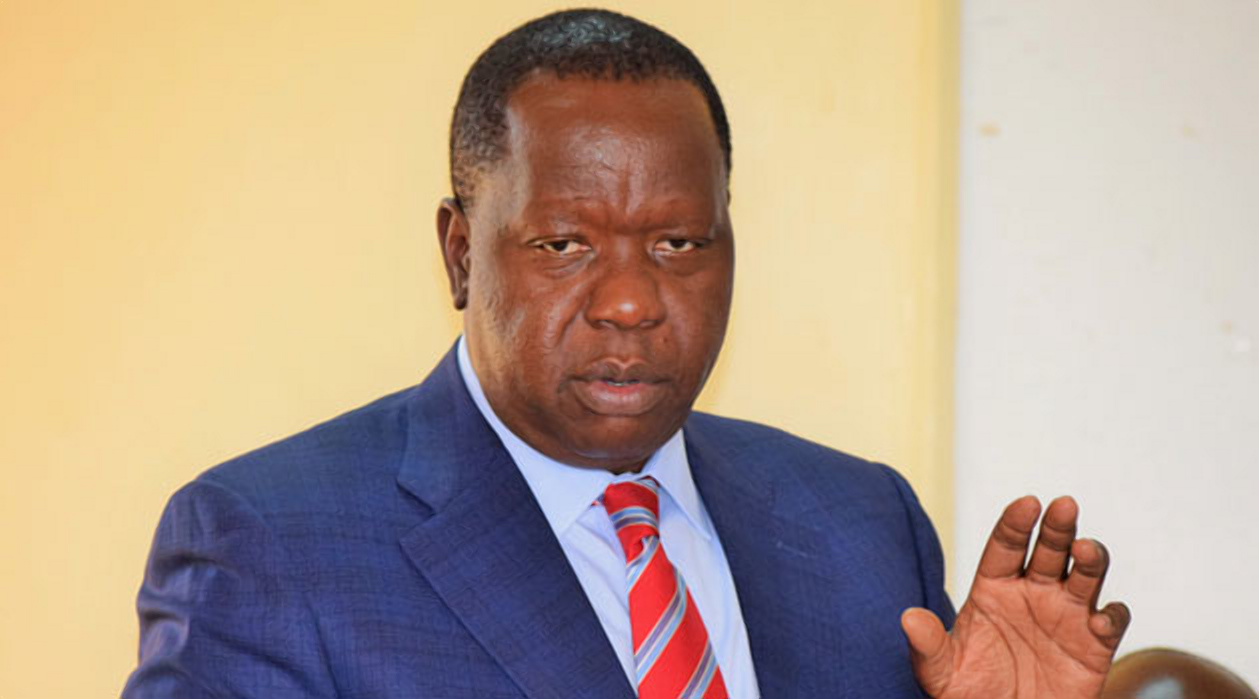
Principal Secretary for Internal Security and National Administration Dr Raymond Omollo has praised President William Ruto’s administration for what he described as an inclusive and non-discriminatory approach to national development.
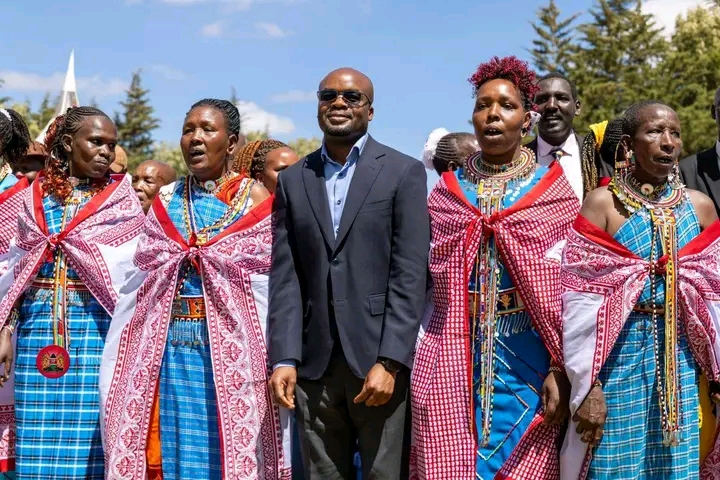
Omollo made the remarks on Sunday, September 20, 2026, during a church development fund drive in Narok East, where he argued that government resources and services should reach Kenyans irrespective of their geographical location, community or political affiliation. His comments come at a time when the government is highlighting development projects across different parts of the country as evidence of its broader national transformation agenda.
The PS said President Ruto had established what he considers a different approach to development by focusing on equitable transformation across the country. According to Omollo, government investment should not be restricted to regions that support the administration politically, but should benefit all Kenyans.
He described the approach as “non-discriminatory and inclusive,” arguing that development should be viewed as a national responsibility rather than something determined by political affiliation.
Omollo's message on equitable development
During his address in Narok East, Omollo said public resources should be distributed fairly and that government services should be available to citizens regardless of where they live.
He argued that Kenyans should assess leaders based on concrete development programmes, particularly in sectors such as roads, education and healthcare.
The PS challenged politicians seeking support from Kenyans to explain what they intend to do in these areas rather than relying on political rhetoric. He said citizens should demand clear programmes and measurable commitments from leaders.
This message formed an important part of his argument that development should remain at the centre of political discussions.
Omollo said President Ruto had “raised the bar” in leadership and urged Kenyans to examine the government's development record when evaluating political promises.
His remarks were delivered in a political environment that is already increasingly focused on the 2027 General Election. However, the central theme of his address was the government's claim that development should reach communities throughout the country.
Development beyond political affiliation
One of the key points raised by Omollo was the relationship between political affiliation and access to government projects.
The PS said government development programmes should benefit Kenyans whether or not their regions supported the administration during elections.
This argument is particularly significant in Kenya, where questions about regional development and the distribution of public resources have historically been part of political debate.
Omollo maintained that the government is pursuing a national development approach intended to ensure that different regions receive public investments.
He pointed to projects and government programmes in different parts of the country as examples of the administration's effort to expand development beyond traditional political or geographical boundaries.
The Star similarly reported that Omollo described President Ruto's approach as one in which public resources and government services are intended to reach Kenyans without discrimination based on region, community or political affiliation.
Narok and the wider development agenda
Omollo's remarks in Narok also connected national development with specific projects and government services affecting local communities.
In a separate address in Narok on the same day, the PS highlighted healthcare, education and infrastructure as important components of the government's development programme.
He encouraged residents to register with the Social Health Authority, saying the government's healthcare reforms were intended to reduce the financial burden associated with medical treatment.
The Star reported that Omollo said more than 33 million Kenyans had registered with SHA and argued that expanded healthcare coverage could help families avoid severe financial difficulties arising from hospital bills.
He also referred to infrastructure projects, including roads and the planned development of an airport in Narok, as examples of investments that the government says are intended to expand economic opportunities and improve connectivity.
The healthcare, education and infrastructure examples illustrate the broader meaning Omollo attached to inclusive development: development should not only involve construction of physical infrastructure but should also improve access to essential government services.
Village elders and grassroots administration
Another issue Omollo raised was the government's effort to strengthen service delivery through grassroots administrative structures.
He said the government was addressing gaps in service delivery by increasing administrative capacity and bringing government services closer to citizens.
According to Omollo, village elders have also begun receiving stipends, which he presented as recognition of their contribution to grassroots administration and community service.
The argument behind this approach is that national development cannot be achieved only through major projects in towns and cities. Government services also need to reach villages and communities where citizens interact directly with local administrative structures.
The PS therefore linked equitable development with effective administration, arguing that citizens should be able to access government services regardless of their location.
Education and healthcare as pillars of development
Omollo has repeatedly identified education and healthcare as key components of inclusive development.
In August, while speaking in Kajiado, he called for greater public participation in shaping Kenya's development agenda beyond 2030. He said Kenyans should be involved in determining the country's long-term priorities, particularly in education, healthcare and infrastructure.
He argued that citizens should feel that they are part of the development process rather than simply being recipients of government projects.
On healthcare, he pointed to efforts to expand access to medical services through SHA and improvements in health facilities.
He also argued that hospitals in different parts of the country should be developed to comparable standards, including adequate staffing, medicines and infrastructure.
This approach reflects a broader interpretation of inclusivity, where regional equality is measured not only by the number of projects announced but also by the quality and accessibility of services available to ordinary citizens.
The Nyanza example
Omollo has also used development in Nyanza as an example of what he considers a more nationally inclusive approach.
In July, he said the Kenya Kwanza administration was investing in Nyanza despite the region's historical political dynamics. He cited infrastructure, flood control, economic empowerment, water projects, administrative services and youth programmes.
He argued that Nyanza residents deserved development just like citizens in every other part of Kenya.
Among the projects he highlighted were flood-control interventions in the Kano Plains, including the construction of dykes. He also referred to plans involving mega dams, water supply and irrigation.
Omollo's message was that development should be guided by the needs of citizens rather than political considerations.
That position has become a recurring theme in his public remarks.
Wajir and the North Eastern region
Another example associated with the government's inclusivity message is investment in northern Kenya.
Earlier in 2026, Omollo highlighted the construction of Wajir Stadium, describing it as an important development for the region.
He said Wajir had historically lacked a major stadium and that the facility would provide opportunities for sports, local talent and businesses.
Reports indicated that the stadium was 84 per cent complete in May, with facilities including a football pitch, an eight-lane running track, changing rooms and spectator facilities.
The government also planned to hold the 2026 Madaraka Day celebrations in Wajir, an event that was presented as part of efforts to strengthen national inclusivity and give greater attention to regions that have historically been viewed as marginalised.
For Omollo, such investments demonstrate the importance of ensuring that development is visible across the entire country.
Inclusive development and national unity
Omollo's argument also connects development with national unity.
Kenya is made up of communities spread across regions with different economic conditions, infrastructure needs and political histories. Unequal access to public services can therefore become a source of political and social tension.
By advocating for development across communities, Omollo argues that government investment can contribute to a stronger sense of national belonging.
His message is that a Kenyan citizen should not feel disadvantaged simply because of the region where they live or the political preferences of their community.
This is also why he has repeatedly encouraged citizens to focus on development priorities such as education, healthcare, roads and economic opportunities.
His remarks on the 2027 election
Omollo's comments came against the backdrop of preparations for the 2027 General Election.
During his Narok address, he went beyond discussing development and expressed confidence in President Ruto's prospects in the next election. He said those serving in the administration believed Ruto would be re-elected and would continue implementing the government's development agenda.
That part of his remarks represents a political claim by a senior government official rather than an independently verified prediction.
The broader issue, however, is that Omollo is presenting development as a central measure that voters should consider when evaluating political leaders.
He urged Kenyans to ask politicians about their plans for roads, education, healthcare and other public services.
Peaceful political participation
Omollo has also linked development with peaceful political participation.
On September 17, during President Ruto's tour of Nyanza, he urged young people in Karachuonyo to reject political violence and avoid confrontations based on political differences.
He argued that political disagreements should not result in young people fighting one another.
This message is significant as Kenya approaches another election period, when political competition is expected to intensify.
Omollo has therefore placed peace, development and citizen participation within the same broader conversation.
What inclusive development means
At the centre of Omollo's remarks is the principle that development should benefit all Kenyans.
In practical terms, this includes roads connecting communities to markets, schools providing education to children, healthcare facilities offering medical services, electricity connections supporting businesses and households, water projects supporting agriculture and households, and administrative services being brought closer to citizens.
It also involves creating opportunities for young people, women and other groups to participate in economic activities.
The government's argument, as presented by Omollo, is that these investments should be spread across the country rather than concentrated in a few regions.
Whether individual projects have delivered their intended results is a separate question that can be assessed through project completion, accessibility, quality, cost and impact on local communities.

You Might Also Like
-
Kithure Kindiki's September 21 visit to Tharaka Nithi combined development inspections, public engagement and political messaging. He inspected road construction works, addressed residents at Gaciongo Market and defended the decision by Mount Kenya elders to endorse him as their spokesperson and rep
-
Azimio la Umoja has officially rebranded as the Ukombozi Alliance, with Wiper leader Kalonzo Musyoka announcing the new political identity ahead of the 2027 General Election.
-
The disappearance of 53-year-old Lily Chorono Kimtai from Kaplamai, Trans Nzoia County, has left her family facing unanswered questions since September 9, 2026. Her reported message about travelling to Mombasa, the subsequent loss of phone communication and the disappearance of her husband's license
-
The High Court has declared unconstitutional a law restricting retired presidents from engaging in active politics, affirming their constitutional right to participate in political activities as private citizens.
-
Former CS Fred Matiang’i is demanding full disclosure of Kenya’s G-to-G oil deal, citing concerns over transparency, accountability and the role of intermediaries in petroleum imports.
-
COTU Secretary-General Francis Atwoli is calling for constitutional reforms to clearly regulate the conduct and political activities of retired presidents, arguing that Kenya needs a framework that will apply to former heads of state beyond individual political circumstances.