Public Health Care Workers End 94-Day Strike After Government Intervention as Negotiations Begin
The suspension of the 94-day public health officers' strike on October 25, 2026, marks an important development in Kenya's ongoing efforts to restore public health services. The intervention by Health Cabinet Secretary Aden Duale has created an opportunity for the government and the Kenya Environmental Health and Public Health Practitioners Union to negotiate a lasting settlement. The union's decision to direct members back to work within 24 hours is expected to help restore disease surveillance, environmental inspections, border screening and other preventive health activities.
Kenya’s public health sector has received a major boost following the decision by public health officers to suspend their nationwide strike after 94 days of industrial action. The decision, announced on Sunday, October 25, 2026, in Kitui County, followed intervention by Health Cabinet Secretary Aden Duale, who agreed to facilitate negotiations between the government and the Kenya Environmental Health and Public Health Practitioners Union (KEPHPU). The union directed its members working in county governments and at border points to resume duty within 24 hours as the two sides begin a 30-day negotiation period aimed at resolving outstanding grievances.
The development is expected to help restore essential public health services that have been affected by the prolonged strike. These include disease surveillance, environmental health inspections, border screening, outbreak prevention, sanitation monitoring and community health protection. The suspension also comes at a critical time when Kenya is dealing with concerns over Ebola and other infectious diseases that require effective coordination between national and county health authorities.Health Cabinet Secretary Aden Duale intervenes to end the strike
Health Cabinet Secretary Aden Duale played a key role in bringing the government and the public health officers' union back to negotiations. According to reports published on October 25, 2026, his intervention helped secure an agreement to suspend the strike for 30 days while the outstanding grievances are discussed.
The agreement provides an opportunity for the government and union officials to discuss the workers' demands without continued disruption of public health services. The union's decision also reflects the urgency of restoring disease prevention and surveillance activities across the country.The strike lasted 94 days
The industrial action began on July 6, 2026, according to a report, and continued for 94 days before its suspension was announced. During this period, the union repeatedly called for the government to address employment conditions and outstanding agreements affecting public health officers.
The dispute attracted growing attention as the workers staged demonstrations to demand better working conditions and recognition of their professional responsibilities.The Kenya Environmental Health and Public Health Practitioners Union has presented several demands concerning employment, remuneration and the future of public health services.
A. Signing and implementation of the Collective Bargaining Agreement
One of the union's main demands is the finalisation, signing and implementation of its Collective Bargaining Agreement (CBA).
A CBA establishes agreed employment terms between workers and their employers. It can cover salaries, allowances, working hours, promotions, disciplinary procedures and other conditions of service.Improved health risk allowances
The union has also called for a review of health risk allowances, arguing that its members face occupational risks while carrying out their duties.
According to reporting published on October 21, the union said the allowance had remained at KSh2,000 for certain job groups and KSh3,000 for others since September 2015. It also said some categories of officers did not receive the allowance. Recruitment of more public health officers
Another key demand concerns staffing shortages.
Public health officers are responsible for a broad range of activities, including disease prevention, sanitation inspections, food safety, water-quality monitoring and outbreak investigations.
The union argues that more officers are needed to ensure adequate coverage in counties and at points of entry into the country.
Insufficient staffing can increase workloads for existing employees and make it harder for authorities to conduct inspections, investigate disease outbreaks and respond to public health emergencies promptly.Permanent and pensionable employment
The union has also demanded better employment arrangements for workers employed on temporary or contractual terms, including those serving under Universal Health Coverage programmes.
It wants the government to address the conversion of eligible contractual positions into permanent and pensionable employment. It has also raised concerns about the recruitment, deployment and payment of interns. Why public health officers are important in the fight against Ebola
The suspension comes at a time when Kenya is concerned about infectious disease outbreaks, including Ebola.
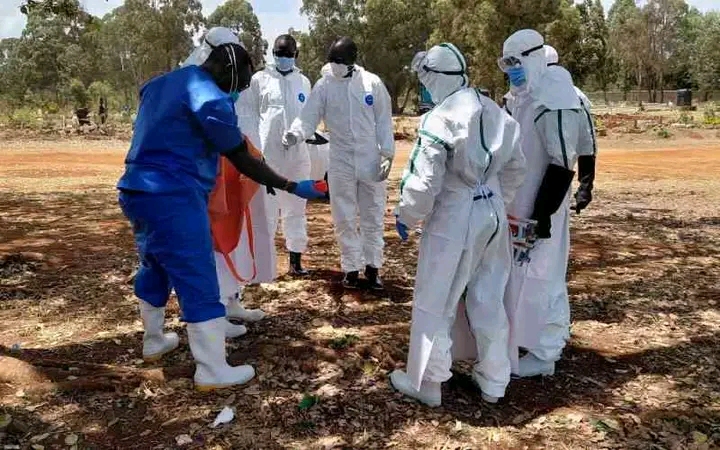
Public health officers play an important role in preventing diseases from spreading through communities. Their responsibilities include monitoring suspected cases, supporting contact tracing, screening travellers at points of entry, promoting infection prevention and coordinating environmental health interventions.
They also help monitor sanitation, investigate possible sources of infection and communicate preventive measures to members of the public.Public health officers expected to resume work within 24 hours
Following the announcement in Kitui County, union Secretary-General Brown Ashira directed members working in county governments and at border points to return to duty within 24 hours.
The union also signed a return-to-work formula with the Kitui County Government, providing a framework for officers in that county to resume their responsibilities. The union expects the wider negotiations to involve the national government and county authorities. The union has warned that the industrial action could resume if the government fails to address its demands within the agreed period. This means the suspension should be viewed as an opportunity for dialogue rather than a final resolution.
Several issues will require attention during the negotiations:
Finalising and signing the proposed Collective Bargaining Agreement.
Reviewing health risk allowances and considering additional compensation for outbreak-response duties.
Agreeing on recruitment priorities and staffing levels.
Addressing the employment status of eligible contractual and UHC workers.
Establishing clear procedures for deploying officers and paying interns.
Agreeing on timelines, responsible institutions and mechanisms for monitoring implementation.The union has warned that the industrial action could resume if the government fails to address its demands within the agreed period. This means the suspension should be viewed as an opportunity for dialogue rather than a final resolution.
Several issues will require attention during the negotiations:
Finalising and signing the proposed Collective Bargaining Agreement.
Reviewing health risk allowances and considering additional compensation for outbreak-response duties.
Agreeing on recruitment priorities and staffing levels.
Addressing the employment status of eligible contractual and UHC workers.
Establishing clear procedures for deploying officers and paying interns.
Agreeing on timelines, responsible institutions and mechanisms for monitoring implementation.Expected benefits for members of the public
The return of public health officers could benefit Kenyans in several ways.
First, it should support the restoration of routine disease surveillance. Early detection and reporting of suspected infections help health authorities respond before illnesses spread more widely.
Second, the resumption of environmental inspections can help identify sanitation problems, unsafe food-handling practices and other conditions that may threaten public health.
Third, improved staffing at border points can strengthen screening and reporting of potential public health risks among travellers.
Fourth, the return of officers to county-level services can help restore public education activities on hygiene, sanitation and disease prevention.The first is financing. Higher allowances, recruitment and permanent employment arrangements may require additional resources and formal approvals.
The second is coordination. The national government, county governments and other public institutions must agree on their respective responsibilities and avoid delays in implementing commitments.
The third is trust. Prolonged industrial disputes can weaken confidence when workers believe previous agreements have not been implemented. The government will need to demonstrate progress through concrete actions rather than relying entirely on promises.
The fourth is urgency. Public health officers are needed for routine disease prevention and emergency response, meaning delays in negotiations could prolong weaknesses in service delivery.

You Might Also Like
-
The death toll from the tragic road accident at Kanga area along the Mtito Andei–Mombasa Highway has risen to 24 after two more victims succumbed to injuries sustained in the crash. The incident has left families grieving and renewed concerns over road safety on one of Kenya’s major transport ro
-
President William Ruto has ordered the inspection of all public service vehicles to ensure compliance with road safety regulations following a tragic accident along the Nairobi–Mombasa Highway in Makueni County that claimed 24 lives. The directive aims to improve vehicle safety, strengthen enforce
-
President William Ruto has urged political leaders to put aside petty politics and focus on attracting investors to Kenya, stressing that the country’s development depends on its ability to create a favourable business environment, promote economic growth, generate employment and unlock investment
-
The death of Kenya's second Ebola victim, a 65-year-old woman who died on October 23, 2026, and her burial at Lang’ata Cemetery the following day highlighted the challenges facing the country as it responds to Bundibugyo Ebola virus disease. The burial was conducted under strict health protocols,
-
PS Raymond Omollo's call for leaders and young people to uphold peace and reject political violence is an important message as Kenya prepares for the 2027 General Election. His latest reported remarks in Nakuru on October 24, 2026, focused on preventing political manipulation, protecting the rights
-
Rescue operations at the collapsed building in Eastleigh, Nairobi, have entered their third day, with four people rescued alive, according to Police Spokesperson Michael Nyaga Muchiri. Emergency response teams continue working through the rubble in search of anyone who may still be trapped, as anxio