Rescue Operations Enter Day Three as Four Survivors Are Pulled from Rubble
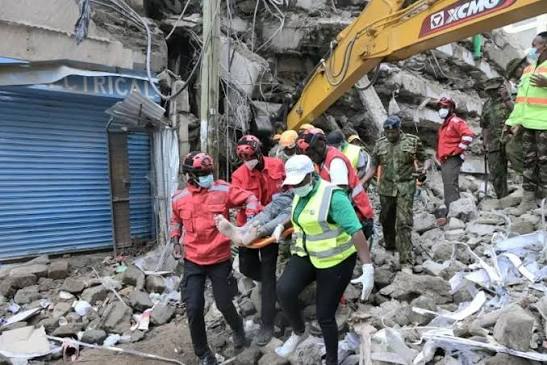
Rescue operations at the collapsed building in Eastleigh, Nairobi, have entered their third day, with four people rescued alive, according to Police Spokesperson Michael Nyaga Muchiri. Emergency response teams continue working through the rubble in search of anyone who may still be trapped, as anxious families wait for updates about their missing relatives. The incident has renewed concerns over building safety, construction standards and the enforcement of regulations in Nairobi. Authorities are expected to establish the circumstances that led to the collapse as rescue efforts continue, while the tragedy highlights the importance of proper building inspections, accountability and effective emergency response systems to prevent similar incidents in the future.
Rescue operations at the collapsed building in Eastleigh, Nairobi, have entered their third day, with four people having been rescued alive, according to Police Spokesperson Michael Nyaga Muchiri. The search continues as emergency teams work through the rubble in an effort to locate anyone who may still be trapped beneath the debris. The incident has drawn attention to building safety, emergency preparedness and the need for strict enforcement of construction regulations in Nairobi.
The collapse has left families anxiously waiting for information about their relatives who may have been inside the building when it came down. For those whose loved ones remain unaccounted for, every hour of the rescue operation brings a mixture of hope and uncertainty. Some families have remained close to the scene, hoping to receive updates from emergency personnel and authorities coordinating the response.
The rescue of four people alive has provided a measure of hope amid the difficult circumstances. However, operations at collapsed buildings are often complicated by unstable structures, heavy debris and the possibility that additional sections could fall during rescue efforts. Emergency personnel must therefore balance the urgency of reaching potential survivors with the need to protect rescuers and those who may still be trapped.
Police Spokesperson Michael Nyaga Muchiri has confirmed that the operation has reached its third day, highlighting the continued efforts by responders at the scene. The search requires coordination among personnel involved in locating survivors, clearing debris and assessing the condition of the remaining structure. As the operation progresses, information from authorities remains important in helping the public understand developments and avoiding confusion about the number of people rescued or still missing.
Building collapses present some of the most difficult situations for emergency responders because victims may be trapped beneath concrete slabs, steel reinforcement, bricks and other construction materials. Accessing spaces where people could be alive requires careful assessment of the rubble and the use of appropriate rescue techniques. Heavy machinery can assist in removing debris, but its use must be carefully controlled to avoid causing further movement in unstable sections.
The rescue teams may also need to identify possible voids within the collapsed structure where people could have survived the initial impact. Such spaces can sometimes provide temporary protection, although conditions inside them may be dangerous because of dust, limited air circulation, falling materials and restricted access. Responders must work methodically to reach these areas while monitoring changes in the structure.
The passage of time makes the operation increasingly challenging, but it does not automatically mean that survival is impossible for people trapped beneath rubble. Each incident is different, and the chances of survival depend on several factors, including the nature of the collapse, the injuries sustained, access to air and the conditions within the spaces where victims may be trapped. This is why rescue operations must be guided by professional assessments rather than assumptions.
The four people rescued alive represent an important development in the ongoing response. Their condition and the medical attention they require would need to be established by the relevant emergency and health personnel. Survivors of building collapses can suffer a range of injuries, including fractures, cuts, crush injuries and breathing difficulties caused by dust or pressure from debris. Some may require urgent treatment and continued monitoring after reaching hospital.
Medical teams play a critical role during such emergencies. They must assess rescued victims, provide immediate assistance and determine which patients require rapid transportation to hospital. The severity of injuries can vary considerably, meaning that even individuals who appear conscious after being rescued may need further medical examination. Early treatment can be essential in addressing injuries that are not immediately visible.
The incident has also raised concern among residents and business owners in Eastleigh, a busy commercial and residential area of Nairobi. The neighbourhood accommodates a large population and hosts numerous businesses, shops, offices and residential properties. A major building collapse in such an environment can disrupt daily activities, affect businesses and create safety concerns for people living or working nearby.
Eastleigh's busy streets and high concentration of commercial activity can also complicate emergency operations. Rescue teams may need sufficient space to bring in equipment, move injured people and coordinate activities without interference from traffic or crowds. Keeping access routes clear is therefore essential, particularly when ambulances and other emergency vehicles need to reach the scene quickly.
Members of the public often gather near major incidents in search of information or to assist affected families. While public concern is understandable, excessive crowding can create additional risks and slow down rescue work. People who are not directly involved in the response should follow instructions from emergency personnel and avoid entering restricted areas. This allows rescuers to concentrate on locating survivors and securing the scene.
The building collapse has renewed attention to the importance of enforcing construction standards and ensuring that buildings are safe for occupation. Nairobi has experienced rapid urban growth, with demand for housing, commercial premises and office space increasing in many neighbourhoods. While this growth supports economic activity and provides opportunities for investors, it also places greater responsibility on developers, contractors and regulatory authorities to ensure that construction meets approved safety requirements.
Buildings must be designed and constructed according to appropriate engineering standards, taking into account the intended use, expected occupancy and the weight the structure is expected to support. The quality of construction materials, the competence of the professionals involved and the supervision of construction work are all important factors in determining structural safety. Failure at any stage can expose occupants and neighbouring communities to serious risks.
The role of county authorities is particularly important in regulating building development. Approvals, inspections and compliance checks are intended to ensure that proposed structures meet applicable planning and safety requirements. Authorities must also respond to concerns about potentially dangerous buildings and take appropriate action where violations are identified. Effective oversight requires sufficient technical capacity, transparent procedures and accountability at every stage of the approval process.
Developers and property owners also have a responsibility to ensure that buildings remain safe after construction is completed. Structural problems can develop over time because of poor maintenance, unauthorised alterations, water damage or excessive loads. Regular inspections can help identify warning signs before they develop into more serious hazards. Where a building is found to pose a danger, appropriate safety measures should be taken promptly.
The investigation into the Eastleigh collapse will be important in determining what caused the structure to fail. Investigators may need to examine construction records, approved building plans, inspection reports and the materials used in the project. They may also assess whether the building was altered after approval or used for purposes that differed from its authorised design. Any findings should be based on technical evidence and the results of the relevant investigations.
Establishing the cause of a collapse is essential not only for determining responsibility but also for preventing similar incidents. If investigators identify weaknesses in construction practices, enforcement procedures or inspection systems, the findings could inform improvements to existing safeguards. Where evidence points to violations of the law, the appropriate authorities can pursue the necessary legal or administrative action.
The incident also highlights the importance of emergency preparedness in densely populated urban areas. Effective rescue operations depend on trained personnel, appropriate equipment, reliable communication and clear coordination among the agencies involved. Emergency plans should account for the possibility of major structural failures and ensure that responders can reach affected locations without unnecessary delays.
Modern search and rescue equipment can help teams locate potential survivors and assess conditions beneath collapsed structures. However, equipment alone is not sufficient. Responders require specialised training to understand how rubble behaves, identify unstable sections and determine the safest methods of reaching trapped individuals. Coordination between rescue personnel and medical teams is equally important throughout the operation.
Public communication remains another critical aspect of the response. During a major emergency, inaccurate information about casualties, missing people or rescue developments can increase anxiety among families and residents. Authorities should provide timely updates based on verified information while respecting the privacy of those affected. Families searching for relatives need clear guidance on where to obtain information and how to communicate with the relevant agencies.
For people waiting to hear from relatives, the uncertainty can be emotionally exhausting. Families may struggle to understand what is happening while dealing with fear and the possibility of losing someone they love. Providing accessible information, appropriate support and clear communication channels can help them navigate the difficult waiting period.
The incident may also have lasting economic consequences for businesses operating in and around the affected building. Traders could experience disruptions if nearby premises are closed for safety assessments or if access to the area is restricted. Workers whose livelihoods depend on businesses in the neighbourhood may also face temporary interruptions. The wider impact will depend on the extent of the damage and the time required to secure the site.
Beyond the immediate emergency, the collapse presents an opportunity for a broader review of building safety practices in Nairobi. Authorities, property developers, professional associations and residents all have a role to play in promoting compliance with construction standards. Stronger inspection systems, proper documentation and swift responses to safety concerns can help reduce the risks associated with unsafe structures.
Residents can also contribute by reporting visible structural concerns to the appropriate authorities. Cracks, unusual movements, damaged support elements and other warning signs may require professional assessment, although such signs do not automatically establish that a building is about to collapse. Qualified engineers and inspectors are best placed to determine whether a structure presents a danger and what action may be necessary.
As rescue operations in Eastleigh enter their third day, attention remains focused on locating anyone who may still be trapped and ensuring that survivors receive medical attention. The four people rescued alive offer hope amid the uncertainty surrounding the incident, while families continue waiting for information about their loved ones.
Police Spokesperson Michael Nyaga Muchiri has confirmed the progress of the rescue operation, as emergency teams continue working at the scene. The final number of casualties, the full extent of the damage and the circumstances that led to the collapse must be established through verified updates and the relevant investigations.

You Might Also Like
-
President William Ruto has urged political leaders to put aside petty politics and focus on attracting investors to Kenya, stressing that the country’s development depends on its ability to create a favourable business environment, promote economic growth, generate employment and unlock investment
-
The death of Kenya's second Ebola victim, a 65-year-old woman who died on October 23, 2026, and her burial at Lang’ata Cemetery the following day highlighted the challenges facing the country as it responds to Bundibugyo Ebola virus disease. The burial was conducted under strict health protocols,
-
PS Raymond Omollo's call for leaders and young people to uphold peace and reject political violence is an important message as Kenya prepares for the 2027 General Election. His latest reported remarks in Nakuru on October 24, 2026, focused on preventing political manipulation, protecting the rights
-
At least 22 people have reportedly died and several others sustained injuries following a collision involving a bus and a lorry along the Nairobi–Mombasa Highway. The accident has renewed concerns over road safety, with calls for responsible driving, strict enforcement of traffic regulations and m
-
KANU chairman Gideon Moi has accused President William Ruto of failing to honour commitments he says were made during negotiations that led him to withdraw from the Baringo Senate by-election in 2025. Speaking to Kalenjin elders and community representatives at his Kabarak home in Nakuru County on O
-
President William Ruto has described Wiper leader Kalonzo Musyoka as a truthful politician who acknowledges development achievements whenever work has been done. Ruto’s remarks highlight the importance of recognising progress despite political differences, as leaders continue to debate government